Why Did You Become an Educator?
I didn’t want to be a teacher at first.
I went to a very traditional school. It was read the book, answer the questions, move on. There wasn’t a lot of opportunity for me to be myself, and I felt that.
So, for a long time, the only kind of education I knew was ‘sit and get’ education. And I thought, no, I don’t want to do that.
Then in college, I found a program focused on democratic education and project-based learning, and that completely shifted things for me. I realized education could be different.
It could be student-centered - a place where kids learn how to be masters of their own learning.
That was the unlock.
I wanted to help students believe in themselves and believe in their own potential. That’s what carried me through my whole career.
I started teaching in Southeast Ohio, in Appalachia, at a school that was aligned with those ideals. Then I moved to Los Angeles to work at a project-based, democratic learning school where I could really hone those skills without everything being confined by test scores.
My goal was always to bring those tools back to public education and show that students everywhere could do these things.
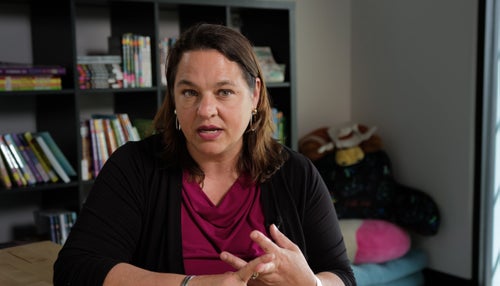
My name is Katie Boye, I'm a Lead Guide at Alpha Denver.
What Was Missing from Traditional K-12 Education?
When my husband and I moved to Denver, I started working in a public charter school system. I tried to implement as many of those project-based ideals and student-centered techniques as I could.
I even entered an administrative role where I worked to implement those things at a higher level. But I really felt the constraints of K-12 public education.
There are rules around funding. There are rules around what programs you’re allowed to use. There are political constraints. There are time constraints.
And there are just so many responsibilities that pull you away from what you actually got into education to do. As a public school teacher, the amount of hats I had to wear was insane.
I was in charge of making all the lessons. I was in charge of doing all the planning. I was in charge of planning conferences, being a guidance counselor, being a school psychologist and planning different professional development for teachers.
And that’s truly just a small drop in the water of what I had to do.
I loved the students. I loved working with my colleagues. But under K-12 education, it was hard to do what I wanted for students.
I felt like the things I was creating for my kids were not as high-achieving as they could be. I felt like I was letting them down because I wasn’t able to give them the challenges I knew they were capable of.
That’s where I was getting burnt out.
What Made Alpha Feel Different?
When Alpha came across my desk, I kind of thought, wait, is this real?
But I wanted it to be real.
I started looking into it, and at first the AI component was pretty new to me. I hadn’t done a lot of AI work at that time. But then I really honed in on the life skills workshops, and I was just enamored with the idea of putting life skills into the curriculum.
That is so important for kids, and we’ve really moved away from it in traditional education.
I was excited because it felt like a culmination of everything I had been working toward in my career. It was all the things I was trying to do, already in a place where I didn’t have to fight the system every day to do them.
The idea that I could make projects and workshops that didn’t always have to be content-aligned, because students were doing their core learning in the morning, was a game changer.
There was definitely some relief and excitement when I saw the Alpha model. Some colleagues and I had even talked about whether we needed to start our own school, because we didn’t see the model we wanted already out there.
But starting a school felt big and daunting. It would have been all the things I didn’t want in my job - financial things, operational things, everything that takes away from what I really want, which is to work with kids.
So when Alpha came around, it felt like somebody had thought of this before I did and already started it.
That was exciting.
What Was the Hiring Process Like?
Applying for Alpha was definitely unlike anything I had applied for before.
The CCAT was something I had never even heard of, and that was a fun adventure. I really liked taking it and seeing how well I did.
Then my bread and butter was getting to create a lesson. We had to create our own lesson and be innovative about how to teach the Trojan Horse story. That was awesome. I loved that. I probably spent too much time on it because I was having so much fun.
After that, I answered some AI chatbot questions, which was a cool introduction to how AI might be used in my work if I was hired.
Then I moved pretty quickly into the first screening call. After that, I got to meet Stef, and I was just so in love with everything I had learned about the school.
It felt like a true dialogue. I got to ask questions, and I was being asked questions too.
It was rigorous, but I enjoyed it. I like a challenge!
And honestly, the rigor is part of why I like the Alpha culture. It takes a special person to want to put in the effort to do all of those steps with their true, authentic self and with their highest level of ability.
I know the people I walk into a room with at Alpha also had to do that. That gives me a basis for trust in my colleagues that I might not have in a place where the interview process has a lower standard.
Find out more about the selection process here.
How Did You Go from Applying in Denver to Supporting Campuses Across the Country?
When I was applying, the Denver campus ended up getting delayed.
I was already in the interview process, and I was so in love with Alpha and wanted to try it out so badly that I told Stef and the team, “Just put my name in. Remember my name when you go to open the Denver campus.”
I was content to keep working my current job until the Denver campus opened.
But after my shadow day, Stef offered me the opportunity to get hired right away and travel around to different campuses throughout the year to help support as Alpha expanded.
I couldn’t turn that down.
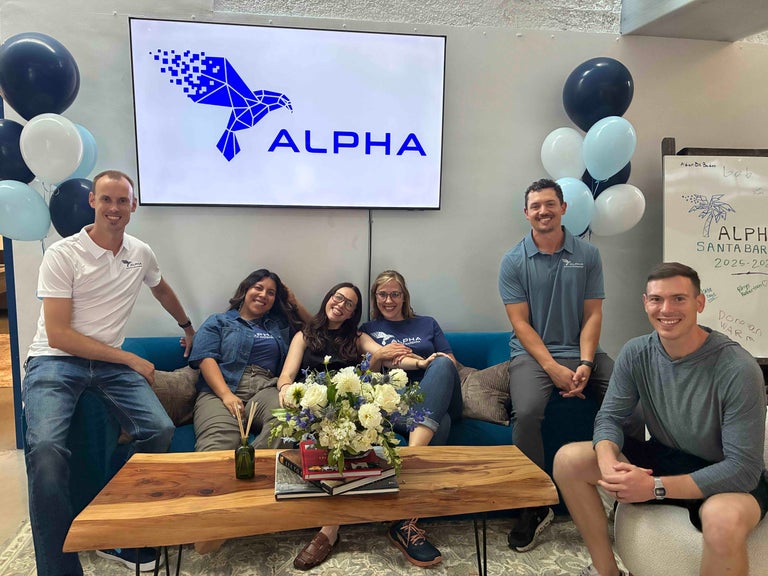
Over the last year, I’ve been able to go to different campuses and support in a way I didn’t even think was an opportunity. And I’ve loved it.
So far, I’ve been at Alpha Austin, Alpha Brownsville, Alpha Santa Barbara, Alpha Miami, Alpha Scottsdale, and Alpha San Francisco. I’ve also been able to travel to assist with different workshops and Test to Passes around the country.
Every Alpha campus is unique.
They all have different facilities, different access to indoor and outdoor space, and different numbers of students because some are more established than others. But one thing you find at every Alpha campus is a real love for students.
The reason we’re all here is to put students’ needs first, help them excel, and help them realize their own limitless potential.
That high standard, high support energy is everywhere when you walk into an Alpha campus.
What Makes the Guide Role Different from Teaching?
At Alpha, so many of the extra hats have been taken off.
The sheer amount of time I get back from not having to make daily lesson plans and grade papers is huge. As a Guide, my focus is on students. That's so special, and it’s something I’ve been looking for my entire career.
The hats I do wear are about making sure my students have high expectations and the support they need to get there. Whether that’s in academics or life skills workshops, my focus is truly on students.
That’s a gift Alpha has given me that I can’t say is true of many other organizations.
I don’t think I work less as a Guide. I work differently.
I have fewer things to work on, which means I can put more focused time into what matters. If I’m creating a motivational model for a student, I can really think through what that kid is going to be driven by instead of throwing something together fast because I have to.
That focus changes everything.
Why Are Guides So Important at Alpha?
There could not be Alpha without the Guides.
The Guides are the most integral part of this model.
Students could just be learning online at home if that was what they wanted to do. But Guides are the connection point. They’re the trust point that helps students try something they wouldn’t try before.
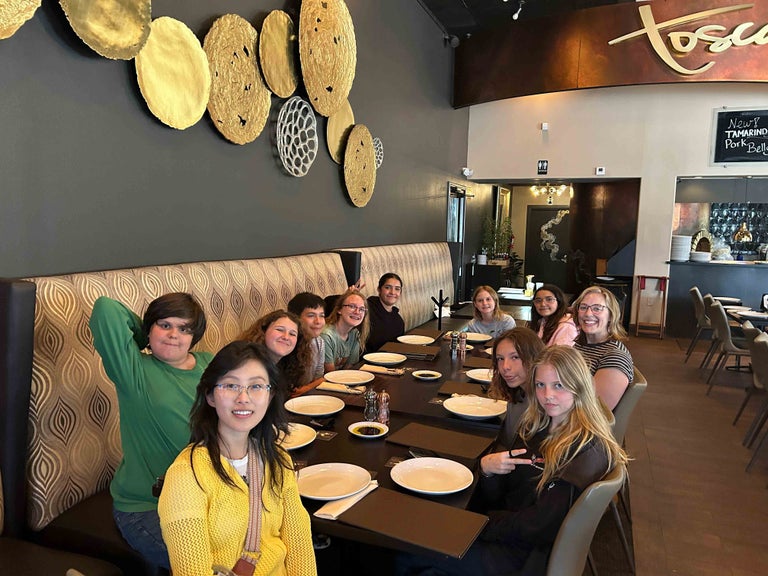
Students aren’t going to try something just for the sake of trying something. They need a safety net to try something really hard. Guides are those safety nets.
They need their constant cheerleader. The person who helps them see their own potential when they’re having a really hard day and can’t see it themselves.
Guides are the people who sit with you when you just need somebody to breathe with. They’re the people celebrating you when you don’t even see that you need to be celebrated.
The most learning and the most risk-taking happens when you have humans around you that you trust and rely on. That’s who Guides are for our students.
And honestly, being a Guide is so much more intriguing to me than being a teacher because I get to focus on the things I got into education for - being a motivator, helping students find success, and helping students understand that they are limitless.
No Guides means no Alpha.
It’s just how it is.
How Has Alpha Changed Your Career?
Being part of Alpha has already given me so many chances to learn, grow, and develop.
I’ve only been here about a year, but I’ve done so many things I would not have done if I wasn’t an Alpha Guide.
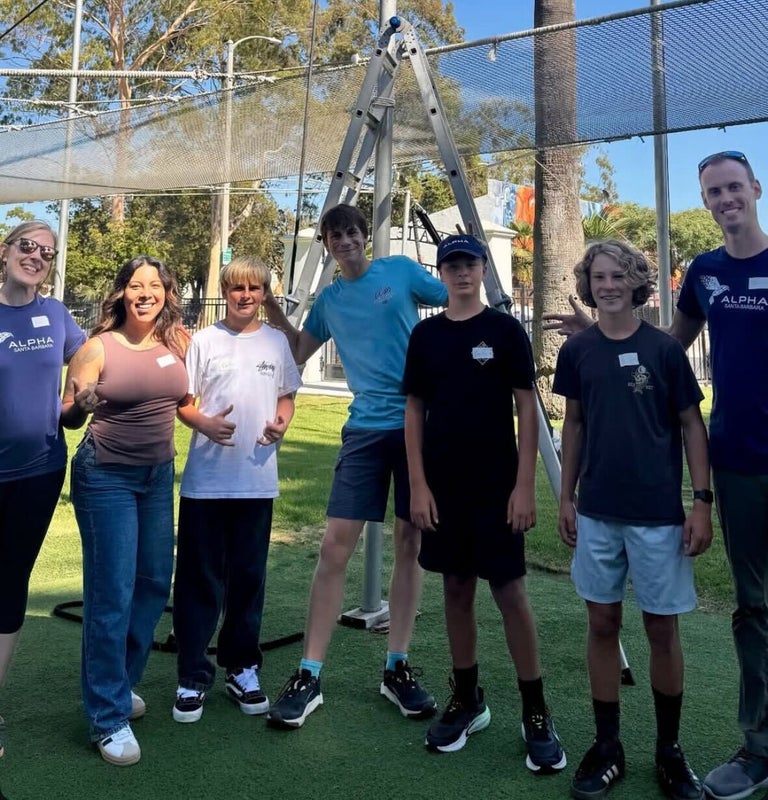
When I was in Santa Barbara, we went to a trapeze park. I don’t like heights. I was sitting there thinking, am I going to do this?
There was one student who I assumed I was going to have to coax up the ladder. I thought, okay, it’s going to be me and him, and we’re going to try to get up this ladder together.
But he just said, “I’ll go third,” climbed up this huge ladder, jumped off, and did the whole trapeze swing. And in my mind, I thought, well, if he can do it, I have to do it too.
So I went.
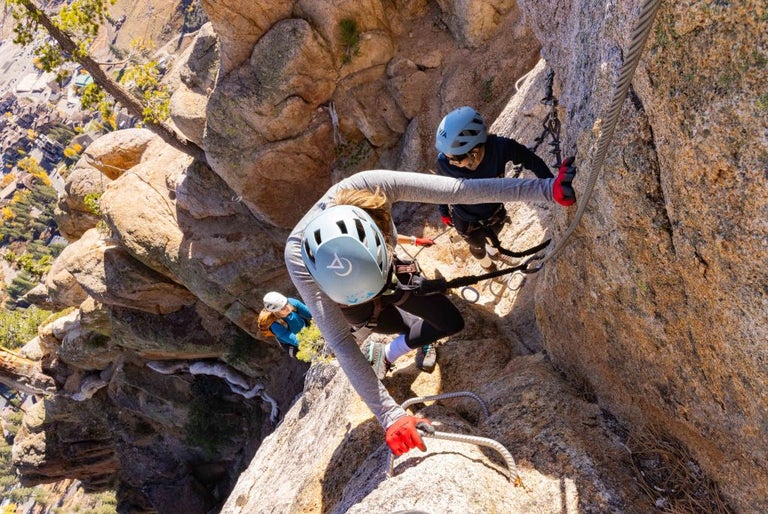
That student surpassed what I thought he was capable of in that moment, and then he motivated me. That was special. As adults, it’s easy to think we’re doing these things for kids. But in that moment, I realized I have just as much to learn as they do, as long as I’m open to it.
That has been reignited in me this year - grit, resilience, and a growth mindset.
Now I’m excited to say Alpha Denver has been put on the prospective list. If we can get enough families to sign on, our Denver campus will open in the fall.
I’ll be the Lead Guide for that campus, and I’m so excited to help open it.
For the past year, I’ve been able to travel to different campuses across the country to support Alpha as we expand. Now I get to take everything I’ve learned and bring it back to Denver.
That feels pretty full circle, and it’s all because I applied for a job on Crossover.
Want to keep reading? Meet Chris, an L2 Guide at Alpha Miami.





 AI-first remote workers.