Why Do You Care So Much About Educating the Whole Child?
My first graduate program was in general education, and my dissertation focused on educating the whole child.
So even then, I wasn’t only thinking about academics. I was thinking about the social-emotional skills students need in class too. Things like confidence, organization, planning, resilience, and knowing how to work through hard things.
Then I went back to school for my master’s in special education, and that became even more important to me.
As special educators, we spend a lot of time thinking about what students need beyond the academic skill on the page. Of course students need to learn addition, subtraction, reading, writing - all of that. But the life skills are what take them so much farther.
A student can know how to do the academic work, but if they don’t know how to organize themselves, start a task, manage frustration, ask for help, or believe they can keep going, they’re still going to struggle.
That was always the piece I cared about.
How do we help students become successful little people, not just students who can complete an assignment?
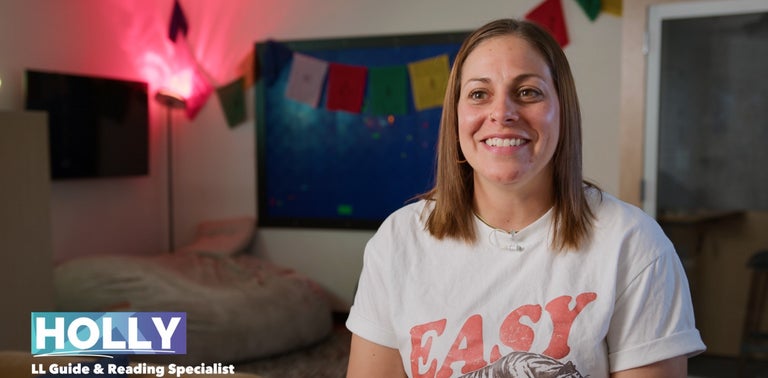
My name is Holly Haygood, and I’m an LL Guide & Campus Reading Specialist at Alpha, Scottsdale.
What Did Working in Special Education Teach You?
I was in public education for 12 years, and toward the end, I worked strictly with special needs students.
A lot of my work was helping students with planning, goal setting, organization, and executive functioning.
I would go into general education classrooms and support my students there, so we could connect what we were working on with what they were doing in class.
We’d do things like write down the plan for the day, list the top three things they needed to get done, or break a task into smaller pieces.
And then something interesting started happening.
The general education students would see the resources I was giving my students, and they would ask if they could do it too.
They would say things like: Can you help me with that? Can I have one of those sticky notes? Can I write down my plan too?
And of course, yes. It was a sticky note. They could have a sticky note!
But that was eye-opening for me, because I realized these weren’t just special education needs.
These were student needs.
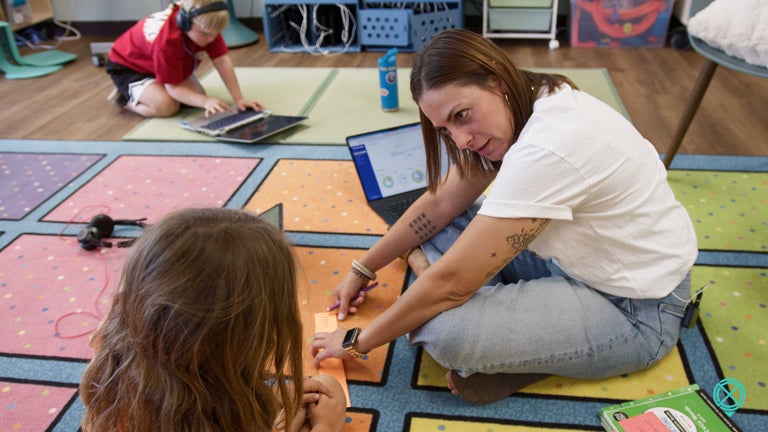
Some kids had those supports written into an IEP, so they had dedicated time for it. But so many other students needed the exact same strategies, and they didn’t have that structure around them.
That was probably one of my first light bulb moments.
If these are the students who are asking me for help, how many students aren’t asking?
When Did You Realize the Traditional System Wasn’t Built for That Kind of Support?
I think the hard part was realizing how big the need really was.
In general education, teachers absolutely try to build those skills into the day. They care about their students and they want to help.
But when you have 30 kids in a room, a full curriculum, all the required pieces, and everything else happening in a school day, there’s only so much space for that explicit life skill support.
With students who have IEPs, those supports are legally required. They’re written down. There’s time dedicated to them.
But for the general education kids, it’s not always explicit in the same way.
So, I started wondering whether we were really preparing students as well as we wanted to believe we were.
Because the world is different now. Kids need to know how to plan, organize, work through frustration, use tools, communicate, manage themselves, and keep going when something feels hard.
Those things don’t just magically happen.
That was disappointing, but it also shook my foundation a little bit. Because I loved public education and I loved the actual work I was doing, but I could see that there were so many kids who needed more than the system was set up to give them.
It wasn’t that academics didn’t matter. They absolutely matter.
But life skills needed a bigger spotlight than most schools were able to give.
Why Were You Looking for Something Different?
I loved the real part of my job.
Working with the kids, getting to know them and their families. I loved being able to help a student build a skill and then watch how that changed their confidence.
That was never the part I wanted to leave.
The hard part was everything around it.
There was the paperwork. The administrative tasks, new curriculum changes, the IEP writing, the emails - and meetings! All the extra pieces that pull you away from the real work with students.
I was at this point where I knew I needed something different, but I didn’t know what that something was.
I remember talking to my husband about it, and he asked if I wanted to go into policy. And I was like, no. Everyone hates those people.
I didn’t want to give up the kids and families. That was the part that made my job great.
So - I was stuck between two things.
Do I keep dealing with the pieces that frustrate me so I can keep the part I love? Or do I do something completely different and risk losing the kids and families altogether?
I didn’t know how to navigate that.
Then I found Alpha, and my first thought was basically, is this real?
How Did You Find Alpha?
I went searching.
I think my Google search was something like unknown education job boards or hidden gem education job boards. It was not intentional. I didn’t even know about Alpha at that point.
I found Crossover, and at first I was very skeptical.
I remember thinking, that’s not real. There’s no way you’re going to work in education and the salaries are that high - that’s just not possible. But I kept thinking about it.
I talked to my husband, and he said, well, just apply. What’s going to happen?
So I applied.
The application wasn’t like a typical education application. At the time, I was questioning it because there were a lot of steps. But now I think that’s beneficial.
There were skill checks where you had to show how you would handle a student or plan out a situation. I did a demo lesson about Troy and the Trojan horse. I also had reading specialist pieces where I had to plan instruction for students.
Then there was the CCAT, interviews, a shadow day, and eventually a proctored CCAT as a final verification step.
It was a lot.
But once you’re here, that process creates a level of trust with your team that I don’t think you necessarily get elsewhere.
You know what everybody went through to qualify to be here. There’s no question of whether someone has what it takes to be a great Guide, because they wouldn’t be here if they hadn’t made it through all of that.
That common ground makes a difference.
Find out more about the selection process here.
What Did the Shadow Day Tell You About Alpha?
The shadow day showed me that Alpha was real.
Up until that point, I was still questioning it. Then they flew me to Austin, and I was on campus, and I could physically see it happening.
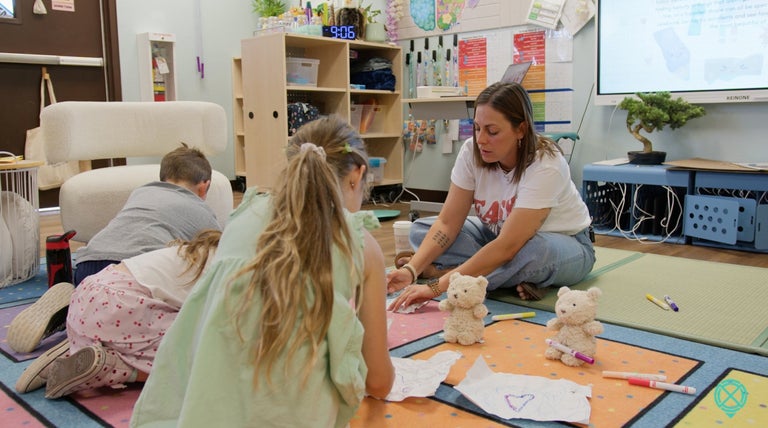
I got to see core kkills, to work with students and to see how they used the apps, how independent they were, and how resourceful they were.
I happened to be there near the end of the school year, so I saw kindergarten and first grade students at that point in the year. Comparing that to what I had seen in public school was eye-opening.
Their independence, problem-solving, and resourcefulness were very different.
I also saw a workshop where students were doing an Austin vlogger project. They had cameras, they were going around to different places in Austin, and they were creating videos about those experiences.
One of the families even helped put on a private concert for them. Seeing that opened my eyes to what was possible.
It’s one thing to read about Alpha - it’s another thing to be in the room and watch students doing it. That was when I started to think, okay, this is not just a nice idea.
This is actually happening.
What Does an LL Guide and Reading Specialist Do?
My role is definitely Guide first and reading specialist second.
My guide group is still my top priority. I’m there to support them, know them, help them grow, and make sure they are getting what they need.
But I’m also the campus reading specialist, so I monitor students’ reading progression.
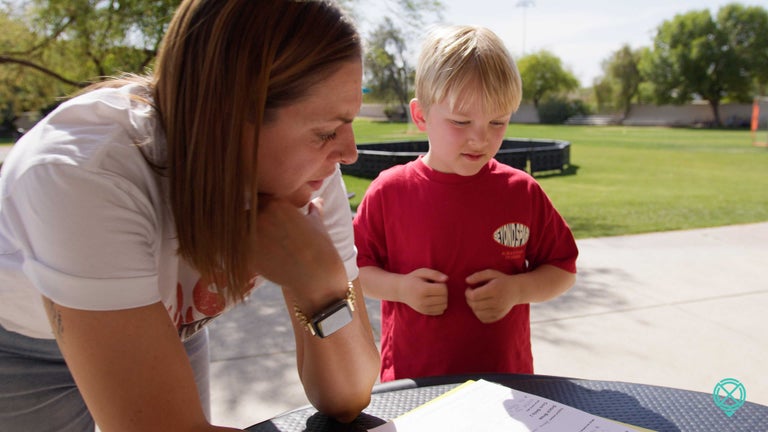
That means I’m looking at where each student is starting, whether they’re on grade level, and whether they’re making the progress we expect them to make.
If a student isn’t on grade level or not progressing the way we want, that’s when I come in with reading interventions. I work with our academics team to figure out which areas we need to target and boost.
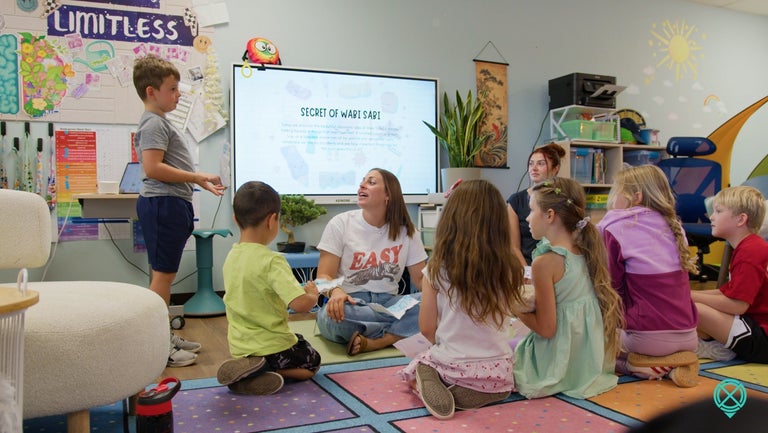
In LL, reading is a much bigger part of my day because those students are naturally learning to read. So, I provide extra reading support to those students each day.
But it isn’t always me directly pulling a student.
Sometimes another Guide will come to me and say, hey, I’m noticing this. What should I try? And we’ll talk through it together.
That partnership with the other Guides has been one of the really great parts of the role. I get to support my own students, but I also get to be a resource across the campus.
And because we’re a smaller campus, I get to know so many of the students, not just the ones in my own group.
How Does Alpha Let You Support the Whole Child in a Way You Couldn’t Before?
Alpha individualizes education in so many ways.
Academically, students aren’t just doing third grade work because they’re in third grade. A student can be at one level in reading and a different level in math. They can have a very specific skill path that belongs only to them.
That’s not something I could do in public school.
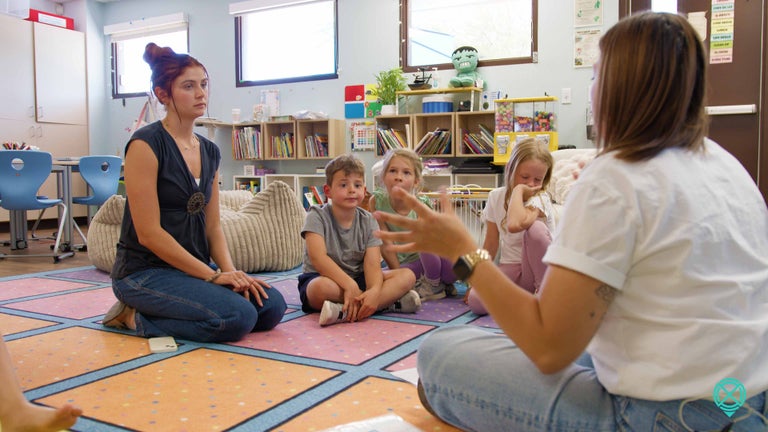
But it goes beyond academics.
The social and emotional development is also more individualized here because we know the students so well. Instead of 30 kids in a room, we might have six or seven. In our guide groups, we have no more than five.
That means we can really, really know them.
We see what they need. We notice when they’re struggling. We can target the exact kind of support that will help them succeed.
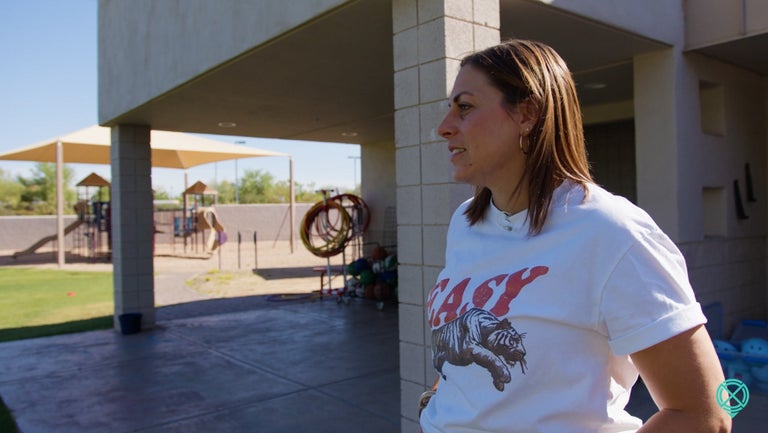
One of my favorite examples was a student who came in very shy and struggled with confidence.
During a music workshop, she chose keyboard and was excited at first. Then when it was time to do it, she shut down. She was in tears and felt like she couldn’t do it. So another Guide and I helped her break it down.
We started with the most basic question - what do you need in order to play?
She realized she needed to know what the keys were. Then we asked how she could figure that out. She came up with ideas. She could Google it, she could look up a picture or she could use an app.
We didn’t do it for her - we guided her thinking until she realized she already had ways to solve the problem. Within a couple of days, she was determined.
By the end of the workshop, she had one of the highest accuracy scores!
That kind of transformation is why knowing the kids matters.
You can’t know when to keep helping and when to step back unless you really know the child. I think that's what makes a great Guide. It’s not just knowing a subject, it’s building a relationship with students and seeing them as little people, not just students in a row.
You need to know what they need academically, socially, and emotionally. Then you do the work to help them become the most successful version of themselves.
That’s what I wanted from education - and at Alpha, I get to do it.
The work is still hard. I probably work about the same number of hours as I did in public school, and in some ways I work harder because I’m constantly learning new things.
But it’s a different kind of work.
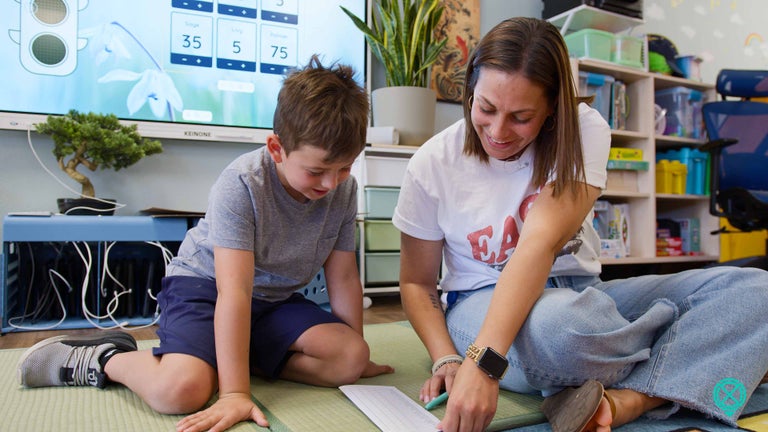
I’m not spending my time grading papers or writing IEPs at home.
I’m learning new tools, researching ideas for workshops, figuring out better ways to support students, and building things I’m excited to share.
When I get home, I’m home.
My family has noticed that I don’t seem as burnt out and tired all the time. Even when I‘m learning something for work, I can bring them into it. My kids get to see me exploring Canva or AI tools or new ideas, and that opens up learning for them too.
There isn’t a piece of what I do here that I don’t enjoy.
The people I work with, the kids I get to support, the work I get to do, all of that brings me a lot of joy – and it’s because I applied on Crossover.
Want to keep reading? Meet Carson, Lead Guide at Alpha San Francisco.



 AI-first remote workers.