Contents
- Your Unique Relationship with Anxiety
- 3 Things High Performers Need to Know About Anxiety
- #1: Productive Anxiety is a Performance Tool
- #2: The Yerkes-Dodson Law Determines Your Yield
- #3: You MUST Calibrate Your Own Stress Zone
- Better Stress Beats Less Stress Every Time
Why do the holidays destabilize high performers more than deadlines ever could? When life slows down, your brain treats it like a system error - too much noise scrambles you, too much silence derails you, and relaxing feels like a deadly threat. This article shows you why your brain needs calibrated stress, how productive anxiety works in your favor, and offers tools that will keep you sharper and happier this season.
Most people assume that road accidents happen because speed kills. Someone was driving too fast and tragedy strikes. But that’s only half the story.
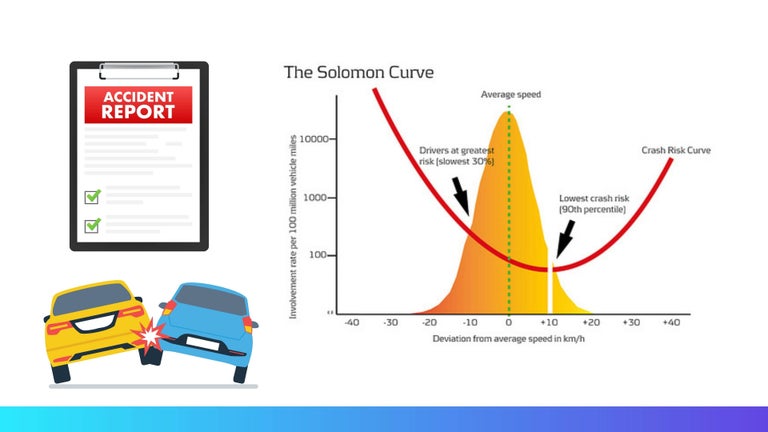
Years ago, some traffic researchers discovered something called ‘The Solomon Curve’ which shares a piece of counterintuitive knowledge that may have applied at the time.
It’s not just the drivers well above the speed limit who have accidents, but those driving well BELOW it too.
That’s right – slow drivers were almost at the SAME risk level as the ones ripping up the road. Crash severity of course, was still highest for the speeders.
But what was interesting with this controversial study was that both extremes – driving too fast, AND too slow – created perfect conditions for failure.
Researcher David Solomon theorized that accidents happened most often in extremes at BOTH ends. Driving the optimal speed was the safest play.
It struck me.
High performers know this basic principle instinctually – and we know it as productive anxiety. Think about it – a sudden influx of to-dos and adrenaline kicks in until you’ve exhausted your way through the load. You get it done, but not at your best.
And, if your workload drops too far, your mind floats away and you get bored. You get it done, but it’s also not your best work.
Too much stress and you panic. Too little – and you ALSO panic. Both extremes knock you off your game. They strip you of your natural drive to perform.
The danger isn’t the pressure itself – it’s the wrong kind of pressure – at the wrong level, at the wrong time. This is the unique balancing act high performers really suck at.
Your brain CRAVES the right kind of stress!
Remote work amplifies this beyond anything the office ever could. There’s no-one around you setting the pace, no social cues or regular interruptions from Susan to ask about Keith from IT. If you don’t recognize and regulate both ends…chaos.
High performers set their own velocity – their own speed.
And when you drift too far from the optimal zone, your performance wavers. When life gets too quiet, or too predictable – too chaotic or too insanely busy.
This is the paradox at the heart of elite remote work.
You NEED stress and anxiety to stay sharp, but only in its calibrated form!
In this article, you’ll see why your high-performing brain depends on the right kind of stress - and what happens when you dip above or below that zone.
I’ll explore productive anxiety as a normal part of elite work, unpack the Yerkes–Dodson Law to show you why both calm and overload tank your productivity, and give you a simple way to calibrate your own optimal stress pocket so that you can stay sharp without slipping into panic or disengagement this holiday season.
Your Unique Relationship with Anxiety
Is your anxiety actually trying to help you?
It’s the end of the year and the holidays are upon us. For many high performers this is the most destabilizing part of the year – a weird emotional ditch after 12 consistent months of goal achievement, new workflows and AI-fueled productivity.
High performers are MORE likely to have anxiety than the average worker.

So why does the happiest season feel like a threat instead of a break?
I have a theory.
Top performers have a DIFFERENT relationship with stress. We tend to exist inside this little grey zone other people can’t fathom or understand. We don’t want to be stress-free, and ‘relax’ for days on end - it feels unnatural to us.
Totally remove challenges from a top performer and it invokes its own kind of spiral.
When faced with free time, we’re the folks who immediately build substitute projects to fill the void – we reorganize the garage, refurbish furniture, pressure-wash the patio – or take up a new hobby like painting or metalworking.
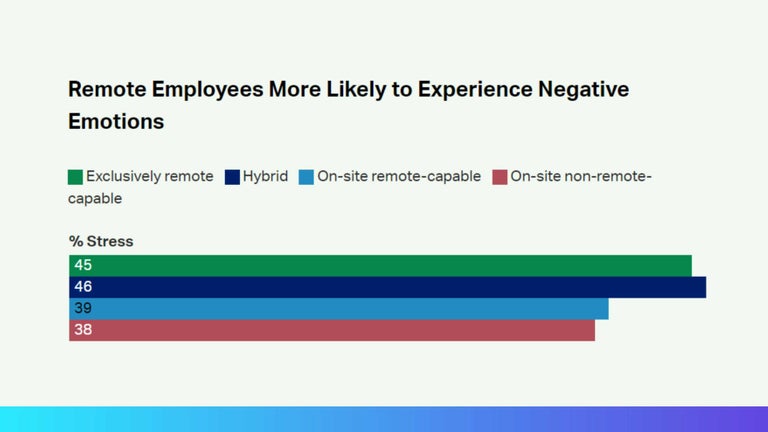
Gallup recently shared that remote workers are highly engaged, but we’re also carrying higher levels of stress (45%). And this is because remote workers are incredibly autonomous – we have to learn to self-regulate in ways office workers simply don’t.
High performers who work remotely can and often DO have a tougher time navigating the peaks and valleys for themselves. They see overwork as an ongoing challenge, but largely ignore underwork as the other side of that equation.
The goal is always consistency.
Like in the Solomon Curve example, in order to remain someone who performs at a high level and neither burns out nor washes out – we must understand what optimal performance MEANS for us.
And newsflash folks: everyone’s different.
My brain doesn’t respond well to unstructured leisure. It needs a certain level of tension to feel grounded. Too much pressure burns me out and too little leaves me unfocused, irritable, and oddly anxious. I know a lot of high performing friends who feel the same.
There’s a link between happiness and anxiety that high performers understand intuitively but don’t discuss often enough.
We are HAPPIER when we are challenged. Anxiety is an ally.
The problem isn’t stress itself - it’s the wrong kind of stress.
What if high performers don’t need less stress at all… just better stress?
3 Things High Performers Need to Know About Anxiety
Fact: some of the smartest people in the world are also the most anxious – and that’s no coincidence.

The reason for this has been widely studied. One study explored the relationship between intelligence and anxiety and found that they evolved together. Turns out our anxious wiring was never a defect in human nature.
It’s part of the same evolutionary upgrade that gave us advanced intelligence.
Anxiety and high-level thinking grew together.
The mental circuitry that makes us anxious is literally tied to the same systems that make us capable of planning, assessing and anticipating risk, solving hard problems and surviving in overtly hostile environments.
The holiday season is busy for a LOT of people. In the US, 89% of folks say that they’re completely overwhelmed at this time of year.
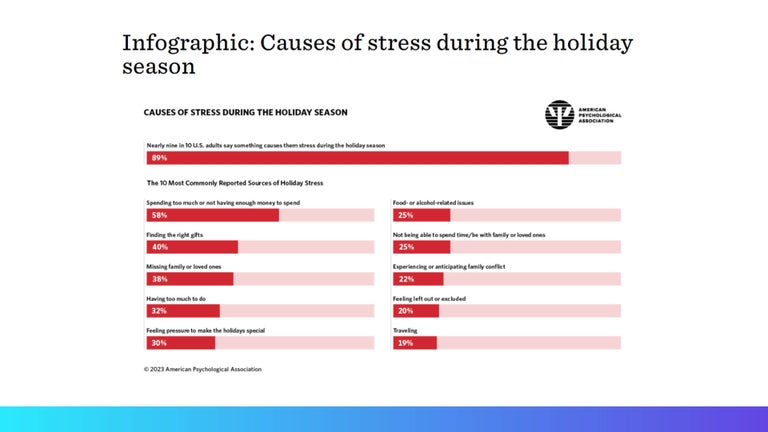
For high performers this translates into total crash and burn out – or the extreme opposite, as friends and family try to get them to slow down (and they don’t want to).
This is why the holiday season is such a dangerous time. If you can’t recognize when you’ve drifted out of your optimal stress zone (too much tension or too little challenge) – you’ll get pulled to the outer edges of your nature.
‘Slowing down’ is a terrible strategy for top performers. So is taking on every Christmas or holiday task around just to keep busy.
Here’s why.
#1: Productive Anxiety is a Performance Tool
Not all anxiety is bad.
Some is productive and some isn’t.
With the co-evolution link between intelligence and anxiety, we have to acknowledge that it’s an essential part of what makes us top performers. Productive anxiety makes us sharper, more focused, and gives us a high level of proactivity.
It wakes us up – instead of shutting us down.
Productive anxiety can be defined as the low-grade tension your brain creates when operating at optimal level.
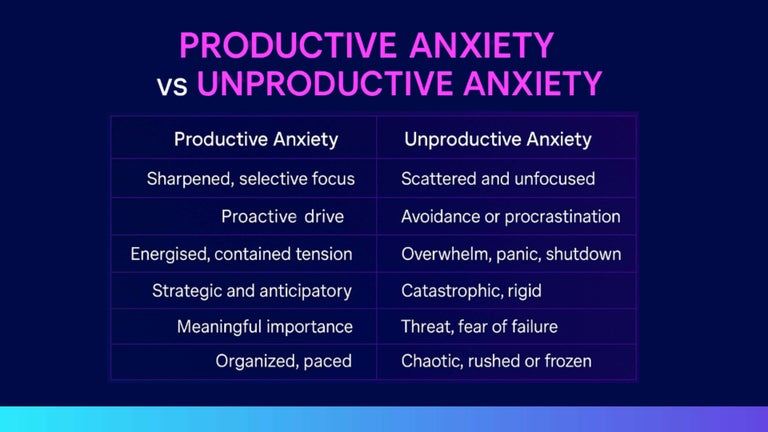
Not to be confused with productivity anxiety – productive anxiety happens when you’re in that effortless sweet-spot of a task – highly engaged, immersed, easily slipping into glorious deep work and making meaningful progress.
High performers already know the low-grade tension felt before a big task, a complex sprint or a looming deadline isn’t a biological system flaw.
It’s your own biology assisting you by making your brain more alert, sharpening your attention and increasing your ability to get things done. Real progress happens when you’re able to maintain productive anxiety over time.
The neurochemical response that happens in your brain can be a good thing – as long as you don’t let it kick into overdrive and become unhealthy. *Ahem workaholism.
Leaning into productive anxiety will help you learn to regulate it – spotting when it slows down, or when it speeds up – causing overload.
Knowing this about yourself will also make your personal life happier! No more feeling agitated when forced to ‘rest’ but it doesn’t feel like rest to you.
Remember the hallmark of productive anxiety is CONSISTENCY. It’s first and foremost a tool that you can use to have a wonderful holiday, by applying it to new pursuits.
#2: The Yerkes-Dodson Law Determines Your Yield
There’s a law that characterizes what we’ve been talking about.
That illusive ‘sweet spot’ for optimal performance.
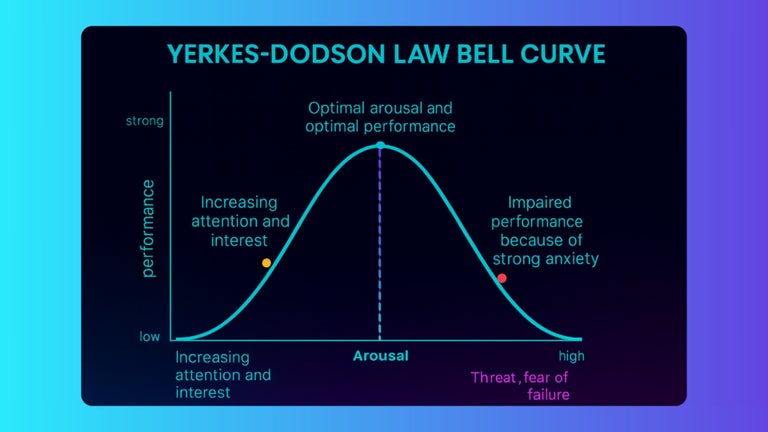
Every high performer knows there’s a specific level of stress where you can do your best work – any higher or lower and all heck breaks loose.
It’s similar to the Solomon Curve I mentioned earlier, but in psychology it’s called The Yerkes-Dodson Law. This law maps the relationship between task performance and stress.
Psychologists Robert Yerkes and John Dodson performed experiments on mice to discover the principle. They theorized that as ‘arousal’ increases (arousal meaning stress, motivation or anxiety) the ability to perform a task well also increases.
What they found was that this was only true up to a certain point. Too much anxiety and you’re too stressed to do your best work. Too little, and nothing happens.
As a high performer you’re probably aware of this operating system already – but most people have no idea it’s always running in the background.

- Low yield: Zero anxiety means zero biological assistance at work (not ideal). It won’t boot up the systems you need for deep focus or meaningful progress.
- High yield: Intense anxiety means a biological fear response of fight or flight. Your amygdala will hijack your system and shut you down.
- Optimal yield: Productive anxiety that is sustainable and creates motivation. You’ll be highly engaged and ‘in the zone.’
For high performers this is a constant battle – that you need to manage not just at work, but ALL the time. You create the structures, routines and habits that do this – even during the holiday season.
If anything, a sudden drop in stimulation or structure can send a high performer into a spiral. Boredom dressed as burnout, restlessness disguised as overwhelm, emotional static where momentum used to be – these happen when you don’t self-regulate.
The Yerkes-Dodson Law makes one thing clear: If you don’t calibrate your stress zone, the season will calibrate it for you.
#3: You MUST Calibrate Your Own Stress Zone
Are you terrible at noticing when you’re gone from optimal to low or high anxiety?
Funny thing is when high performers aren’t working, this fluctuating nightmare can get really turbulent, real fast. We wrongly believe some good ‘rest’ is all we need, because that’s what we’ve been told by wellness gurus and influencers online.
And believe me when I say the goal THESE holidays is authentic rest – so that you can come back to work stronger, happier and more focused than ever before.
But it won’t happen if you don’t listen to your internal rhythms and your own biological stress responses.
The Yerkes-Dodson Law clearly states that different tasks demand different levels of arousal. If you work in a high-pressure job in tech all year round – then wonder why you feel irritable and restless over Christmas when all you are doing is lying by the pool, this is WHY.
- Some tasks need high arousal (strategy, deadlines, complexity)
- Some need low arousal (admin, recovery, maintenance)
- Some need mid arousal (creative planning, learning, deep thinking)
Only – your holidays aren’t going to match ANY of these zones. The season is going to pull you into extremes - you’ll get hyper stimulated with too many obligations or under stimulated with too few.
Here are the symptoms:
Low anxiety
- You feel bored but call it burnt out
- Your brain keeps searching for something to do
- You feel pointless, flat or unproductive
- Doomscrolling endlessly
- You start fixing things that don’t need fixing (or you low-key work)
- Rest makes you more agitated not relaxed
High anxiety
- You get confused and can’t think straight
- Every small request feels like a giant threat
- You want to flee to the airport and jump on the nearest plane
- You dread gatherings, commitments or messages
- You are stuck in procrastination mode and do NOTHING
This is what happens when your threat-response system overrides your performance system. So here is some friendly calibration advice.
Don’t fill up your calendar with to-dos - and take each day as it comes. Plan for some key experiences and leave the rest blank. Pay attention to your nervous system, and rest when it feels right. When it doesn’t – go ahead and build that app, or piece of furniture or third impossible thing that will excite your brain.

Even though you are a high performer, that’s not your job during the holidays. Instead, it’s an important time to try to slow down, speed up in other areas – and reconfigure the way you balance your life so that you don’t plummet into chaos.
- Add structure when you feel yourself drifting into the low zone
- Slow down and set boundaries when tipping into overload
- Protect your middle zone by diverting this energy to things you love to do
Self-calibration is the gift you can give yourself this year.
Learn to do it well and you won’t lose momentum going into 2026. You’ll remain on the peak, instead of having to claw your way back up to it.
Better Stress Beats Less Stress Every Time
Don’t spend your holidays trying to escape anxiety!
That’s a superb way to make it worse.
High performers waste a truckload of energy trying to become people they’re not – then they wonder why their stress shoots through the roof the second they try to relax.

You don’t want to escape stress, you want the RIGHT kind of stress!
Your brain was built for tension, challenge and momentum. Turning that off doesn’t soothe you at all – it totally destabilizes you.
The real skills is knowing when to slow down, when to speed up – and when you’ve gently drifted into one of the danger zones at either extreme.
Accidents happen there!
So as holiday mode takes over and everyone else becomes sofa potatoes, remember that the fantasy of doing nothing won’t restore you.
What will, is learning to steer the engine you actually have.
Don’t cram a Ferrari engine into a beach buggy. It will explode.
Your high performing brain needs calibrated pressure. You don’t need emptiness or chaos – you need to stay in the middle lane, where you feel sharp, grounded and your ambition still has room to breathe.
Get your productive anxiety in the right gear, and you won’t spend January puttering your way back to peak performance from total engine burnout or shutdown.
In the end, the goal isn’t to eliminate anxiety.
It’s to master the version of it that makes YOU exceptional.
Do that, and you’ll start the new year already performing at the level everyone else needs weeks to reach.
Happy holidays folks!
Similar post


Want to read more?
We have a lot more where that came from



 AI-first remote workers.