Contents
- Way #1: Curate Your Sources
- Way #2: Capture and Connect
- Way #3: Interleave AI as a Thinking Partner
- Way #4: Run Comparative Thinking Drills
- Way #5: Layer Modalities of Input
- Way #6: Turn Learning Into Teaching
- Build a Personal Learning Environment That Makes You Work
Your personal learning environment is either an active gymnasium or a passive archive. MOST people choose archive. Curating beautiful content collections that make them feel educated while their actual thinking atrophies. Stop pampering your ego and start training your cognition.
Most personal learning environments aren't built for learning.
They're built for consumption.
Pushing you towards endless online courses. YouTube tutorials. *Ahem, can't-miss articles.
Building a personal Library of Alexandria might look impressive. But without action, it's destined to burn down and leave you with nothing.
Elite performers know this.
That's why they've built their personal learning environments for productive struggle. Forcing them to refine raw information into actionable knowledge.
You NEED to do the same.
Tired of burning rubber on a hamster wheel that takes you nowhere slowly? We're here to share 6 ways to learn faster (and better) with a REAL personalized learning environment.
Way #1: Curate Your Sources
Most people let algorithms pick their sources... BIG mistake.
The algorithms controlling your feed have PhDs in distraction. Caring far more about keeping you scrolling than keeping you informed.
Elite performers NEVER outsource their inputs.
I'm reminded of an insight shared by our friend Chintan Parekh - CS Conductor at Trilogy:
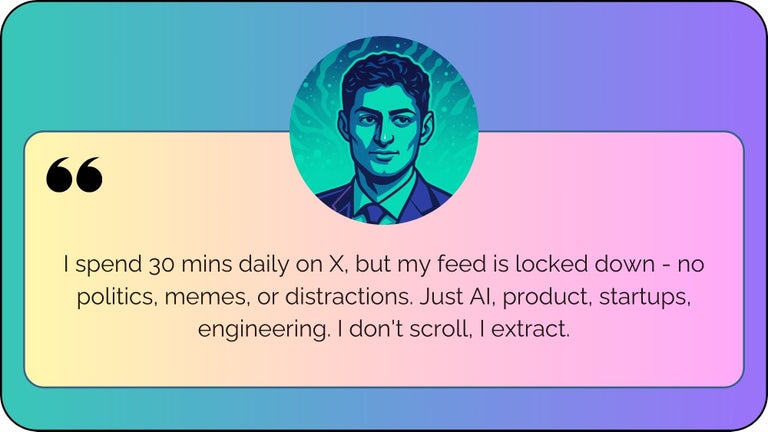
Notice what he's NOT doing? He's not trusting the algorithm or going in blind.
High-performers like Chintan take their information personally.
Here's how you can do the same:
- Block the noise - Silence anything that hijacks your focus. That means blocking key terms around politics, celebrity drama, or anything else adding to the noise.
- Curate the voices - Follow a small circle of trusted experts, making sure you include opposing viewpoints. You need the whole picture, not just one slice of it.
- Guard your time - Set hard limits on your research. Uncontrolled research is just procrastination with an excuse.
Not all information is equal. Own your inputs or they'll own you.
Way #2: Capture and Connect
Note-taking without processing is just hoarding. Don't build an intellectual junk drawer.
The best personal learning environments are built to connect. To uncover the unseen patterns that turn scattered datapoints into something that matters.
At Crossover, we process using Brainlift. The process is simple, but powerful:
- Fact + Fact = Signal
- Signal + Signal = Insight
- Insight = Impact
The goal isn't to archive information. It's to combine it in new and interesting ways that change how you think.
Tools like Obsidian and LogSeq are GREAT Brainlift partners. Unlike traditional note apps that store isolated entries, these tools let your knowledge network itself. Helping you map seemingly isolated facts into a living web of hidden connections.
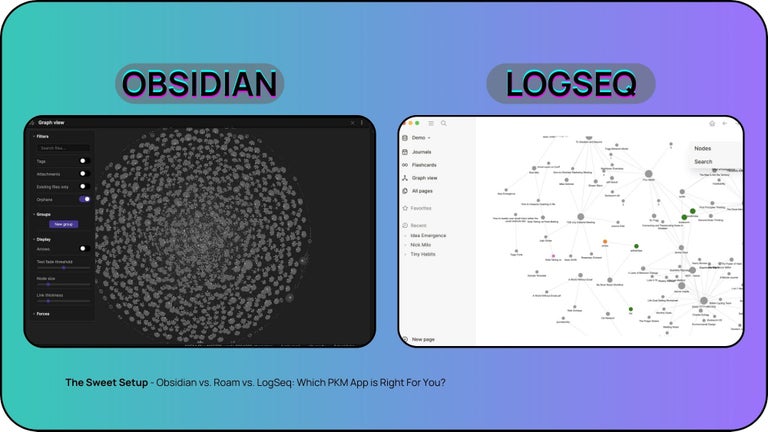
Saving is easy. Synthesizing is where the value is.
Way #3: Interleave AI as a Thinking Partner
AI is NOT a fancy search bar.
The ask → receive → move on cycle is a waste.
High-performers treat AI like a collaborative thinking partner. Showing up with their own ideas and then working with AI to build depth.
Here’s how to start:
- Push your perspective - Clearly communicate your stance with your AI thinking partner, then ask it to explain your idea back to you. Look for miscommunications and flawed logic. Adjust.
- Explore the edges - Prompt your AI with questions like 'what am I not seeing?' or 'what are the second-order effects?' Hunt for blind spots.
- Map possibilities - Work with AI to sketch multiple scenarios. Prompt with questions like 'if this happens, then what?' or 'what would need to be true for X to work?' Refine crude ideas into powerful understanding of cause and effect.
Bring the ideas. But then work with AI to stretch them.
Way #4: Run Comparative Thinking Drills
Passively nodding along makes you a fan, not a thinker.
High-performers take the harder path - running their ideas against opposing arguments. They question, role-play, and stress-test until they understand the full landscape.
Research from the National Training Laboratory shows that lecture-style learning results in about 5% retention. But when learners actively participate, retention rates jump to 75%.
That's a MASSIVE 15x payoff.
You need to force yourself to go beyond passively agreeing. Here's how to weaponize AI for intellectual sparring:
- Pick your topic - Zero in on a single target. That could be AI policy, product design, coding, whatever.
- Generate friction - Spin up a GPT designed to argue against you. Have it present research, nitpick your logic, and expose flawed thinking.
- Build your stance - Weigh each argument, and adjust your position until you can defend your stance.
Passive learners parrot. Active learners process.
Only one gets to mastery.
Way #5: Layer Modalities of Input
Most people stick to one learning format.
But learning through a single channel is like trying to get fit by working a single muscle. It tires quickly and never builds balanced strength.
High-performers layer modalities. Taking the same material and creating a learning experience across text, audio, AND visuals.
AI makes this ridiculously easy. Here's your starting point:
- NotebookLM - Upload your material and use NotebookLM's dialogue feature to generate a podcast-style conversation. Interject with questions. Engage with the hosts in real-time.
- ChatGPT Voice Mode - Prime your chat with an expert persona, then dive into a dynamic, real-time conversation using Voice Mode. Teach yourself by conversing with simulated elite.
- Claude Artefacts - Turn ideas into interactive visuals with ZERO technical lift. From simple mind maps to interactive dashboards, the possibilities are only limited by your imagination.
Your brain doesn't learn in one dimension. So stop feeding it like it does.
Way #6: Turn Learning Into Teaching
Teaching and learning are two sides of the same coin.
The National Training Laboratory found that students remember just 10% of what they read… but nearly 90% of what they teach. And scenario-based training has been shown to boost retention by up to 30%.
Here’s how to weave teaching into your personal learning environment:
- Build an AI student - Create a struggling learner GPT that asks confused questions about concepts you're studying. Work through their misunderstandings until your explanations become bulletproof.
- Mentor as you learn - Share your learning in real-time through posts or Looms. Share them with your learning community. Get feedback.
- Turn insight into output - Distill your knowledge into frameworks, checklists, or guides. Each artifact forces you to simplify your thinking and expose what you do and don't understand.
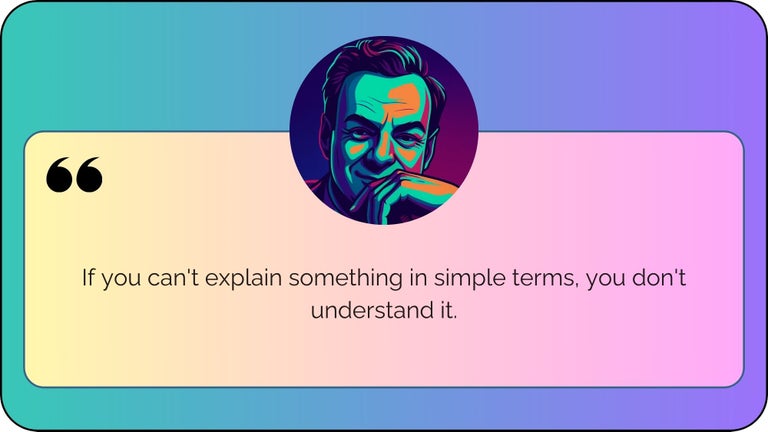
In the immortal words of Nobel Prize-winning physicist Richard Feynman:
Build a Personal Learning Environment That Makes You Work
Most personal learning environments are designed for comfort.
But learning ISN'T comfortable.
The real advantage comes when you build a system that fights back. That forces you to process, practice, and produce.
Studies show AI-powered training can increase learning efficiency by 57%. Combine that with deliberate design, and you get a compounding system that makes you smarter, faster.
Ready to take advantage of a real personal learning environment? STOP curating a feel-good archive. It's time to build a learning process that makes you sweat.
Similar post


Want to read more?
We have a lot more where that came from



 AI-first remote workers.