Contents
- Why Anti-AI Sentiment Is Rising So Fast
- 3 Ways to Survive AI Washing (That You Can Use Right Now)
- Take a Bird’s Eye View of AI Washing
AI washing isn’t real AI transformation. It’s when companies talk like they’re AI-first, act like they’re experimenting, and then use the language of efficiency and inevitability to justify bad decisions that land squarely on employees. Here’s how to survive it.
Everyone suddenly hates AI.
From an upswell in negative media sentiment, to employee job threats, to folks on Reddit raging about the next great conspiracy – the promise of AI has been dragged through the mud and put on display in the town center for all to see.
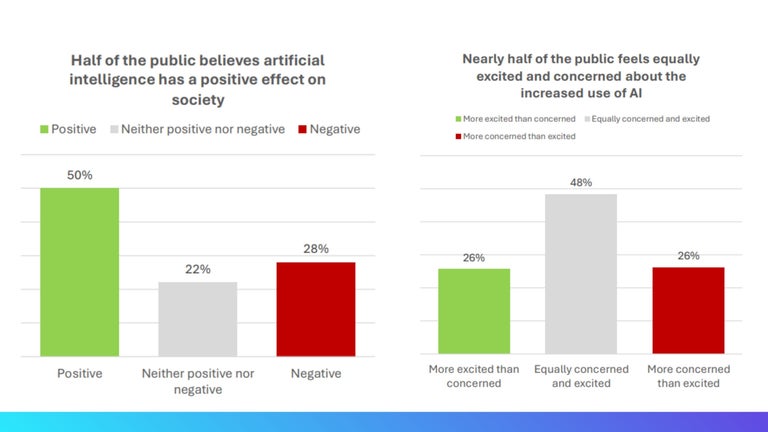
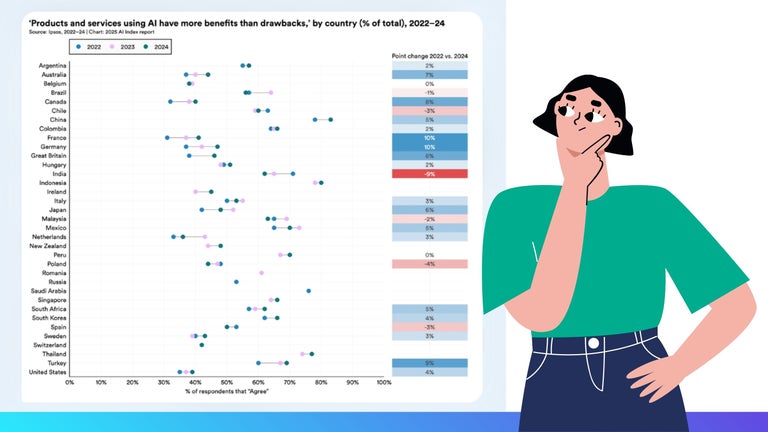
- According to the AI Global Public Opinion Tracker at USC, negative sentiment is up from 22% to 28%. With a total of 50% who believe AI isn’t positive for society.
- 74% of the public are equally concerned and excited (48%) and more concerned than excited about it (26%).
Most people seem flat out fatigued – and experts claim it’s because of the influx of AI content. Reports say, some 50% of the internet is already AI slop.
But is it the reason folks are falling out of love with AI?
People aren’t happy, especially tech people.
And this concerns me, because it’s making smart people complacent. It’s giving them an easy-out when last year was one of the hardest years yet.
This global confirmation bias is like a fresh-from-the-dryer blanket on an icy evening. Sure, it’s comforting now, but for how long? The winter cold isn’t going anywhere.
You’ve likely heard ‘the AI bubble is going to burst to the tune of $2.52 Trillian, and ‘AI is all fake hype.’ And this argument – the AI hype vs AI risk discussion has been enthusiastically embraced by key voices – the most grounded of whom recognize that polar opposites are great for debate, but leave out essential nuance.
Point being - perhaps you’ve picked a side.
You’ve taken these headlines and the upswell of anti-AI-ness as excellent signs that your dismissal (or tragic downgrading) of AI was the right thing to do.
Loads of people feel this way right now.
But I’m here to ground you with some chewy truths and hopefully point out something glaringly obvious to those of us working in companies where AI is performing as advertised.
The current tech climate is not an AI issue, it’s an issue of implementation by disconnected, detached leadership. And the joke will be on you for allowing the bad behavior of others to wreck your future prospects.
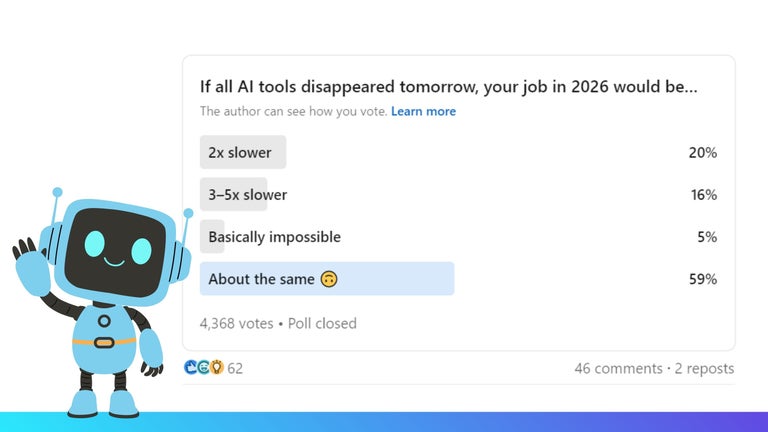
In a recent poll, we asked our LinkedIn community what their job in 2026 would be if all the AI tools suddenly disappeared. And 59% of folks said, ‘about the same.’
Most remote workers continue to use AI so infrequently that it might as well not exist. This, despite companies pushing HARD for AI adoption in the workplace. This, despite the massive and persistent skill gorge resulting between AI power users and everyone else. You’d think people in tech would be more…enthusiastic?
So, what in the name of Torrance Shipman has gone wrong?
AI washing, that’s what.
I want to slow things down in this article. We’ll look at why anti-AI sentiment is rising so fast, how AI washing is distorting expectations and damaging trust at work, and how tech workers like you can respond – without panicking, posturing or becoming a zombie in dead-end denial.
Let’s not embrace or chase the hype – let’s protect your future in an industry getting noisier, weirder and more AI-washed by the second.
Here’s how to survive AI washing at work.
Why Anti-AI Sentiment Is Rising So Fast
It’s been more than 3 years since November 2022, and ChatGPT changed the world’s understanding of AI. At the beginning it was roses and possibilities for remote workers.
Then came the grind and grapple – the tests and implementations.
This year (2026) is an adjustment year. A time when companies will streamline, redesign and discover how to auto-update processes to cope with multi-agent models that constantly change.
But it’s also the year unscrupulous leaders have to undo their mistakes, and appear as though the technology they’ve backed will STILL result in ROI.
Nearly overnight, AI went from famous to infamous.
That’s what happens when a vast (and commonly misunderstood) field like AI is rebranded from a promising productivity tool to a lurking workplace threat.
- AI layoffs are climbing – over 100,000 tech workers were told to hit the road in 2025, and way more are expected this year. Structural pressure is only expanding as leaders feel compelled to spend on strategy, automation and AI skill.
Tech leaders have been tying AI directly to performance pressure, increased workloads, and layoffs for quite some time.
I don’t think anyone minds automation, but they do mind being told something is the future - meant to drastically boost productivity and profits – all while their friends and colleagues are fired.
I’ve heard from friends that their company will host a round of layoffs, then a week later celebrate a record-breaking profit quarter, while their own pay hasn’t kept up with inflation. It doesn’t sit well with people.
And this really is the tip of the iceberg:
- Gaps are widening everywhere!
Between leaders and teams, between companies and consumers, between different generations of workers, and between those who DO, and those who wait and see.
- 87% of executives use AI on the job, while only 57% of managers and 27% of employees do. Globally, AI adoption assists leaders more often.
- 45% of executives use it more than Gen Z, who are AI-native.
- Companies are all-in on AI, consumers use it mostly for work and school.
AI is amplifying division at an alarming rate.
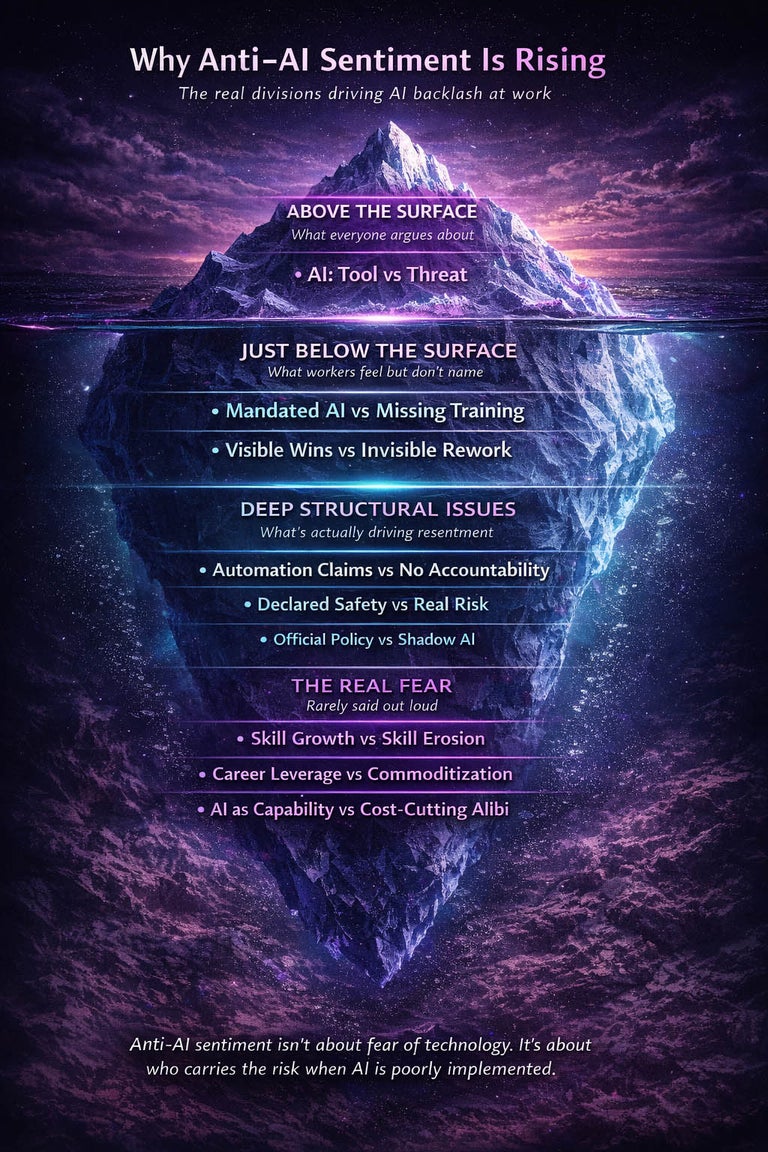
- What executives expect from their employees vs the reality on the ground: It’s not inspiring to be paid the same and told they have to learn 100 new things, transforming their jobs without any benefit at all to them. This makes it feel like a top-down trend instead of industry-wide coordinated transformation.
- The time investment vs the return. A large whack of AI companies can’t prove their ROI. When massive, complicated rollouts and integrations are performative – people get upset. A lot of the time, they’re held accountable. MIT says, 95% of these fail.
- The excitement vs the fear. McKinsey says people don’t need much to hate a new technology like AI. They just need it to be risky, and what most people fear is privacy and security. This relates to compliance at work, and directly impacts their jobs. What if they forge ahead with a shadow tool, and are fired for it?
Couple this with AI slop and suspicion growing between teams when secret chatbots are used for work, and you have a lot of people who have reason to dislike AI. Senior leaders are even saying that AI is eroding their hard-won skills.
I don’t think anti-Ai sentiment is irrational – it’s a response to rushed implementation, unclear ownership and leadership narratives that ask tech workers to trust systems they didn’t design, can’t see and constantly change on them.
So, in many ways AI is the perfect scapegoat for companies. They can look innovative while impacting good old-fashioned cost-cutting, profiteering and forcing their employees to work harder, for less. And they can do it in the name of progress.
Ah, the office. Aren’t you glad remote work exists?
3 Ways to Survive AI Washing (That You Can Use Right Now)
Right now, it feels like your brain is being scrubbed of common sense. You’re trapped in the middle of two confusing truths:
- AI isn’t fake – and it is changing how work is done
- AI isn’t being used well – most companies are winging it
Things are tense, and that’s why AI washing is spreading.
The important thing is that you realize this is also where you are at your highest risk. You’re being asked to adopt new tech, move faster, learn more, absorb company risk – all while staying grateful for your current pay, even as the rules keep changing.
It can be maddening!
Seriously – you can’t fix your leaders or what they want, and you can’t stop the hype train. But you can change how exposed your career is to it.
And no – you don’t have to become an AI advocate, or someone building a bunker to plan for the rise of Skynet. All you have to do is position yourself so that you’re not crushed by a changing system of poor implementation, whirling expectations and invisible value creation.
Here’s how to survive AI washing in 2026:
#1: Ignore The Nutty Extremes
You guessed it! Your job is to ignore the hype AND the horror. Find out for yourself how well AI can fit in your job.
AI washing is lousy with extremes, and they’re the real career poison you want to avoid.
- Companies and leaders say – “AI will replace everyone and create super profits!”
- While employees say – “I’m not scared of AI, it doesn’t work – the bubble will burst!”
Emotionally satisfying to be sure, everyone loves a good – evil story, but strategically this is useless for your career. Real progress happens in the grey zones.
We’ve been here before.
In the early days of the spreadsheet, professionals were similarly split. Some declared that spreadsheets would erase accountants from existence. Others said they were dangerous toys that encouraged sloppy thinking.
The pros who won didn’t pick a side. They experimented on their own and learned the reality of what the new tech was good at. They watched it break. The learned to double-check results and figured out how to use it best.
It’s a repeating pattern.
AI doesn’t need to be perfect to be important. It only needs to be useful enough in the hands of brilliant people willing to test it, instead of argue about it.
That’s what happened with spreadsheets. Adoption didn’t explode because they were magically or systemically flawless on launch – immediately proven within the year.
It spread because a small group of professionals experimented, learned where the tool failed, and figured out how to make it work anyway. Everyone else was trapped in the argument, too caught up to know better.
And the data shows the same split forming again now.
While AI use at work is rising fast, only a minority of workers are moving beyond surface-level use, even as productivity gains concentrate among a smaller group of power users. Gallup told us usage hasn’t really changed since 2024 among the majority – it’s all still chatbots and writing.
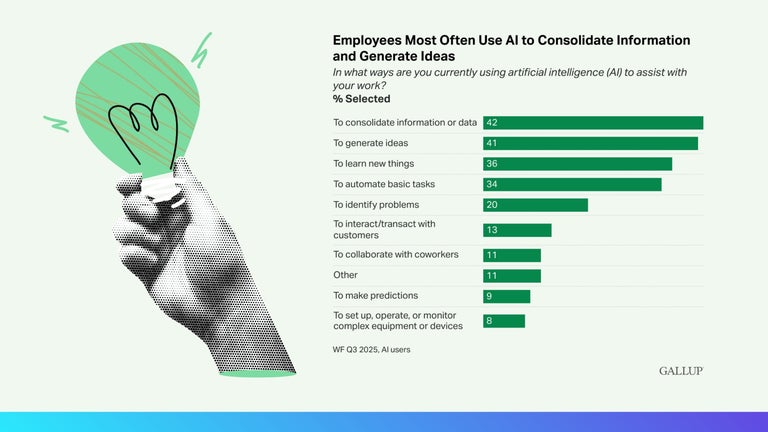
Couple that with the survey data that shows nearly half of employees are now more concerned than excited about AI, creating a false sense of safety in disengaging just as the capability gap widens.
And companies aren’t slowing down - 70% of them expect AI to materially change roles in the next two years, whether employees are ready or not. The direction of travel is crystal clear - what’s uneven is who’s keeping up.
That’s why anchoring your career to extremes is so dangerous.
Hype cycles and backlash come and go. But skill gaps compound! Just ask fax machine repair men who didn’t switch to IT.
So again - progress happens in the grey zone - where people experiment early, learn the limits, and stay close enough to the technology to judge it for themselves.
Ignore the extremes that trigger inaction or overreaction. The only real risk now is letting everyone else test it for you.
#2: Become an AI Boundary Setter
You need to become the person who can define AI’s limitations for your team.
AI washing blooms on the false idea that automation is quick, easy to scale and is totally risk-free. Of course, that’s just not true.
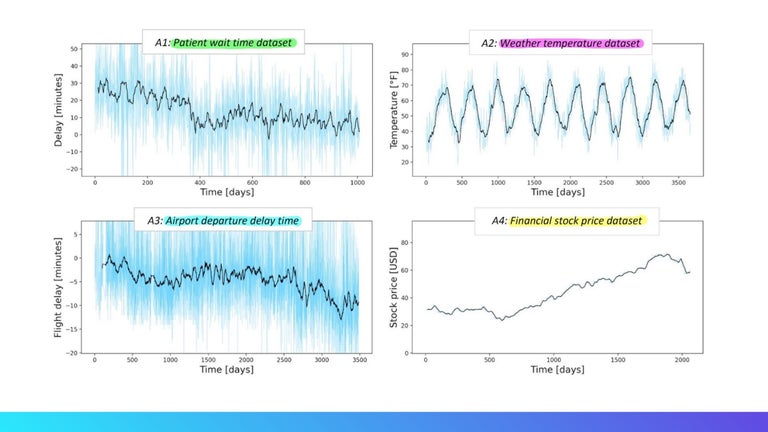
Studies in human-Ai collaboration show that AI systems work best in narrow, clearly defined domains. And when they aren’t there, they degrade rapidly – because context shifts, data drifts, and goals start to conflict with each other.
- 60% of companies don’t keep pace with AI data changes
- MIT, Harvard and Cambridge have said it – 91% of ML models degrade over time
- Without governance and monitoring errors can leap to 35%.
AI is supernatural at repetition – but wow do they lack judgement.
The trouble flairs up when leaders apply AI to work it sucks at handling.
- Ambiguous decisions (of any kind)
- Judgement calls where the stakes are high!
- Situations where failure is expensive, irreversible or public
You have to watch out for automation bias, complexity stacking and expanding costs. Companies that don’t define clear automation boundaries are prone to more rework, corrections downstream and when systems fail – blame shifting.
Opportunity: When no-one sets boundaries for AI, workers absorb the risk.
The role of a boundary setter:
- Which decisions need human judgement
- Which edge case breaks the system
- Where accuracy matters more than speed
- When to review AI output and who does it
This is pristine human-in-the-loop governance that will protect your job. A person who flags the risks early, defines escalation paths and anticipates where models will fail – these tech workers will win.
It’s an intentional move from being part of the cost system to the control system.
#3: Make Your Work Measurable With AI
AI washing is great at blurring responsibility and breaking how value is measured.
In most modern tech companies, performance systems were created when:
- Effort was plainly visible (visually)
- Work took time investment (logging hours)
- Output strongly implied contribution (tasks completed, boxes ticked)
AI haphazardly collapses all three, especially when you start using agents.
When tasks get faster, leaders stop seeing how your work happens and start judging only on what ships. That’s quite dangerous for people at the office, more so for remote workers who are already invisible a lot of the time.
What the data says (and why it matters)
- Most AI gains don’t show up in traditional performance metrics! A recent industry analysis aligned with MIT Sloan research found that 85% of employees don’t use AI in ways that drive any measurable business value, and fewer than 3% integrate AI into workflows that matter.
- Managers are saying they struggle to evaluate AI-augmented work fairly… because they can’t tell what’s been automated, accelerated, or thoughtfully designed. Yikes! Yet, some 88% of leaders say they’re being measured on AI use.
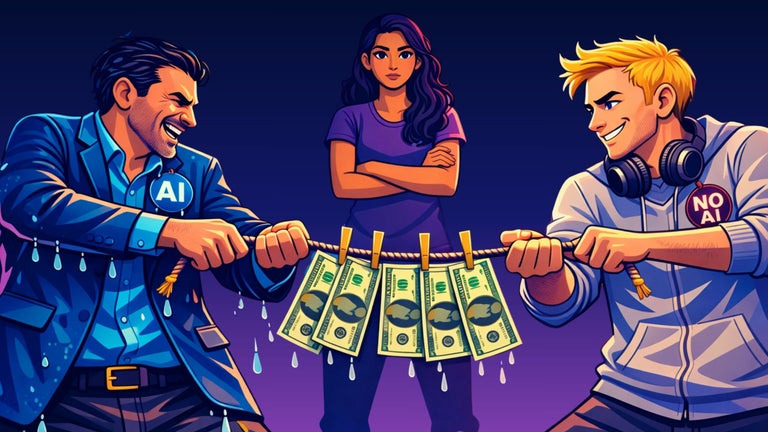
While this is going on companies are tightening performance reviews - despite faster tooling. You will be measured on AI, if not now – soon.
This is the trap of AI washing: Work gets faster, expectations rise, and credit doesn’t follow. That’s how people end up doing mountains more while looking less essential.
The non-obvious move is to expose the delta.
The smartest tech workers right now are making the before-and-after delta visible.
They don’t say:
- “I delivered this faster.”
They show:
- What would’ve taken 3 lengthy weeks without AI
- What AI handled vs what required human intervention
- Where risk was reduced, not just speed increased
- What didn’t need escalation because it was designed well
That turns an AI threat into evidence of leverage. With AI washing everywhere you eliminate the vagaries that threaten your position.
It’s never good when everyone sounds the same - so the person who quantifies impact will stand out.
- Workers who tie outputs to measurable outcomes are significantly less likely to be flagged as redundant during restructuring
- People who can articulate how AI changed the work are more likely to be pulled into planning, not cut from execution.
Here’s what it looks like in practice:
- Track your time saved - but also where time wasn’t saved
- Separate AI-generated work from human decisions
- Call out risks avoided, not just tasks completed
- Write short notes on what AI helped with (and what it couldn’t)
What you’re doing here is documenting value creation in a distorted, imperfect system. In a company fraught with AI washing – performance is murky at best.
The people who survive are the ones who filter the water. Make your contribution legible and visible in a system that doesn’t know how to measure humans properly...yet.
Take a Bird’s Eye View of AI Washing
So, how do you survive the onslaught of AI washing?
It starts with putting an end to your confusion. About what AI can do, who owns the risk and how that value is measured once the work speeds up.
Confusion always harms employees first. But the conversation and arguing over who is right or wrong about AI is moot. Just like the conversations about the automobile, the telephone, the internet, and the quantum supercomputer.
All moot. Each arrived (or will arrive) and the world was changed.
If you’re growing your tech career, the truth is all that matters: Quit picking sides, and be on your own side.
AI washing can only threaten you if you ignore it, deny it or let it define you.
Take a bird’s eye view perspective:
- Ignore the hype/hate extremes so you don’t freeze or overreact
- Set boundaries so you don’t absorb the failures you didn’t design
- Make your contribution visible so speed doesn’t erase your value
Together these three little moves will help you sidestep out of the blast radius. Don’t forget – AI washing is meant to turn capable people into scapegoats and expendable labor, by blurring judgement, accountability and workplace impact.
Don’t let bad leaders ruin your great career.
AI will keep changing, leaders will keep changing the narrative on you and there will never be a moment when these great divides don’t seem polarizing and vast.
What’s clear is that tech workers who survive this won’t be the most opinionated, the fastest, or the ones most set on their own ideologies.
They’ll be the ones who stayed curious.
That’s how you’re always ready for the future of work.
Similar post


Want to read more?
We have a lot more where that came from



 AI-first remote workers.