Contents
- Step 1: Be the architect, not the coder
- Step 2: Fine-tune intelligence for your context
- Step 3: Build your AI team
- Step 4: Become the AI manager
- Step 5: Cross the machine-human bridge
- Stay Ahead When AI Replaces Software Engineers
Can you adapt before AI replaces software engineers? The next wave of automation won’t target the underqualified - it’ll target those who mistake coding for engineering. Your raw coding chops won't help you dominate, but we know 5 steps that will.
AI WILL replace software engineers who cling to code. And it’ll reward those who grow into something bigger.
Software developers and engineers everywhere are leaning on artificial intelligence (AI) to code and ship better than ever.
The productivity bump is obvious. But the danger isn’t.
Most - regardless of years of experience - hand off execution, but fail to reinvest in the things AI can’t handle. And they’re walking blind into a future where they’re replaced by the handy helpers they lean on today.
An opportunity lives on the other side of that trap.
Smart engineers don’t outsource to AI. Yes, they reap those sweet, sweet productivity gains. But they do it by strategically retooling themselves to own the structural and human layers that make AI effective.
Because in a world where AI can burn through the repetitive work, the real value shifts to those who can steer the ship.
Trying to adapt before AI replaces software engineers? Take these 5 steps to position yourself as a leader in the AI age.
Step 1: Be the architect, not the coder
If you still see yourself as a 'coder,' you’re behind.
As of 2024, engineers everywhere (82%) were already leaning on AI to generate their code. And these same engineers expected automation to expand into documentation (~81%) and testing (~80%) this year.
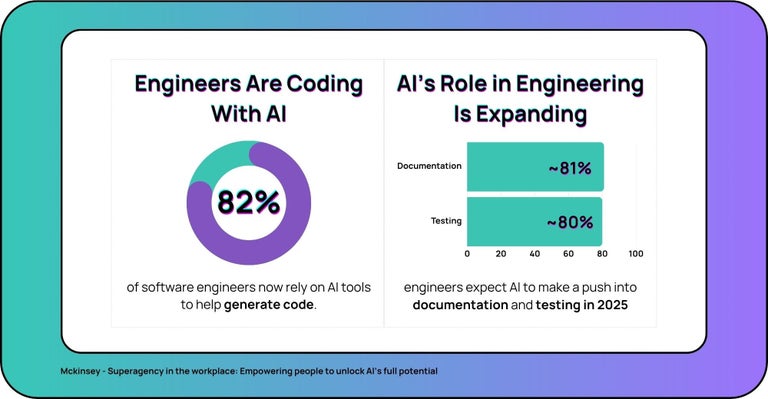
AI automation is dominating production... and now it's moving onto the guardrails. You need to own the architecture around it.
Because architecture is where human judgment outmatches automation.
Reasoning through how components connect, designing how data moves, building systems around privacy, reliability, and bias control. Here's where human foresight sets the conditions for AI success.
This is a career-defining moment for engineers everywhere.
Stick with implementation, and you’ll end up competing with a machine that outpaces you every day of the week. Shift to architecture, and you position yourself as the person who defines where and how those machines operate.
When code becomes mass-produced, the blueprint is what matters. And the engineers who own that blueprint decide how the system flows and grows.
Step 2: Fine-tune intelligence for your context
You’ve drawn the blueprint. Now you need to shape the intelligence that runs inside it.
Off-the-shelf models are generalists - trained to respond to a million different use cases. That makes them useful, but rarely optimal.
Fine-tuning is where you transform a blunt instrument into a precision tool. It’s how you take a model that 'knows a bit about everything' and teach it to speak your language, and solve your problems.
And the payoff is very real. Professionals with good or expert AI knowledge are nearly 3x more likely to see measurable benefits from AI. And that comes down to their ability to shape AI for a mission.
For engineers, that means developing the instincts to zero in on what the model actually needs to know. Gathering, cleaning, and structuring high-quality data until it’s fit for purpose. And being able to evaluate and tune performance with the right mix of metrics and human judgment.
This is the big ask of engineers today - the kind of work that separates those who tinker from those who lead.
Great AI can't be used like a generic plugin. Engineers able to tune it to their mission WILL win.
Step 3: Build your AI team
One model is a tool. A team of AI agents is a personal workforce.
Agents are proactive. They’re able to plan, recall, adapt, and carry out tasks without your undivided attention. That shift - from tool to teammate - is where we're heading.
And we're moving fast.
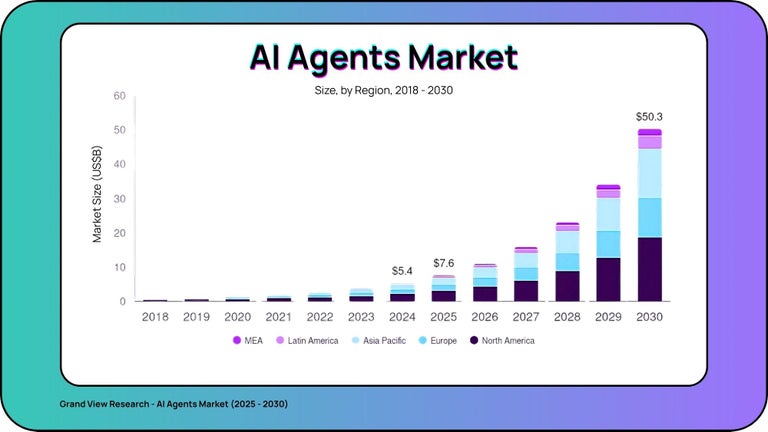
The global AI agents industry was valued at over $5.4 billion in 2024, and it’s projected to grow to more than $50.3 billion by 2030.
But scale doesn’t equal success.
Gartner predicts that over 40% of agentic AI projects will be canceled by 2027, weighed down by hype-driven experiments, unclear ROI, shifting governance, and cost. Execution may be possible, but it takes smart engineering to make it work.
That means turning away from flashy demos and focusing on problems that justify the cost. While making sure your agents can act boldly and autonomously within the guardrails you’ve set.
You can't just 'make an agent.' You need to create systems that can sustainably execute over the long term, WHILE driving real world results.
And the value is high for those who get it right.
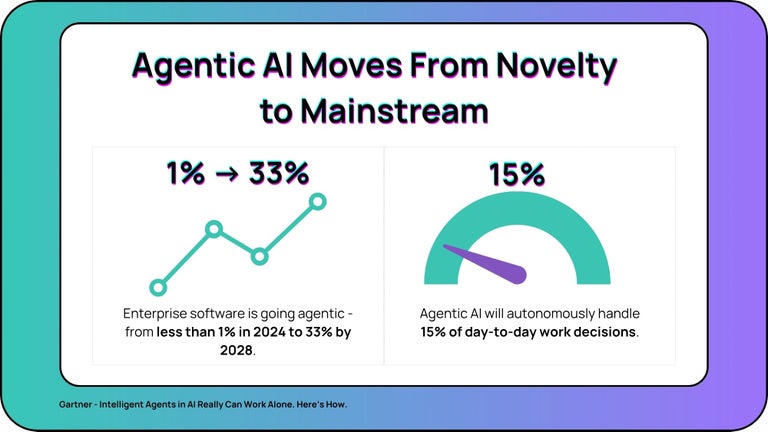
Gartner projects that by 2028, a third of enterprise software applications will include agentic AI, with 15% of day-to-day decisions made autonomously. The engineers who thrive will be the ones able to build and guide the AI teams behind that reality.
Step 4: Become the AI manager
The more your agents can handle, the less classic engineering sits on your plate. Smart engineers are already positioning themselves as managers of this new AI workforce.
Agentic systems can execute tasks with less and less guidance - churning out raw code faster than any human alive. But the quality of that code relies on something else.
Problem solving. Creativity. The ability to work with emerging information and rejig a plan in real time. These are the real world thinking skills AI doesn’t have - but can’t succeed without.
Smart engineers hone these unique skills into managerial instincts, becoming the steady hand that holds the agentic process together.
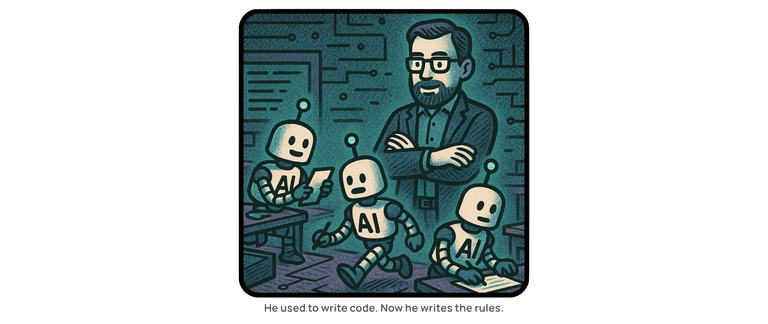
And the deeper the AI bench becomes, the sharper the need for someone able to steer it. Someone able to set priorities, balance trade-offs, guide the process end-to-end, and own the definition of success.
Companies need engineers who make sure the process delivers the outcome, not just the output. You need to become that manager-engineer hybrid.
Step 5: Cross the machine-human bridge
AI is powerful, but it's hard to understand. Companies need engineers who can translate business goals to AI - and AI outcomes back to the business.
Almost all companies are pouring time and budget into AI, but only 1% believe they’re anywhere near maturity. That gap in AI understanding is a bottleneck you can solve.
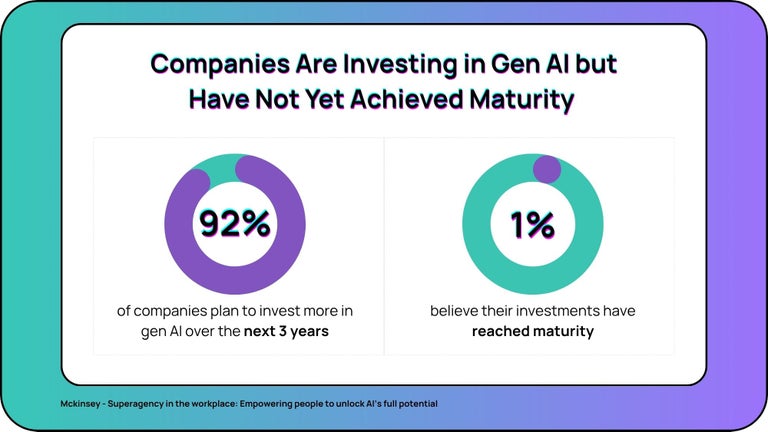
But it'll take becoming fluent in two directions.
You need to be able to sit across from leaders to draw out what really matters, then shape those priorities into instructions your AI teammates can act on. And when the outputs roll in, you need to be able to complete the loop - carrying them back across the table in language decision-makers understand.
Human-only organizations are already a tangled web of communication. Add AI teammates into that mix - and all that complexity living under their hood - and the opportunity for confusion multiplies in ways most companies aren’t ready for.
Smart engineers are already fluent in AI. If you can expand to cover the human side of the AI-human communication gap, you become an irreplaceable asset.
Stay Ahead When AI Replaces Software Engineers
AI isn’t coming for software engineering. It’s coming for software engineers who think their value begins and ends with code.
AI is scaling the execution layer faster than anyone imagined, and the engineers treating it like a shortcut are quietly AI-outsourcing themselves out of the job. Those who stay standing see AI as a collaborator and are evolving alongside it.
Getting prepared comes down to 5 must-take adjustments:
- Own the blueprint, not the bricks
- Make AI work the way you do
- Build your AI teammates
- Lead your invisible AI workforce
- Bridge the human-machine language gap
You can't settle for just coding faster. You need to think higher.
Because if you can master the thinking skills behind designing, tuning, and leading systems that work with AI, AND you can bridge the machine–human divide, you’ll be standing exactly where the future needs you when other software engineers fall.
Trying to adapt before AI replaces software engineers? Start now, and build yourself into the kind of engineer no algorithm can replace.
Similar post


Want to read more?
We have a lot more where that came from



 AI-first remote workers.