Contents
- Huggers vs Hoppers: Two Sides of The Same Coin
- The Psychology of Job Hugging: Functional Freeze Mode
- Are You a Job Hugger? Here are The Signs
- What Top Performers Do Instead of Job Hugging
- Job Hugging Won’t Save You, But This Will
Think job hugging will make you safer or richer this year? You’re not alone - but you’re also dead wrong. In this article, I unpack why clinging to your current role could be sabotaging your long-term success. You’ll learn how fear-based career moves backfire, how top performers turn fear into focus, and get 3 bold shifts that protect your future - no matter what the market throws at you.
It’s the start of a new year. But is it a good time to switch jobs?
Top performers have always benefitted from high job mobility. But last year (2025) brought big changes - and for the first time switching jobs DIDN’T lead to better pay and progress like it had in the past. At least, not for the average worker.
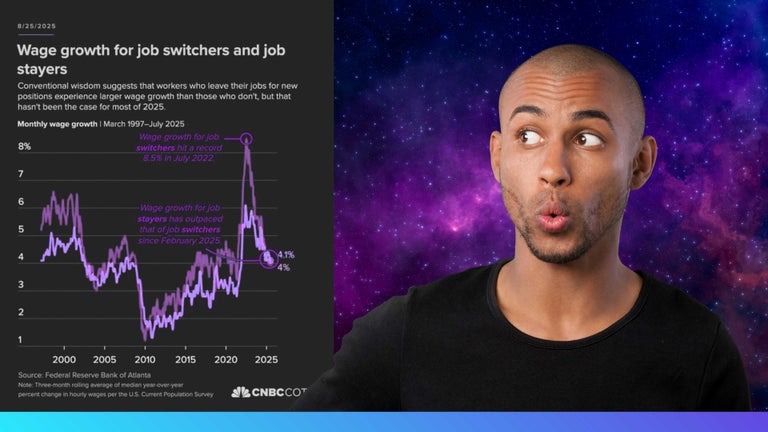
Step aside job hopping every 1-3 years! That once-reliable pay boost that outpaced inflation is harder to nab than ever. In its place is a new trend: job hugging.
Thanks to the shaky US job market, regular layoffs and mounting fears around AI fluency and automation – folks are deciding to STAY in the jobs they have.
According to Monster’s 2025 Job Hugging Report:
- 75% of workers are choosing to stick to their jobs through 2027
- 26-27% of them cite pay, benefits and job security as the reason
- 63% of people say MORE people will stay put in 2026
- 45% see this as a neutral move (only 8% see it as negative!)
This fear-driven strategy has triggered a global freeze response in tech.
Worse still - the job hug seems tighter for remote workers, where staying remote in these in-demand roles often means staying at the top of their game.

Job hugging may feel like career security – but it certainly isn’t.
The punchline is that it only protects your paycheck if you’re actively building your own career security. Most people aren’t.
Top performers know the difference, and they stay moving and agile when others grind to a sudden stop. So, whether you’re planning to stay or switch jobs this year, you need to make sure it’s intentional – and not just a reaction to fear.
That means understanding why playing it safe could be the most dangerous move of all – especially in remote work.
I’m going to help you spot the signs of job hugging and show you what top performers are doing to keep growing while everyone else stands still.
Huggers vs Hoppers: Two Sides of The Same Coin
For the longest time job hopping had a bad rap.
Those of us who did it were seen as disloyal or unreliable – which was a red flag for recruiters. Of course that’s a tired, old-school mindset that doesn’t recognize today’s tech reality.
The global tech market is relentless, ever-changing and incredibly unstable.
People who were job hoppers weren’t reckless, they were responsive! They were the young strategic minds who recognized that staying put meant staying stagnant.
And top performers always switched jobs for good reasons.
Strategically, it built connections, skills, and value MUCH faster than staying in a job for too long. It’s what drove many people to start working remotely pre-2020, seeking higher pay across borders at better companies.
Job hugging is on the other side of this familiar coin.
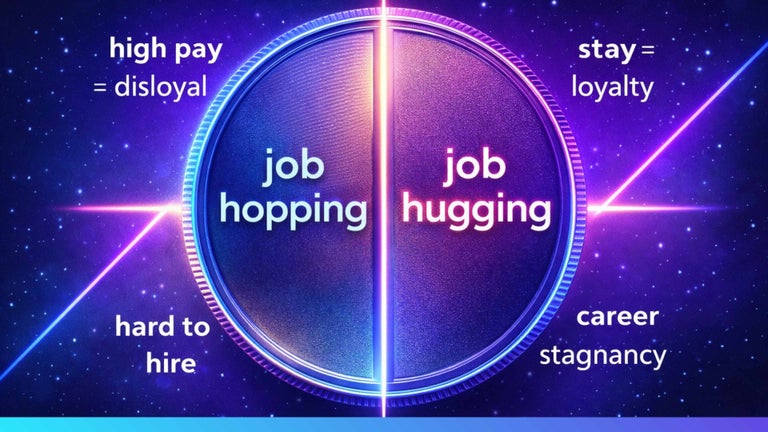
While it gets praised for being loyal, a return to ‘old school values’ and stable – it’s none of those things. The fact is that most job huggers aren’t staying because they love their jobs. They’re staying because they’re terrified of losing what little they have.
Everyone in tech is scared. And that’s when freeze sets in.
The Psychology of Job Hugging: Functional Freeze Mode
Ever heard the phrase ‘frozen by fear?’
In psychology there are two ultra well-known states for your brain – fight or flight.
But freeze is the lesser known (and WAY more common) response. In the seventies, Gordon Gallup Jr spoke about something called ‘tonic immobility’ which happens when animals play dead in response to a predator.
That response isn’t only for wildlife. It shows up in people too – especially when under unprecedented career and social pressure – the kind we’re all currently under.

When the brain detects a threat (like looming layoffs, constant and increasing AI disruption and expectations, vanishing remote roles and RTO headlines for example) - the amygdala floods your body with stress hormones.
The parasympathetic nervous system kicks in to ‘asses the threat’ – not ACT.
So, you freeze. You stay frozen. And you keep hugging your job. It’s not that it’s helping you (though many will default to believing it is in this climate) it’s that doing NOTHING feels far safer than doing the wrong thing.
And who knows what the right thing is these days?
Brené Brown is a leading voice on unmasking fear in the workplace.
And she says, “If you’re leading people, you probably know people are not okay… people are emotionally dysregulated, distrustful and disconnected.”

She also says, “stay in the discomfort zone.”
A few years back I took Krav Maga classes where we trained to break out of this functional freeze state. One of the first lessons was – you can’t think your way out of it.
You have to keep moving.
The entire tech industry is in a state of functional freeze. Job hugging is a symptom of the rampant burnouts, changes and challenges of 2025. It’s causing smart people to do the one thing they’ve been taught not to do – nothing.
Uncertainty will rob you of your career progress this year. Don’t let it!
Top performers don’t freeze – they fight.
Are You a Job Hugger? Here are The Signs
Before we explore what top performers do differently – here are some big neon flashing signs that you’ve slipped into a job hugging pattern. Even if you’ve been performing well on paper!
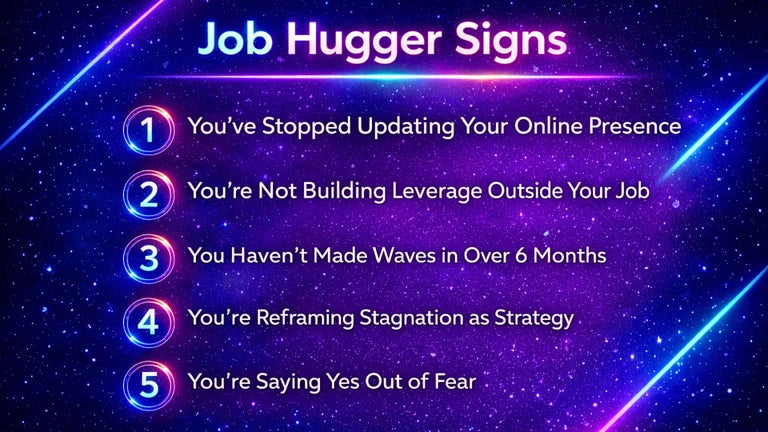
#1: You’ve Stopped Updating Your Online Presence
Social evidence suggests that highly engaged professionals always keep their online profiles updated and respond to new opportunities – regardless of whether or not they’re looking for a new job. If you haven’t looked at yours in a while… you’re job hugging.
Why are you hiding?
#2: You’re Not Building Leverage Outside Your Job
If every skill you’re developing only makes you better at your current job, and not more valuable to the market - that’s a trap. A lot of roles are so narrow that there aren’t transferable or portable skills that would help you secure a better position in the future.
Real leverage travels.
#3: You Haven’t Made Waves in Over 6 Months
If you’re not pushing for that promotion, or initiating uncomfortable career-defining conversations – you’ve chosen comfort over progress. Top performers ask for the raise, they suggest big changes, propose switches and offer fresh ideas.
#4: You’re Reframing Stagnation as Strategy
The ‘wait and see’ approach is only good for ornithologists. If you’re just consolidating right now, waiting on the ‘weird’ market or doing what you’ve always done – you’ve chosen stagnation.
That’s not strategy, that’s fear.
#5: You’re Saying Yes Out of Fear
The clearest signs of job hugging show up on your calendar. You put in more hours, take on more work and go the extra ten miles because it feels risky NOT to put your mental, emotional and physical health on the line. Sacrificial over delivery is job hugging.
You’re in survival mode.
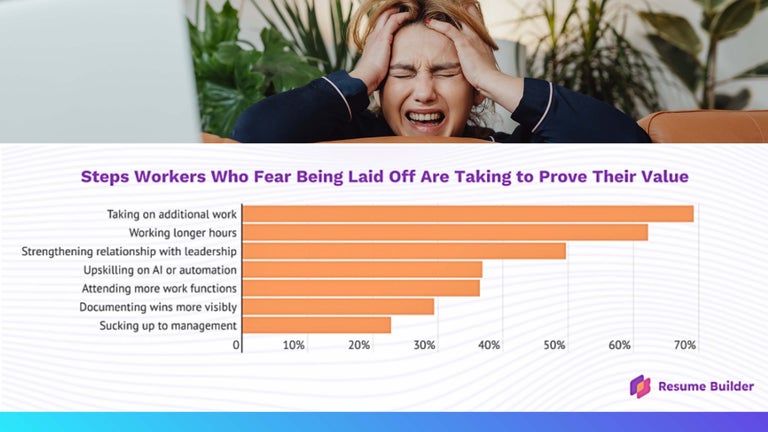
If you’ve been hugging your job a little too tightly, you’re not alone. But here’s what the top 1% are doing differently - and how you can start today.
What Top Performers Do Instead of Job Hugging
There are three things top performing remote workers always do to make sure that they’re creating career momentum, and earning higher pay each year – regardless of the various external market changes snapping at their heels.
1: They Create Career Security (NOT Job Security)
I’ve said it before - the biggest risk in the global tech market is never taking any! Nearly 48% of workers say that they’re staying in their jobs because of economic uncertainty. For millennials at the peak of their careers, that means trading ambition for survival.
That’s a great way to end up losing everything.
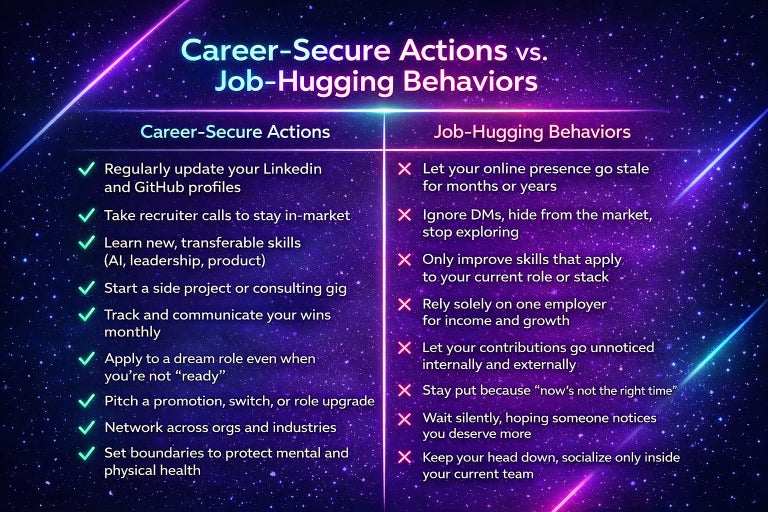
Career security means acting autonomously, in your own best interests – not handing your security to companies who rarely see you as anything other than a resource.
2: They Create Momentum BEFORE They Need It
Job huggers love to wait for certainty that never comes.
Instead of wasting time on that nonsense, top performers build momentum before they need to act. It seems counter-intuitive to do more once you’re happily performing in a great role, and there’s literally nothing wrong enough to justify change – but it’s extremely useful.
You’ll never see a top performer waiting for layoffs, sweeping AI changes or burnout to force their hand. These individuals are constantly in motion, even when they plan on staying put.
Small, intentional moves matter:
- Explore internal opportunities and switches before boredom sets in
- Test new skills through learning sprints, side projects and certifications
- They keep talking about their findings using it to create conversations
This is critical for remote workers because jobs are super scarce. You’re facing global competition at the highest level. The last thing you want to do is forget to progress – then be faced with the reality of how far you’ve been left behind.
Don’t forget – hiring is a mess right now. Job scams are on the rise, and it can take months to secure another high paying job in your field – if you’re lucky.
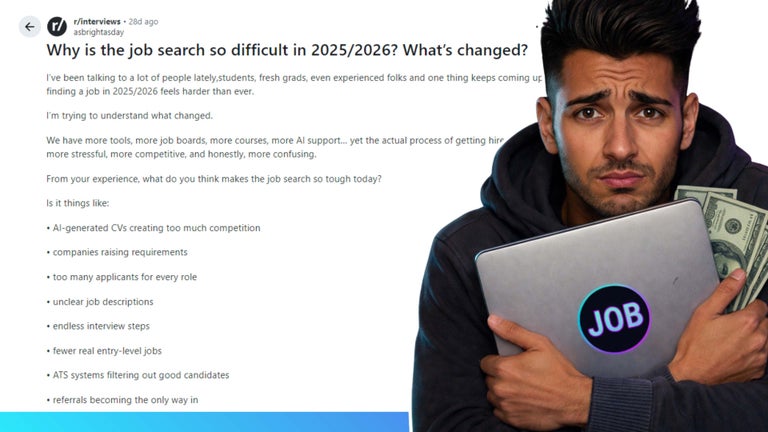
But staying in your job won’t protect you – staying ready does.
Momentum lowers the psychological cost of job switching. Waiting feels safe, but the longer you wait, the harder it gets to move. It pays to keep your skills sharp, your network alive and options open.
That way when change comes (and it always does) you won’t scramble – you’ll slide. Because you never stopped moving.
3: They Turn Fear into Focus
It seems that fear is everywhere these days- and top performers are taking notice. There are dozens of external reasons to dig your heels in and cling on for dear life.
But fear-based retention will cost you everything that protects your career – better pay, higher innovation and improved engagement.
Don’t pretend you’re not scared. Instead, do what top performers do – they think about their fear (metacognition) and don’t let it fuel their decisions.
Instead of reacting with silence, overwork and self-sacrifice they channel it into clarity.
- Think about what you REALLY want next
- Set yourself new learning goals and blaze ahead
- Get out of the burnout cycle asap (don’t double down on it!)
- Have those uncomfortable but entirely necessary career conversations
Fear is a great sign that action must be taken.
Every new year I spend a weekend reviewing my goals and priorities for the coming year. I meditate on what I want, and who I want to become. I acknowledge that life offers us many paths to success, but that it’s up to us to choose the ones to travel down.
But whatever I decide, traveling is the point.
Fear-based decisions protect the present. Focus-based decisions build the future.
Job Hugging Won’t Save You, But This Will
So, is it a great time to switch jobs right now?
Not for everyone.
But for the right person – the one who’s ready, focused and in motion – it could be the most important move you make ALL year.
Still, that’s not the right question to ask.
Because job switching – whether it’s hopping or hugging – are both surface-level moves governed by a system that tells us one thing and does another.
We’re told pursuing higher pay makes us disloyal. We’re told staying put is safe, when it puts our entire careers at the mercy of a broken system.
Well, you can change your title and still feel stuck. And you can stay in the same job for 10 years and grow into a titan.
The rules that matter aren’t the ones handed down by a fickle market, your manager, or the mood of the economy. They’re the ones that you set for yourself.

That’s why the real question is:
“Are you becoming the version of yourself that your future deserves?”
Top performers don’t measure their success by movement alone – they measure it by the momentum they create and the journey they’re on.
So, take comfort in knowing that there are many paths to walk and as many forks in the road. Even if you choose one over the other, the point is that you’re on your way. That you face them with focus and intention – and that you build when everyone else breaks.
You deserve harder problems and higher pay. More room for life, and not less! A career that expands instead of constricts with time.
Whether you stay or go this year, forward motion has to be the goal.
So learn, explore and ask for more. Choose growth even when fear is loud.
Security doesn’t come from holding on tighter, it comes from knowing you can let it all go – and still rise. And if you’ve reached the point where you’ve outgrown your role, where your ambition feels bigger than the room you’re in – then maybe – this IS your moment.
Not because you’re running or hiding from something. But because you’re finally moving toward who you’re meant to become.
Similar post


Want to read more?
We have a lot more where that came from



 AI-first remote workers.