Contents
- The Flashy Allure of Job Perks
- Polling The Perk Reality
- What Perks Do People Want in 2025?
- Who REALLY Benefits from Job Perks?
- The Absolute Myth of Office Work Life Balance
- Rejecting The Tradeoff
- Making The Right Choice (Perks vs Pay)
Are free lunches and rooftop yoga really work-life balance…or a corporate swindle? For years, tech giants have dazzled workers with fancy perks that look like care but feel like control. Behind the ball pits and baristas are tax breaks, productivity hacks, and strategies to keep you tethered to the office. Today, we rip off the corporate hypno-glasses to expose why perks aren’t the gift you think they are - and what you should be aiming for instead.
Job perks are in high demand – people absolutely LOVE them.
And why wouldn’t they? Working for a perk-rich company in tech has been the dream since people started sitting behind screens.
Before that, even.
- Google offered free gourmet meals and a rock-climbing wall
- Microsoft countered with a mini city, shopping mall, treehouses and a lake
Tech companies have long been in an arms race of extravagance. Comparably even ranks firms by perks and benefits - though Google didn’t even crack the top 10 last year.
Lavish employee lunches in the all-free cafeteria, massages by an in-office health therapist and office fitness classes are up for grabs if you pick the right workplace.
Plus, they’ll pay for extensive maternity and paternity leave, and give you discounted insurance on TOP of group medical aid.
You’ll never have to do your own dry cleaning again.
What a sweet deal.

So sweet, you barely notice the behind-the-scenes economics or the real hidden costs involved. Especially in non-US tech hubs.
The brussel sprouts wrapped in glazed bacon.
The inky truth is that perks are designed to supercharge your performance at work, not your life outside of it.
And globally, governments make it easier for companies to disguise perks as generosity - because they’re rewarded with tax breaks, lower employee costs, and serious productivity gains.
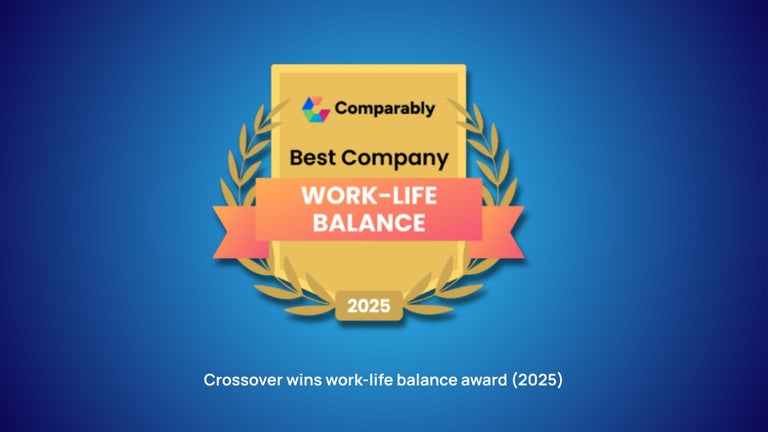
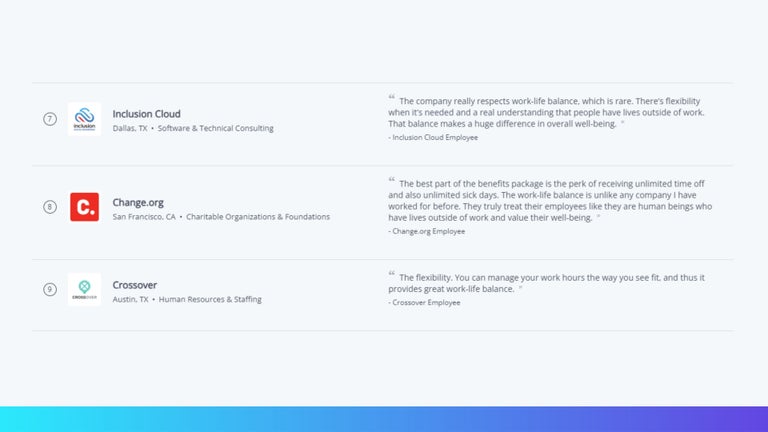
At Crossover, we just won Comparably’s Best Company for Work-Life Balance Award (2025).
And we don’t offer any perks. Not a single free baguette.
So, let’s take off the corporate hypno-glasses and see job perks for what they really are - a trade-off you should ALWAYS question. Especially as your career takes off.
The Flashy Allure of Job Perks
I’m not saying perks are a BAD thing.
They can make toxic workplaces tolerable, even enjoyable. Many of us have fond memories of free lunches, messy staff Christmas parties, and in-office fitness classes.
But this isn’t tech PRE-Covid.
The world has changed, and so has the job market. I’ve written extensively about the breakdown of job security in tech, the rise of RTO and mass layoffs, and how AI is widening knowledge gaps, everywhere.
There is SO much evidence that top talent no longer prioritizes perks over pay – for good reason. That’s what this is about – bringing it back to current day reality.
Workers no longer fall for perks the way they used to - because they’ve woken up to the trade-off.
Polling The Perk Reality
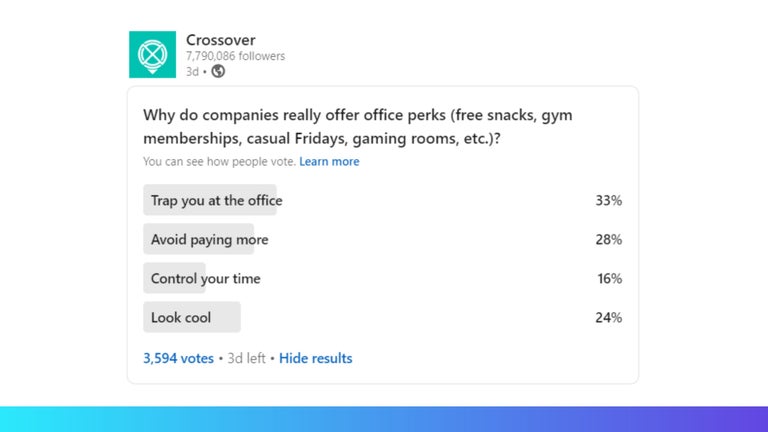
We polled our LinkedIn community to ask about the REAL motives behind perks.
Many people answered with a healthy level of skepticism, but many also defaulted to defending perks - saying that they promoted social connection, and make life better at work.
Of course they do, no-one is disputing that perks ARE perks.
What we want to do is help you understand who is really benefiting from them, and why you should play closer attention to your perks package when job hunting.
Newsflash peeps: Perks aren’t for you, they’re for your employer.
Of the 3594 people polled in 2025:
- 33% said perks trap you at the office
- 28% said companies use them to avoid paying you more money
- 24% said perks were designed to make them look cool
- 16% said companies want to control your time
Yes, all of these options were biased.
They speak negatively about a good thing people are terrified of losing – contentious stuff in 2025 when perks are drastically being reduced!
That’s not what we’re trying to do. People who choose to work in offices should have perks, and LOTS of them. But not at the expense of fair pay and flexibility.
It’s no secret we believe office culture is largely BS for knowledge workers.
For most people your perks will continue to decline as we shimmy into 2026. If they expand, increase or explode – you really need to see them clearly.
Companies are getting leaner and meaner in many ways. It’s the cost of doing business when systems take over from people.
Just this morning I read how Starbucks has laid off 900 workers, including a recruiter who was on maternity leave. Her perk made her a target!
On the other hand you get AI-skilled individuals being offered perks that would make Elon Musk blush.
Whatever reality you face, face it knowing what the trade-off is for you.
What Perks Do People Want in 2025?
Living La Vida Loca may have been all the rage in 2017, but the pandemic woke a LOT of people up from a kind of panic-induced busyness stupor.
Tech workers were entranced by onsite perks, but these were uniquely designed to keep them at work, performing, healthy and engaged in office culture.
Many of the highly publicized perks (like Microsoft’s mini city or Google’s cafeteria) DID improve the lives of their workers. Making them happier, healthier and more motivated to sacrifice ALL OF THEIR TIME to work.
Yay?

The pandemic really messed that up for them.
People went home, and suddenly realized an hour playing inter-office quidditch was not equivalent to seeing your daughters’ first steps. Or being available for your nona’s 90th birthday breakfast.
Suddenly, it all felt like a total swindle.
There were consequences for these companies (but I’ll get to that in a minute) when they realized their workforce didn’t want to come back for table tennis and free drink Fridays.
The illusion of work-life balance was shattered.
According to Robert Half’s 2026 US Salary Trends Report:
- Financial incentives (bonuses, stock options, high pay)
- Work-life balance / remote work (paid time off, hybrid, flexible hours)
- Retirement planning (employer matched plans)
These are the top 3 ‘perks’ people are motivated enough to leave their current jobs for in 2026. It’s quite telling that Robert Half classifies work-life balance in the same category as remote work.
We certainly do.
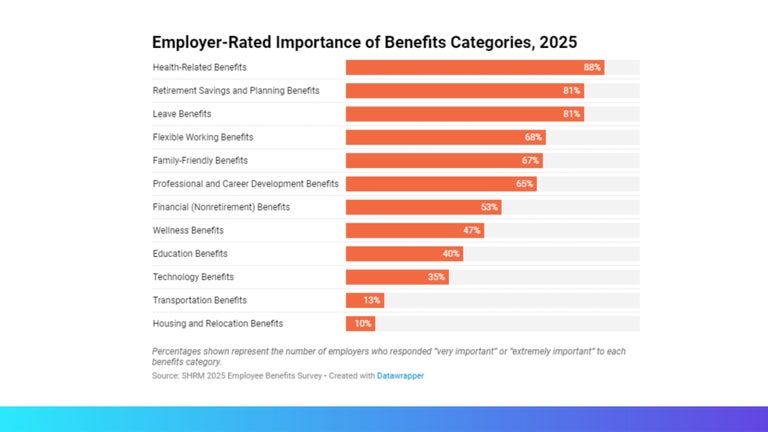
*A second data set from SHRM for context. Health and flexible working still on top.
Because remote work is the ONLY way work-life balance can exist. You’ll also notice that no-one is expressing extreme desire for office ball pits anymore.
Who REALLY Benefits from Job Perks?
First the obvious – advertising job perks has always attracted talent, projected an image of employee care and has kept people from leaving the company.
This alone saves companies a lot of money, if you consider the cost of attrition, hiring and training of new employees that will fit your company culture.
But there is a stronger business strategy at play.

When companies claim that most job perks improve work-life balance, they are horribly distorting the truth.
Consider:
- Perks Create Corporate Dependency: Great office culture with exceptional onsite perks can be corporate control disguised as care. An environment built to keep people at the office and with their colleagues, has zero work-life balance benefit. What it does have, is work benefit – blurring the lines for employees, amping up job loyalty and making people dependent on the office for social and wellness needs. Perks can be a tool for keeping people AWAY from real life.
- Perks Cut Taxes for Companies: Yes folks, perks are a tax strategy. In most countries, providing perks for your employees comes with nice tax deductions that save the company a LOT of money. Never mind office buildings standing empty, what about the onsite gym and wellness programs, the free food and massages that have to be cancelled because your employees are at home now? Asking for benefits like MORE pay? Outrageous. Better to get them back to recoup costs, drive up profits and resume lowering of taxable income. Tax breaks and exemptions save companies millions at scale. Why pay higher wages when you can funnel money into perks, lower your tax bill, and look generous doing it?
- Perks Improve Productivity and Performance: When people have loads of onsite wellness benefits it really pays off for the company! Less absenteeism, lower insurance costs and much, much higher performance rates make these perks extra attractive. Harvard research shows $1 spent on wellness saves $3–$6 in healthcare and absenteeism costs. It’s far cheaper to set up a gym at work and deduct the cost of the equipment (while excluding the value from employee pay) than paying workers the same amount in fair wages. Plus, group discounts on insurance and tax deductible (but limited) medical aid makes it worthwhile.
These perks are good for employees, but GREAT for employers. And that wouldn’t be such a bad thing if employers prioritized the actual needs of their people, over profit.
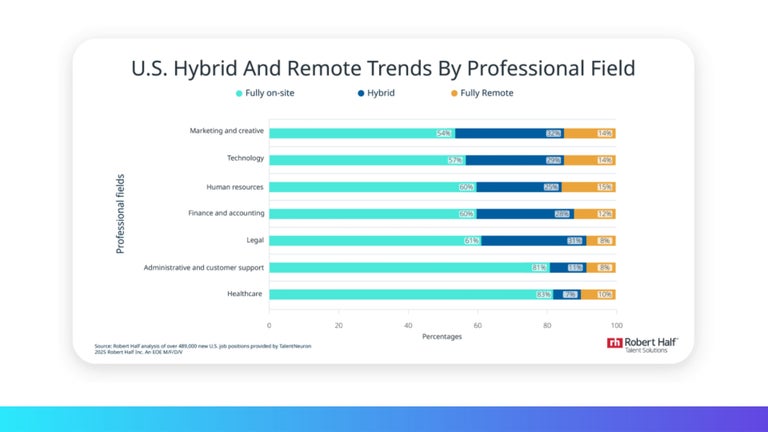
But we know people want remote work flexibility, and as of October 2025 – only 14% of US tech companies are offering fully remote work.
What happens when employees are at the office all the time, and their entire lives revolve around what they do, who they know and how they perform there?
MIT calls it ‘the burnout age.’
- 51% of employees say they burned out in the past year
- 54% said it was ‘long hours,’ 52% worker shortage
- And 34% said they had NO work-life balance
Of course they didn’t! They were sold a lie.
All of those wonderful job perks that were supposed to make their lives better, didn’t. It made them better workers. It made them better at BEING at work and PERFORMING at work – constantly. With little to no time at home, building their actual lives.
- The massages and lunches resulted in less family time. Skipped moments. Missed conversations with loved ones. Extra hours given to work in the form of commuting, planning, texting, emailing, syncing and pushing to achieve subjective (and ridiculous) KPIs.
- A denial of promotions, or when one does ‘happen’ they’re told it’s a lateral move – and their pay doesn’t increase. They’re given ‘opportunities’ to grow and work outside their role, which doesn’t pay. They are given paltry, minimal and often extremely unfair increases – leaving them vulnerable to inflation.
- Their constant presenteeism results in massive and cycling burnout, leaving them vulnerable to career stagnancy, limited upskilling and falling behind in an ‘always on’ culture that does not make room for illness, time off or peace. Ever tried to take ‘unlimited time off?’ You might as well put yourself on a PIP.
And worst of all, they remain underpaid and struggling. This impacts their financial stability and their entire future. But hey, those free beers are nice.

So, companies lie about perks improving employee work-life balance.
It’s gross, it’s pervasive and SO many people still believe it.
There is no transparency at play here. Companies mercilessly tie perks to performance (not any real flexibility or time off) and selectively communicate about their benefits – while downplaying their own much-needed advantages.
There is UNEQUAL access to these perks, they are tiered on purpose to encourage inequalities rather than promote authentic work-life balance. It’s a shoddy and blatant short-term exchange of perks for long-term loyalty.
It reeks.
These companies CANNOT use perks as an excuse to not give you – the top performer – what you want.
And you want time and money.
The Absolute Myth of Office Work Life Balance
Work life balance doesn’t exist at the office.
I hate to tell you this, but you’ve been scammed. And worse, it was your boss who swindled you. They did it with a smile on their face – like they were handing you the last rolo ever made at the chocolate factory.
People are complicit in these things, because they don’t really think about them.
They do as they’re told, and go with the flow.
The higher up you go, the better your perks, you see.
You get better insurance, better medical aid, better retirement packages. Your perks incentivize you to entice talent who will get crappier perks than you – to make the same bargain.
Your TIME, ENERGY and LIFE for work.

Zero balance.
When corporates speak of balance, they MEAN at work.
Balancing your life at work. Not at home with your family. Not freeing your time to travel or spend with friends (real ones not colleagues) as you wish. And definitely NOT paying you a (living / fair / increasing) wage that gives you better quality of life.
As someone who lives outside of the US, I see this everyday.
A toxic work environment, with high staff turnover at local tech companies – ever increasing layoffs and bureaucracy, and no accountability from leadership at all.
You are expected to be grateful for your rooftop mini golf course, and your breakroom pool table. But you’re also expected to work free hours, be available outside of work 24/7, regularly work outside of your job role AND get paid peanuts for the privilege.
This is not employee care, it’s employee entrapment.
Rejecting The Tradeoff
At Crossover, we don’t pretend.
For us and the entire group of companies that we hire for – we have no perks. No work mandated laptops, or taco Tuesdays, no free dry cleaning or in-office gyms.
We don’t discount your insurance and force you to go with our provider (who doesn’t cover your needs). And we certainly don’t force you onto a group medical aid that leaves you with nothing when you need it most – because it’s so incredibly limited.
Instead we:
- Pay more (sometimes 16X more)
- Offer FULL remote flexibility (with no strings – go where you want!)
- Let people design their own perks outside of work
It works.
Our people anonymously voted us as the best in work-life balance for 2025 (Comparably) - because freedom and fair pay are the real perks.
Making The Right Choice (Perks vs Pay)
People think perks = care.
But cast aside your hypno glasses for a second and see the strategy and the RISK it poses for you.

Companies are happy to trap you at the office, lower their company tax bills, and squeeze more performance from you while paying less in wages.
If they really gave a damn about work-life balance they’d let you work remotely, pay you fairly and trust you to live your own life.
Right?
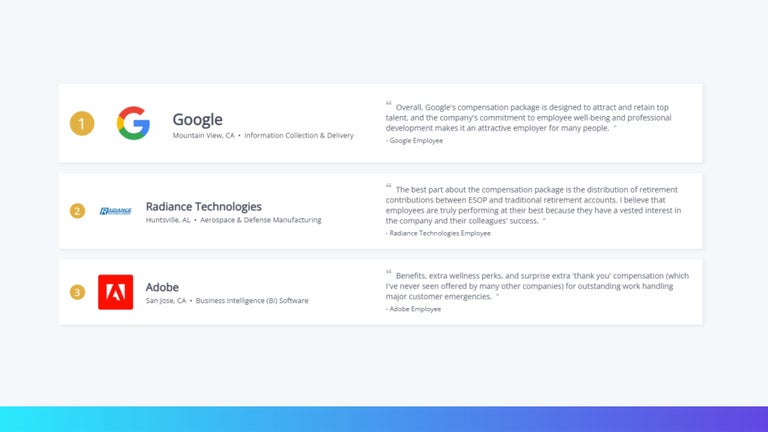
In 2025 it’s Google, Radiance Technologies and Adobe who have the best perks and benefits – and it’s because they have switched BACK to higher compensation.
The Robert Half Report tells us what many top performers in tech around the world already know. The only perks you need are the ones that respect your time and money.
That’s why remote work flexibility and high pay are the only ‘perks’ that matter.
Because it’s the only way you can HAVE authentic work-life balance. Otherwise, you’re just being tricked into trade-off you never fully understood until it was too late.
So, here’s the million-dollar question…
Do you want balance at the office, or balance in your life?
Because those two are not the same thing.
Similar post


Want to read more?
We have a lot more where that came from

![Crossover’s Basic Fit Check [Official AI Screening Guide]](https://assets-us-01.kc-usercontent.com:443/7beb5311-75a4-0049-50f5-8f58fd55aba7/90bfc8de-1a38-4802-8432-c063c215e90a/BasciCheckGuide.jpg?fm=jpg&auto=format&w=500&h=500&fit=clip)




 AI-first remote workers.