
![The Crossover Proctored Cognitive Aptitude Test [Official PCCAT Guide]](https://assets-us-01.kc-usercontent.com:443/7beb5311-75a4-0049-50f5-8f58fd55aba7/f3a83846-88f2-4beb-a135-91f5bb9d2232/PCCAT%20Header.jpg?fm=jpg&auto=format&w=800&h=500&fit=clip)
Contents
- 1. What Is Crossover’s Proctored Cognitive Aptitude Test (PCCAT)?
- 2. Why Does Crossover Require a PCCAT Before an Offer?
- 3. What Is the Purpose of the PCCAT?
- 4. Do People Really Cheat on the CCAT?
- 5. When Does the PCCAT Happen in the Hiring Process?
- 6. Does Everyone Have to Take the PCCAT?
- 7. What Happens During the PCCAT?
- 8. Is the PCCAT Timed?
- 9. How is The Proctored Cognitive Aptitude Test Administered?
- 10. Who Proctors the PCCAT?
- 11. What Score Do You Need to Pass the PCCAT?
- 12. What Happens If You Pass?
- 13. What Happens If You Fail?
- 14. How to Prepare for the PCCAT
- 15. What’s It Like to Take the PCCAT?
- 16. Succeeding with Crossover’s PCCAT
Need to pass Crossover’s PCCAT? This official guide walks you through what to expect, how it’s scored, and how to prepare for test-day success.
You made it! You've passed every test we've given you.
There’s just one final verification step before we make any job offers - the Proctored Cognitive Aptitude Test (PCCAT).
It’s the same 15-minute test you already passed, only this time it’s taken under strict exam conditions.
A trained examiner will verify your ID, check your workspace, and watch your session live through your webcam and phone to confirm that your score is 100% your own work.
Everyone who works at Crossover and at our client companies - has done this test.
From senior leaders to new hires, nobody skips it. It’s what keeps our hiring process fair, our results consistent, and our fantastic teams full of the world’s top talent.
Getting here already puts you in elite company.
- Harvard’s acceptance rate is 3.6% (4 in every 100 get in)
- MIT’s acceptance rate is 4.5% (4-5 in every 100 get in)
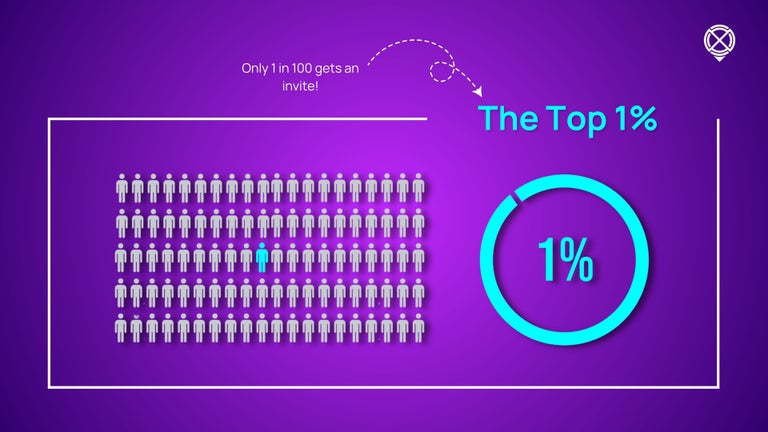
Only 1 in 100 candidates will be invited to take this proctored cognitive aptitude test.
That means you’re already among the world’s top 1% of tech professionals - the ones who’ve proven they can think fast, solve problems independently, and perform under serious pressure.
Most people score about the same as before, because this stage isn’t designed to trip you up. It’s just proof that you earned your results honestly and on your own steam.
This guide will show you exactly what happens next, how to prepare, and what to expect on test day so you can complete this verification successfully and move to the final stage of the hiring process.
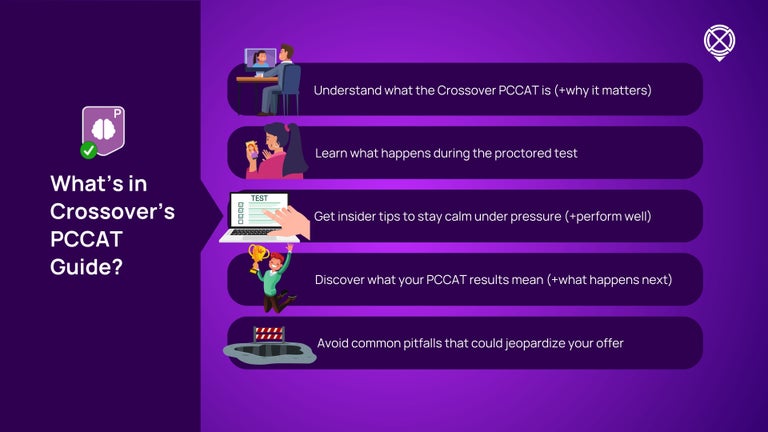
Here’s how this guide will help:
- Understand exactly what the Crossover PCCAT is (and why it matters)
- Learn what happens during the proctored test (and how to prepare)
- Get insider tips to stay calm under pressure (and perform well)
- Discover what your PCCAT results mean (and what happens next)
- Avoid common pitfalls that could jeopardize your offer
Prefer a video rundown? Check out the short walkthrough below before you read on. It covers how to schedule your session, what the examiner will check, and how to make your test day smooth and stress-free.
This is it, the final hurdle.
1. What Is Crossover’s Proctored Cognitive Aptitude Test (PCCAT)?
The Proctored Cognitive Aptitude Test (PCCAT) is the final verification step in Crossover’s hiring process.
It’s the same CCAT you already passed - only this time, it’s taken under live exam conditions to confirm your score was earned fair and square.
What is Proctoring?
During the PCCAT, a trained proctor (exam supervisor) verifies your identity, checks your environment, and monitors you live through your webcam and phone camera to make sure you’re testing independently, without any external help.
This process is called proctoring – a standard safeguard used in official exams to protect fairness and accuracy.
Everything else about the test remains exactly the same.
Reaching this stage means you’ve already passed every major step - the Basic Fit Questions (BFQ), the CCAT, the skills-based assessments, and the all-important interview stage – well done!
You’re already part of the top 1% of global tech applicants - the PCCAT is simply the final green light that confirms your eligibility for an offer.

- The final verification step in our hiring process
- Retake the CCAT you passed with an examiner monitoring you in real-time
- Confirms the score you achieved was honest and authentic
The PCCAT is the big check mark on your name, before final offer consideration.
You’re among the top 1% of tech candidates applying for a job on Crossover.
2. Why Does Crossover Require a PCCAT Before an Offer?
At Crossover, we hire thinkers, not cheaters.
The PCCAT exists to confirm that every candidate who joins our clients’ teams earned their results without any outside help.
It protects the integrity of our hiring process and the reputation of those who’ve genuinely proven their skills.
Some candidates use calculators, AI tools, or even friends to cheat on their original CCAT. The PCCAT filters that out - confirming that your high score truly reflects your ability to think fast, reason logically, and solve problems under pressure.
This step exists because cognitive aptitude is one of the strongest predictors of job performance. It guarantees that only the world’s most capable remote professionals make it to the finish line.
3. What Is the Purpose of the PCCAT?
Verification.
For us, this last step is worth it to stay on mission: to find the best people, globally.
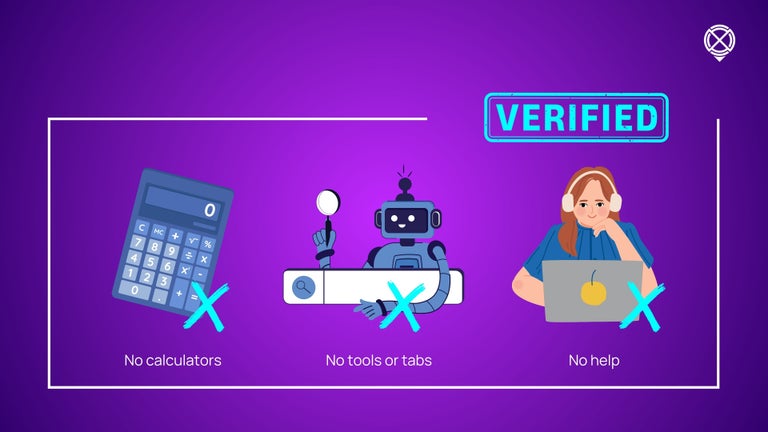
So, the PCCAT is the final verification step that confirms your CCAT score reflects your actual ability - not ChatGPT’s testing skill or your friend’s math genius.
It’s designed to:
- Validate that your original CCAT performance was genuine
- Protect honest candidates from being disadvantaged by cheaters
- Ensure clients hire the best talent based purely on merit
If the scores weren’t genuine, our clients would not be able to rely on our business model. And because we hire for some of the most innovative and disruptive private companies in tech – that would be disastrous.
The proctored test keeps our hiring process clean, fair, and focused on what really matters - real talent.
Simply put – the purpose of the PCCAT is as a foolproof and cheat-proof final filter that keeps the world’s top 1% remote professionals in, and bad actors out.
4. Do People Really Cheat on the CCAT?
Yes - a few people still try.
And some manage to pass the CCAT with flying colors. These unscrupulous test-takers try to game the system using calculators, AI tools, and friends sitting nearby or on their phones.
The PCCAT is the last line of defense – it detects any mismatch between your first CCAT score and your proctored one. If your scores are consistent, you’ll pass easily and will start your new job.
If they’re drastically different, it’s a red flag.
Crossover doesn’t advance red flag applicants to the offer stage.
So seriously - it’s not worth trying to cheat. Cheating wastes our time and yours.
If this has been your plan all along, abandon it - authentic talent doesn’t need tricks to succeed. And we have failsafes to prevent your entry.
5. When Does the PCCAT Happen in the Hiring Process?
The PCCAT happens before any job offer is made. It’s part of our fraud-check stage - the last verification before a final decision.
It’s the final step in the Crossover hiring process - the last checkpoint before you get your offer in writing.
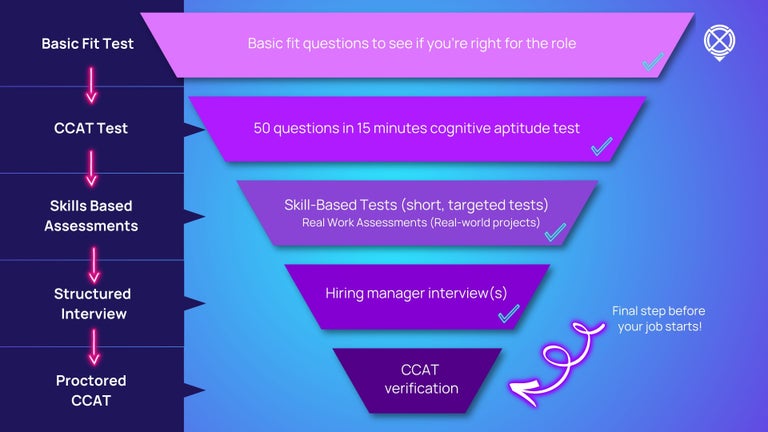
You’ve already passed:
- The Basic Fit Questions (BFQ)
- The CCAT
- The skills-based assessment for your role
- And the final interview(s)
If you’re taking the proctored CCAT, you’ve reached the final verification stage.
6. Does Everyone Have to Take the PCCAT?
Yes, everyone moving into final consideration for an offer must take the PCCAT.
But because accurate proctoring takes time, people, and resources, the PCCAT is reserved for candidates who’ve already passed every major step of the Crossover hiring process and are under final consideration for the job they've applied for.
In short, if you reach this stage and want the job – you have to take the PCCAT.
7. What Happens During the PCCAT?
The test itself is the same CCAT you completed earlier in the hiring process.
There are still 50 randomized questions in 15 minutes covering logic, verbal reasoning, and numerical problem-solving. The difference this time is that it’s taken under live, proctored exam conditions.
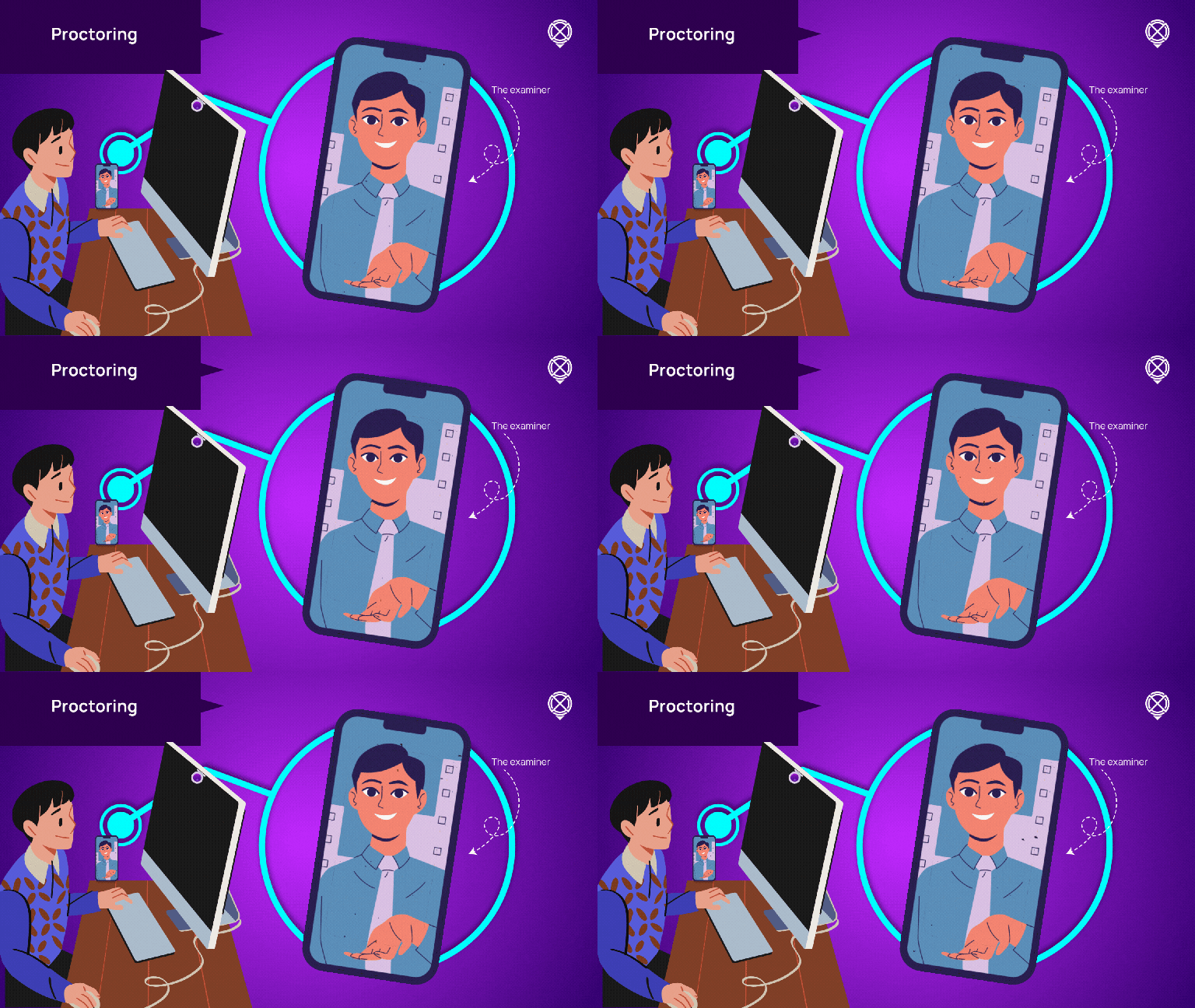
On invitation, your hiring manager will orientate you on what is expected in the PCCAT, and will let you choose from a number of timeslots so that you can sync with your examiner.
Here’s what to expect:
- You’ll join a scheduled session with a trained Crossover examiner (your assigned proctor).
- You’ll be asked to verify your identity using your government-issued photo ID.
- The proctor will ask you to join from two devices - your computer and your phone (or another camera-enabled device).
- Using your phone, you’ll do a quick 360º scan of your room and desk setup to confirm that your workspace is clear.
- The proctor will check your computer setup to ensure it’s not connected to external devices or running unauthorized tools.
- Your phone will stay positioned to provide a side view of your workspace, and your webcam will stay on throughout the test.
- Once everything is confirmed, you’ll start your 15-minute assessment - while the examiner watches both camera feeds to ensure the test is taken fairly.
Proctoring is a strict but fair process.
If you passed the CCAT honestly, you’ll do just fine. In fact, many of our top performers do even better in the proctored version – great evidence that they can perform at a high level under any sort of pressure.
On completion, after a few short minutes your score and badge will appear in your profile.
8. Is the PCCAT Timed?
Yes! Just like the original CCAT, the PCCAT gives you 15 minutes to complete 50 multiple-choice questions.
That works out to about 11 seconds per question - a few seconds to read and understand the ask, and a few more to calculate the right answer.
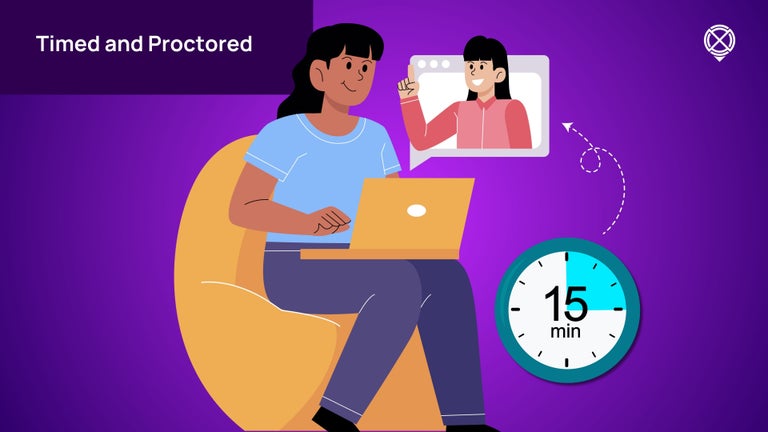
The goal is to move quickly and with confidence.
Don’t overthink it or get stuck on one question. Each of them counts and leaving any blank means missing a chance to score higher. So, it pays to answer them all, even if you make your best guess.
9. How is The Proctored Cognitive Aptitude Test Administered?
The PCCAT is taken online, just like your original CCAT - but this time, it’s proctored live to guarantee a fair and secure testing environment.
Your scheduled test session gives your examiner a dual view and helps confirm you’re testing independently – and have no notes, extra devices, or AI tools in sight.
Before the test begins, the proctor will check your setup, verify your identity, and make sure your environment is quiet, well-lit, and ready.
Once everything looks good, you’ll start your test. When it begins there can’t be any interruptions, because there are no second chances.
If the feed drops or pop-ups happen during the test, you fail. Then you have to reapply and try again in 6 months’ time.
It’s straightforward, fair, and designed to showcase your true ability under the same conditions as everyone else.
10. Who Proctors the PCCAT?
The PCCAT is proctored by Crossover examiners - real members of our team who oversee the test to ensure fairness and accuracy.

They monitor your session live through your webcam and phone camera, confirming that you’re testing independently and under the same conditions as everyone else.
Their goal is simply to verify that everything runs smoothly, honestly, and distraction-free so your results truly reflect your ability.
11. What Score Do You Need to Pass the PCCAT?
To pass the PCCAT, you’ll need to score within the same range as your original CCAT result and meet the minimum passing threshold required for your role.
Your proctored score is compared directly with your previous CCAT result to confirm consistency. If it aligns closely and meets the job’s minimum standard, you’ll pass.
If your proctored score falls well below your original one, or below the required threshold, it suggests that your earlier result may not have been accurate - and you won’t be able to proceed.
For example:
- If you originally scored 42 on the CCAT and the minimum passing score for your role is 35, you’re comfortably above the line.
- But if your PCCAT score drops to 35 - and while it technically passes, it suggests your earlier score may not have been consistent.
Perform at the same (or better) level you did before, and you’re in the clear.
12. What Happens If You Pass?
Passing the proctored CCAT is the final green light - confirmation that your results are genuine and that you’re eligible for a job offer.

Once you pass, your job offer is officially validated, and the onboarding process begins. You’ll get access to Crossover’s systems, meet your new team, and kick off your remote career with one of our global clients.
13. What Happens If You Fail?
If your PCCAT score falls well below your original CCAT or below the minimum passing threshold for your role, you won’t move forward to the final offer stage.
This is at your examiner’s discretion – there have been occasions when they allow a second test, if they feel it was due to nerves.
Significant score differences usually indicate that the first attempt may not have reflected your true ability.
In those cases, Crossover can’t move forward – we are expected to protect the integrity of our hiring process and the fairness owed to every candidate who honestly earned their score.
So, consistency and integrity matter. If your first test was genuine, you have nothing to worry about.
14. How to Prepare for the PCCAT
If you passed your CCAT on your own merit, you’re already in great shape - the same strategies still apply.
You can revisit our CCAT Study Guide and Tips here.
Since the proctored environment can feel a little more high-pressure, here are a few extra tips to help you stay calm and perform your best.
Before the Test: Your Prep Checklist
Practice under real conditions:
- Take a few CCAT-style practice tests on 12minprep.com with no calls, calculators, or interruptions. Practice on a notepad if you need it.
Find a quiet, private space
- Choose a distraction-free spot with good lighting, a stable internet connection, and easy access to power. Let anyone nearby know not to disturb you during the test - no kids, pets, or calls for 15 minutes.
Disconnect any extra devices
- You’ll only be allowed one screen during the PCCAT. Disconnect any external monitors, headsets, or peripherals. Keep only your two required devices (computer and phone), your keyboard and mouse, and a pen and clean sheet of paper within reach.
Get your ID and second device ready
You’ll need a government-issued photo ID for verification and a second camera device (usually your phone) for a side view of your workspace. Make sure both are ready before your session starts.
Close any open apps or tools
Before joining the call, close everything except the meeting itself. Translation tools, calculators, and other programs aren’t allowed. This will make the setup check faster and prevent any issues.
Test your tech in advance
Install and update Zoom on both your computer and phone (or other secondary device). Disable virtual backgrounds or blurring - your proctor needs a clear view.
Optional: Keep a clean sheet of paper and a pen nearby if you like to jot down calculations during the test. No notebooks or pre-written pages are allowed.
Pro tip
Treat your prep like a dress rehearsal! Sit where you’ll test, check your lighting, camera angles, and internet stability ahead of time. That way, the only thing you’ll need to focus on is thinking fast and staying calm.
15. What’s It Like to Take the PCCAT?
Here is a first hand account of taking the proctored CCAT from Murray Elphick:

“Going in, I had the kind of nervous energy that makes you a bit more talkative than you might like. I was confident enough in myself after my CCAT score, but there’s always that 'what if something goes wrong?' feeling that runs in the background.
I remember Andrew’s explanation ahead of time helped regulate a lot of those nerves. He had shared the reasoning behind doing the PCCAT, so I understood the point wasn't to catch me out.
After joining the session, the proctor helped me get emotionally settled. They were really calm and patient, and weren't overly chatty (which I appreciated), but clear and steady as we got up to speed. We checked my connection, scanned the room, adjusted my camera angle, and did a final pass of the rules together.
All of that structure helped shift my nerves to focus. By the time the test started, all the uncertainty had been removed, and I had a distraction free space to think.
The strict setup actually helped to increase my confidence in the outcome. With the camera, room scan done, mic, and all of that, there's really no room to game the system. That mattered a lot to me, because it signaled that the people I’d work with had to meet the same standard under the same conditions.
I was also really grateful for the instant score. I'm the type of personality to obsess, so seeing the result so quickly helped me mentally detach and move on.”
Read his full testimonial here
16. Succeeding with Crossover’s PCCAT
The PCCAT is your entry into a very rare circle.
Every person who passes it stands to join a private network of the world’s top-performing remote professionals - people trusted to build, lead, and innovate inside teams where ego, politics, and bias don’t stand a chance.

The PCCAT protects that culture.
It guarantees that everyone who makes it through our doors is there for the right reasons - talent, integrity, and an obsession with doing meaningful, career-defining work.
You’re not competing against others at this level - you’re proving that you belong among them. That the only person worth competing with is yourself.
If you earned your CCAT score the right way, you’ll have no trouble repeating it under pressure. Many candidates do better the second time - because real ability thrives when it’s tested.
So, take this moment seriously.
You’re standing on the threshold of something few ever experience. This is your chance to join a global team that values skill over status, collaboration over ego, and results over excuses.
We work to live, and we love our work.
This is what the top 1% looks like - and the PCCAT is your passport in.
You’ve got this.
Similar post

Want to read more?
We have a lot more where that came from



 AI-first remote workers.