Contents
- Lesson #1: Research Digital Nomad Visa Options
- Lesson #2: Respect Local Talent and Job Market Competition
- Lesson #3: Secure a Remote Job - Your Career Lifeline Abroad
- Lesson #4: Adapt Quickly to Culture Shock
- Lesson #5: Communicate Clearly and Learn the Local Language
- Lesson #6: Balance Hustle with Local Traditions of Rest
- Lesson #7: Build a Community Abroad to Thrive as an Expat
- Lesson #8: Stay Adaptable and Redefine Career Success
- Your American Expat Remote Career Success Checklist
For many American expats local jobs abroad are scarce - markets are competitive, visas are complicated, and the ‘automatic American advantage’ is a total myth. This checklist of 8 lessons - written from my experience as an U.S. expat in İzmir, Turkey - shows how remote work creates real remote career success.
“You’re American. You’re a native English speaker. You’ve got a degree. You’ll land a great job anywhere.”
That’s the advice I heard before I moved abroad.
And it was dead wrong.
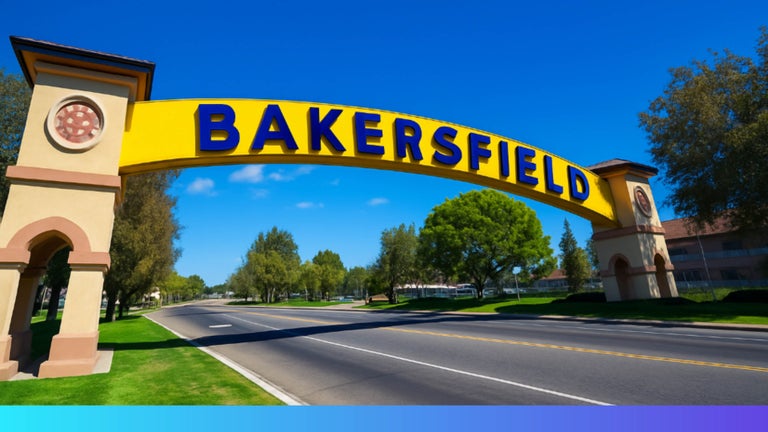
I’m Matthew, originally from Bakersfield, California - an agricultural and oil town north of L.A. After traveling during university, I moved to İzmir, Turkey, to be with my wife.
What I discovered is something most American expats don’t realize: the job market abroad isn’t waiting for you with open arms.
It’s competitive.
Local engineers are highly skilled. Government rules make foreign hires complicated.
What saved me wasn’t privilege, but a remote job. Without it, I’d have had to move back to the US. With it, I’ve built a career in tech, got promoted, and learned lessons I wish someone had handed me before I packed my bags.
Here are 8 lessons for any potential American expat who wants to live and work abroad.
Lesson #1: Research Digital Nomad Visa Options
For Americans, visas will make or break your move abroad.
Some countries actively welcome remote workers with digital nomad visas (Estonia, Portugal, Croatia, Costa Rica, and more). Others, like Turkey, don’t - which means finding local work or staying long-term can be far harder than you’d expect.
In my case, I moved to Turkey to get married. With the U.S. embassy closed during Covid, it was impossible for my wife to come stateside, so I came to İzmir instead. I quickly discovered the myth of “automatic American advantage” was just that - a myth.
Turkey had no shortage of engineers, wages were low, and local firms faced legal headaches if they wanted to hire foreigners.
Before you buy a one-way ticket, research your visa options. Remote work doesn’t solve immigration law. If you can secure a country with a clear digital nomad path, you’ll avoid months of frustration as an expat.
Lesson #2: Respect Local Talent and Job Market Competition
It’s easy to assume that being American or having a U.S. degree gives you leverage abroad. I thought so too. I was wrong.
After arriving in İzmir, I spent months applying for local engineering jobs. I didn’t stand a chance. Turkey has plenty of highly skilled engineers, many working for far lower wages than U.S. firms would offer.
On top of that, companies had little incentive to navigate the legal hurdles of hiring a foreigner.
Don’t underestimate local talent. As an American expat, you’re not competing against a weaker workforce - you’re competing against equally smart, equally driven professionals who just happen to have local passports.
Lesson #3: Secure a Remote Job - Your Career Lifeline Abroad
Remote work isn’t a perk abroad - it’s survival.
After months of rejection, my wife spotted an ad for Crossover. I applied, passed the tests, and started in Support. Over time I moved into a role we call ‘CS Cyborg’ - a blend of handling support tickets, automating workflows with AI, advising on business matters, even digging into raw code.
Some days I’m restoring a telecom carrier during an outage; other days I’m building automations that save my team hours of manual work.
Here’s the thing: not all remote jobs are created equal.
Some expect you to sit on Zoom calls all night to overlap with U.S. time zones. Others micromanage every task. Trilogy (the company I work for) is asynchronous-first: flexible hours, minimal meetings, maximum autonomy.
That’s made a big difference.
If you’re job-hunting abroad, ask hard questions about time zones, meeting schedules, and flexibility. And don’t forget taxes - U.S. citizens still have to file at home, even if they live overseas.

Lesson #4: Adapt Quickly to Culture Shock
Nothing humbles you faster than realizing your rules don’t apply anymore.
When I first arrived in İzmir, one of my bags never showed up. I did the logical thing: waited in line at the airline desk.
When I finally got to the front of the line, an older woman stormed in, shouting. Instantly the staff abandoned me to handle her. That’s normal here. Same with driving - rules are more like suggestions. Following them too strictly just makes people angry.
At first, this was very difficult to accept. I grew up in a culture where rules mattered. But over time, I realized that culture shock isn’t just something you endure, it’s something that teaches you to adapt.
The stuff that frustrates expats most is often the best teacher. Don’t fight culture shock - let it sharpen your flexibility and make you more adaptable.
Lesson #5: Communicate Clearly and Learn the Local Language
Back home, my mom (a teacher) encouraged us to read literature and use the vocabulary we learned. I’d casually drop words like “anachronistic” into conversation.
That ended abroad. When your colleagues are non-native English speakers, clarity matters more than cleverness.
I simplified my English and started to notice how learning Turkish changed the way I thought in English too. Sometimes I’d catch myself saying “I am afraid from spiders” - a direct borrowing from Turkish grammar.
Now, when colleagues say, “I have 43 years” instead of “I am 43 years old,” I don’t think ‘mistake’.
I feel respect - and admiration. Because I know how hard it is to operate in someone else’s language. Most of my co-workers are non-native English speakers, but every day I’m amazed by how well they communicate!
American expats need to keep communication simple. And if you can, learn the local language - even a little goes a long way toward building trust.
Lesson #6: Balance Hustle with Local Traditions of Rest
In college, I was running on fumes - four jobs plus a full engineering course load, with barely a few nights of sleep a week.
Then I moved to Turkey, where relationships take precedence over hustle, and rest is a deeply held value.
Summer is practically sacred here.
Families will sometimes save four to six months’ salary for a week at an all-inclusive resort. Nearly everyone goes to a summer house, either their own or a friend’s or family member’s. Work slows to a crawl as people migrate to the coasts.
I was shocked! In California, only the ultra-wealthy have a summer home. But in Turkey - where people frequently complain about the economy - there are somehow millions of them.
At first this felt indulgent, even contradictory. But over time I began to see the wisdom. A summer house isn’t just a luxury here - it’s a way to step out of the city’s busyness and appreciate the beauty of the gorgeous beaches and countryside.
I’ve come to see the value in occasionally prioritizing relationships over work, instead of always letting them take a back seat.
As an expat if you only bring American hustle abroad, you’ll miss half the point. Learn from local traditions of rest and build your own rhythm for remote success.

Lesson #7: Build a Community Abroad to Thrive as an Expat
A week after I arrived, a café owner I’d barely met waved me in for breakfast.
He didn’t speak English, I didn’t speak Turkish, but we shared a lovely meal together anyway. That simple act of hospitality made me feel like I belonged in a city where I knew no one.
Later, I experienced Turkish weddings - massive events where everyone you can invite shows up. At my own wedding, I didn’t know two-thirds of the guests.
But to my wife’s family, having so many people present was a great honor. That sense of community became important to surviving and thriving here.
Before you move, ask yourself: Can I build a community there? It can be lonely being an American expat - work, weather, and food won’t matter if that’s the case.
Lesson #8: Stay Adaptable and Redefine Career Success
When my company went AI first, it was chaos.
Processes disappeared. Roles shifted and many people left.
I adapted. I started building automations: compliance workflows, automated telecom processes, tools that saved hours of drudgery. For the first time, my ideas weren’t ignored - they were celebrated. That adaptability got me promoted.
I’m not a traditional software engineer. My background is mechanical engineering. But with Agentic AI and MCP, I’ve built solutions that matter.
Remote work and expat life both reward adaptability. If you can roll with change and leverage new tools, you’ll carve out opportunities others miss.
Your American Expat Remote Career Success Checklist
Moving abroad won’t magically solve your problems. It’ll give you new ones. But those challenges are the point - they force you to adapt in ways you never would at home.
Here’s the checklist I wish I’d had as an American expat building a remote career abroad:
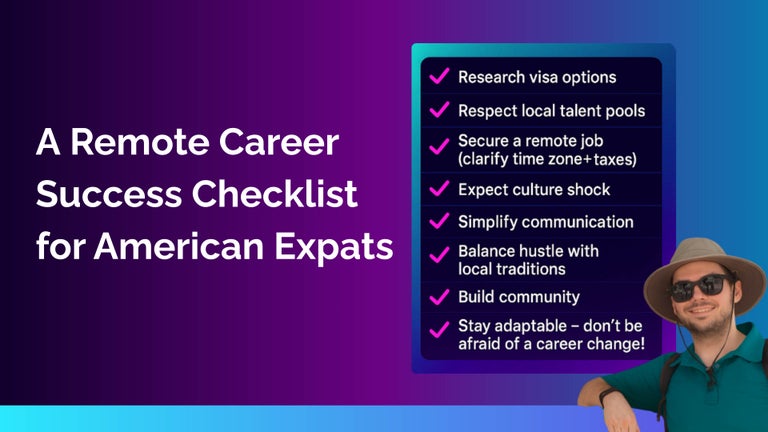
- Research visa options
- Respect local talent pools
- Secure a remote job (and clarify time zones + taxes)
- Expect culture shock
- Simplify communication
- Balance hustle with local traditions
- Build community
- Stay adaptable - don’t be afraid of a career change!
Do that, and you’ll find what I did: expat life isn’t a fantasy. It’s an education. And sometimes the smartest career move isn’t up or sideways - it’s across an ocean.
Similar post


Want to read more?
We have a lot more where that came from


![Crossover’s Basic Fit Check [Official AI Screening Guide]](https://assets-us-01.kc-usercontent.com:443/7beb5311-75a4-0049-50f5-8f58fd55aba7/90bfc8de-1a38-4802-8432-c063c215e90a/BasciCheckGuide.jpg?fm=jpg&auto=format&w=500&h=500&fit=clip)




 AI-first remote workers.