
Contents
- Why TokenMaxxing is Not a Good AI Strategy
- 3 Operator Rules for Managing AI Agent Costs
- Use the AI Cost Calculator Before You Scale
- The Superagent Economy Demands Token Discipline
Are your AI agents the future of work, or the future of your expense reports? AI agents can turn one skilled operator into a full team, but only if they know how to manage the fire. In this article, I explore why tokenmaxxing is a bad AI strategy, how model choice, context control, workflow design, and an LLM cost calculator help you manage agents without wasting time or tokens, and why AI agent management is fast becoming one of the highest-value skills in the superagent economy.
AI agents have changed the economics of work.
One superagent operator can literally run an entire company from a laptop. That single skilled operator will create results that once required an entire team of people. I wrote about it at length in my article on the superagent economy.
But as is often the case – there’s a catch.
AI agents aren’t just great at amplifying your results, they’re also extremely good at scaling your management system. Sometimes that’s wonderful, and other times it’s the kind of ‘wonderful’ you utter when you’ve dropped your ice-cream on the ground.
Once again, fast scale has an exposure effect among tech employees.
Everyone is talking about cost exposure.
Agentic AI burns 1000X more tokens than run-o-the-mill prompting.
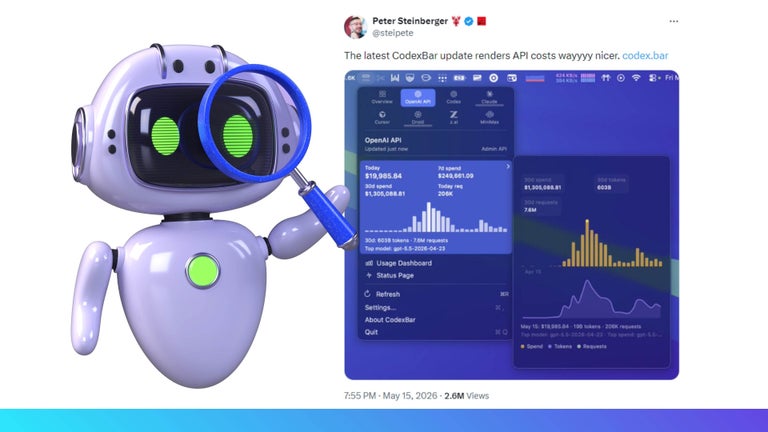
Peter Steinberger (OpenClaw’s creator) recently said that his team burned through $1.3 million in token costs in just one month. That’s 603 billion tokens spent across 100 coding agents, by three people.
If that’s a preview of where agentic AI is heading – you’d be right to pay closer attention.
The general consensus is that the value outweighs the cost.
And for highly savvy AI-native operators, that’s true.
But for many tech companies, the cost economics of AI is quickly becoming a lesson in employee trust. Mind, these costs are less than what they’ll be in the future, as the major AI players offer lower API rates to attract users.
The broader tech industry has clapped back by saying that AI is getting far too expensive. Companies aren’t seeing big enough AI returns to justify the cost of using these superagent systems. Or worse, the tools work so well they’re overused.
- According to a Synch survey of 2500 senior decision-makers, three-quarters of enterprises have rolled back their AI agent systems.
- The survey looked at companies across the US, UK, Australia, India, Canada, Brazil and more – with an 81% rollback rate at companies with mature governance frameworks.
- Runaway token usage is a HUGE issue, wrecking budgets everywhere. Uber burned through its entire AI budget for 2026 in 4 months. Microsoft is ending Claude Code licences, based on a pilot launched in December 2025.
Bottom line folks – there’s an impending AI cost crisis happening. Agentic AI burns through a ton more tokens than your regular chatbot use.
These autonomous systems plan, call tools, read files, generate drafts, test things, revise, organize and go, go, go – blazing through tokens based on the way the system was designed, and how it’s managed.
And therein lies the opportunity for you.
In this article, I’ll show you how to manage AI agents before they start mangling your budget. You’ll learn how to choose the right model for the job, control context before it bloats your token spend, design workflows that don’t spiral, and use a simple AI cost calculator to estimate what your agentic system could cost before you scale it.
In the superagent economy, the most valuable skill you can develop is AI agent management. Here’s how to direct autonomous systems without letting them waste your company’s time, money, or tokens.
Why TokenMaxxing is Not a Good AI Strategy
What happens when a tech company forces everyone to use AI?
Tokenmaxxing. That’s what happens.
The name is ridiculous, which feels appropriate - because the behavior itself is ridiculous. It’s the equivalent of judging a chef based on how much gas they burn, and instead of the dinner they’ve cooked for you.
Doesn’t matter if the chef has a Michelin star, or makes dirty hot dogs on a busy street corner - the amount of gas burnt is the measure of impact.
Tokenmaxxing is what happens when Silicon Valley encourages everyone to embrace ‘AI use’ as a benchmark metric in the workplace.

Measuring AI progress based on the rate an employee aggressively burns through tokens is a terrible – and unsustainable – budget strategy.
It rewards activity instead of judgement.
It encourages people to use the biggest models for the smallest jobs, spin up agents where a single prompt would do, and build ten-step workflows for two-step problems.
That’s exactly how you end up with premium models doing grunt work, multiple agents reading the same context, and workflows that look impressive - right up until the finance team sees the invoice.
Some workplaces have even posted leaderboards praising the employees who have managed to chew through the most tokens, in the least amount of time. They’re given lavish perks – all in the name of encouraging AI automation.
But automation folks, is not the same as management. You can’t manage AI agents by telling people to use them more.
Anyone these days can create a workflow that does something. The real question is whether it does the right thing, with the right model, using the right context, at a cost that still makes sense to the company.
Agentic systems aren’t static – models and costs change, often.
The old idea that ‘the more you use AI, the more value you’ll create’ just isn’t true.
Perhaps it was a year ago, but now with bigger models, more users, vibe coding and token costs skyrocketing – a lot of companies are feeling tokenmaxxed out.
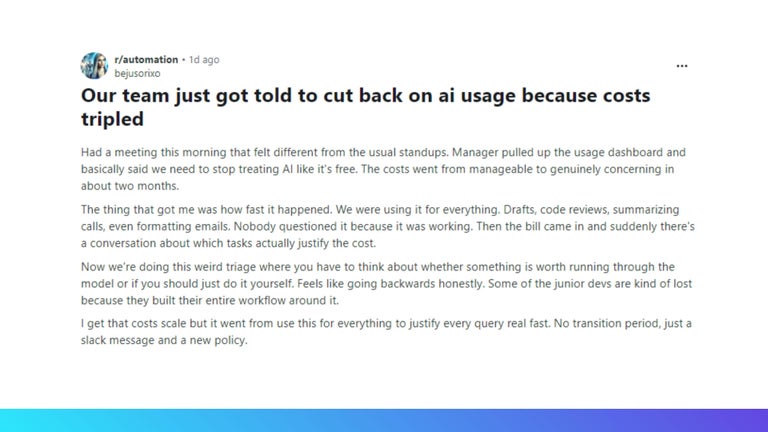
CFO’s everywhere are having to start on blood pressure medication as AI budgets have leapt from modest to darn-near outrageous.
Panic is setting in as the ‘adopt or die’ strategy is backfiring.
Microsoft data has implied that ‘using AI’ is more expensive now than hiring people. And no wonder – with these sorts of attitudes clouding the judgement of senior executives. But these are the teething moments that will make or break companies.
- Do they limit AI growth and rollback token use – debilitating practically all of their junior teams, and upsetting a now AI-centric workforce?
AI is expensive, sure. But that’s not the problem. The problem is clearly that weak AI managers don’t know where these escalating expenses are coming from.
They don’t know when to use a cheaper model, or when to reduce context, or collapse 5 steps into one. They just don’t know when an agent is genuinely valuable, and when it’s cosplay for a checklist.
Superagent operators know.
A weak AI manager burns tokens to prove they’re using AI. A strong AI operator spends tokens to create authentic leverage. They can strike that essential balance between AI cost economy and ROI.
It’s time to face the facts: AI agents don’t automatically save time or money. They only do that when someone knows how to manage the work.
3 Operator Rules for Managing AI Agent Costs
Do you know how to manage autonomous AI agents?
The best superagent operators do, and it’s an INCREDIBLY valuable skill. Companies like ClickUp have already earmarked their most highly paid roles for these individuals.
This is a $4 billion productivity startup who has identified that people who can create ‘outsized impact using AI’ deserve million dollar compensation. This is about using AI wisely for the overall benefit of the company.
Meanwhile 22% of the ClickUp workforce has been laid off to make room for this change. As we predicted years ago, the most competent AI architects will become the highest value employees in Silicon Valley – and in the world.
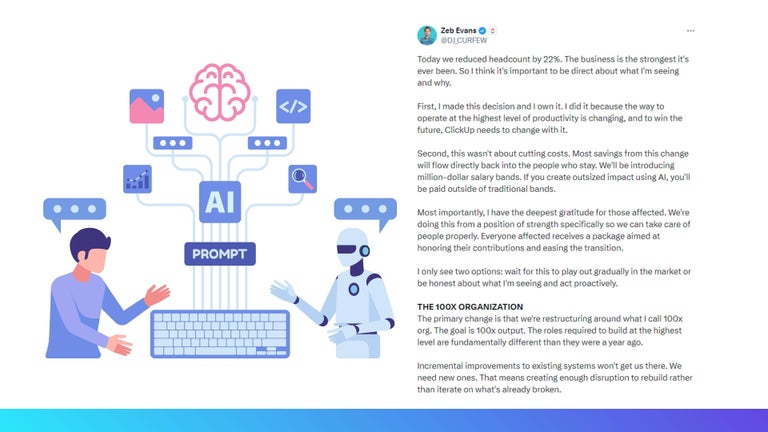
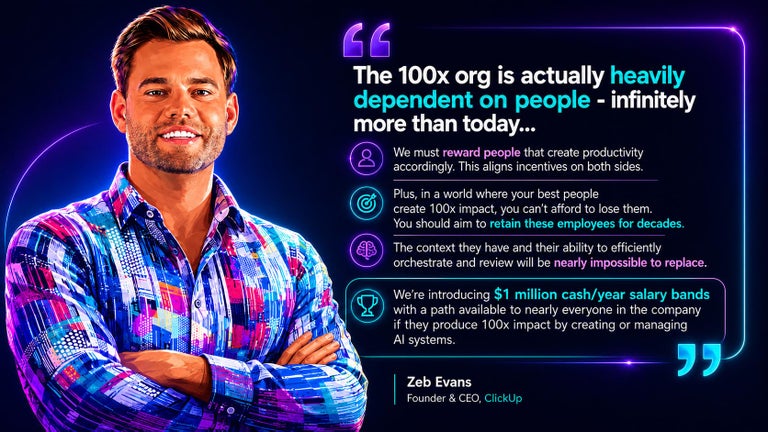
What Zeb, and many other AI-fluent founders have realized is that the future of their companies depends on superperformers who can turn AI into leverage, not more costs.
The 100X employee – they’re cost sensitive and ROI focused.
That means understanding when to unleash your agents, when to simplify the workflow, when to downgrade the model, when to reduce context, and when to stop pretending that every task needs an AI marching band.
Here’s how to build cost-effective agentic systems that scale.
#1: Use The Right Model for The Job
AKA: Model discernment and alignment

Surprise! Not every task needs your smartest (and priciest) model.
Beginner and intermediate AI builders default to this assumption because newer and bigger is better, right? Wrong. A closer look inside a lot of AI workflows and you’ll find the digital equivalent of a heart surgeon cleaning a shallow cut.
When you consider models come with a pricetag and usage cost, it’s like paying an hourly surgeon’s rate to put a plaster on a scrape. Strong superagent operators match the model to the work.
Simple, easy, low-risk tasks can go to the fast and cheap models. The harder the task, the more sophisticated the model can be. You don’t need a genius to solve every task!
You don’t even need AI to solve every task (Imagine!).
Model discernment and alignment in workflows and superagent systems is how you automatically reduce bloated, unnecessary costs – and keep them from blazing out of control as you scale.
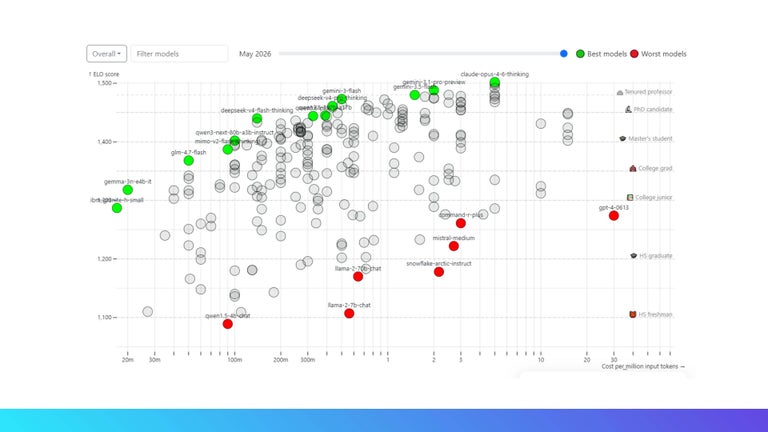
A good rule of thumb is:
- Use cheaper models for extraction, formatting, classification, tagging, routing and basic summarization.
- Use mid-tier models for drafting, comparison, synthesis and structured analysis.
- Use stronger models for strategy, judgment, complex problem-solving, final review and anything where errors are expensive.
Operator action: Create a model-routing rule
Before you build the workflow, classify each step by difficulty and risk.
Ask:
- Is this task repetitive or judgment-heavy?
- Will a mistake be easy to catch later?
- Does the task need reasoning, or just transformation?
- Is the output customer-facing?
- Does this step need the best answer, or just a usable one?
Then route the task accordingly.
Example:
- Extracting names from a transcript - Cheap model
- Summarizing five customer interviews - Mid-tier model
- Turning that research into a positioning strategy - Strong model
- Final approval before publishing - Strong model or human review
This is the start of your token discipline journey.
Takeaway: Before you assign a task to an agent, ask: Does this need intelligence, speed, accuracy, judgment, or just formatting? Match the model to the risk and complexity of the work - because using premium AI for basic tasks is how minor inefficiencies become monstrous bills, at scale.
#2: Control The Context Before It Controls the Cost
AKA: Context control and application

The more context you can give your agentic workflow, the better. Only it’s not better, it’s more expensive! Context is a sneaky one because it goes against your instinct to give the model absolutely everything at all times.
Old and new docs, customer research, brand orientation, meeting notes. Add every ingredient of the company brain to this tasty context lasagna.
But more context doesn’t magically mean better outputs.
Often it means confusion, hordes of tokens and several pricey mistakes. The mindset shift is easy enough – not ALL context needs to be there, just the right context.
- A headline agent doesn’t need your entire brand wiki
- A formatting agent doesn’t need your company strategy
- A QA agent doesn’t need ten years of historical product notes
Managing agentic workflows is about knowing how to slice context by role.
Each agent should only get what it needs to complete its specific task, either by design or by selection. So that means building retrieval properly, creating smaller context packs and stripping out erroneous, irrelevant information.
You need to make sure that your agents aren’t repeatedly reading the same documents time and time again, for every run.
So instead of a prompt dump, design for information flow.
Operator action: Build context packs by role
Instead of giving every agent the same huge knowledge base, create smaller context packs for specific jobs.
For example:
- Brand pack: voice rules, positioning, examples, banned phrases
- Product pack: product facts, pricing, features, technical details
- Customer pack: audience pain points, objections, use cases
- Task pack: the specific brief, goal, constraints, and desired output
- QA pack: scoring rubric, checklist, pass/fail criteria
Then give each agent only the pack it needs.
- A writing agent may need the brand pack, product pack, and task pack
- A formatting agent may only need the task pack
- A QA agent may need the draft, QA pack, and relevant source material
Come to terms with which pieces of the context puzzle fit in each step – and know what should be cached, retrieved, summarized – or kept all the way out of the workflow.
Takeaway: Every unnecessary token adds cost, confusion, and drag. In a superagent system, that drag compounds fast. Give each agent the smallest useful slice of context it needs to do the job well. Don’t dump the whole company brain into every workflow -clean information flow beats context lasagna every time.
#3: Design The Workflow Before You Automate It
AKA: Design directive discipline

There are a lot of messy, impractical processes that end up being automated.
Teams often feel compelled to patch existing human systems or they take broken human workflows and then chuck an agent at it, like it’s a grenade clearing out a bunker during wartime. Then they have the nerve to call it transformation.
AI isn’t an excuse to automate strategy or to not map the work first.
- What is the end-point goal?
- What steps are required?
- Which steps need judgment?
- Which steps are repetitive?
- Where should the agent stop?
- Where does a human need to review?
- What does ‘done’ mean?
Operator action: Map the workflow in five boxes
Before you automate, write down:
- Input: What does the agent receive?
- Task: What exactly should it do?
- Output: What should it produce?
- Review: Who or what checks the result?
- Stop condition: When is the task complete?
If you can’t fill in those five boxes, the workflow isn’t ready to automate!
Automation doesn’t fix bad processes – and if you’re not careful it will scale them. They’ll get faster, louder and they come with a bouquet of API charges.
If you don’t have these basic answers, expect your agentic system to inadequately fill the gaps. It will rewrite things that are already fantastic. It will run extra steps that don’t change a thing. It will pass work between agents like a haunted hot potato.
And wowee, will it look smart and busy as it builds the token bonfire!
Any good relationship needs firm boundaries and this is especially true with agentic workflows. Strong operators focus on these a lot.
- Give agents clear roles, inputs, outputs and stopping points
- Make being vague a cardinal sin (aka – make this post better)
- Get intentional about starting super small (I mean tiny)
Agentic management is about directives, boundaries and explicit instructions that corral your agents and keep them from herding themselves over a cliff.
Your goal should always be to build the smallest system while creating the best possible outcome or result. That can sometimes mean 40 agents (oooh impressive), and sometimes it means doing the same thing with 2 agents (WOW!).
Takeaway: Map the work before you automate the work. Give every agent a clear role, input, output, review point, and stopping point. The best workflow isn’t the biggest, fanciest one. It’s the smallest system that reliably creates the big result.
Use the AI Cost Calculator Before You Scale
Now that you know the three core levers > model choice, context control and workflow design - it’s time to put a number on the thing.
Because a kind of useful workflow isn’t the same as one that makes financial sense when 200 people run it every day - that’s where an LLM cost calculator comes in.
Use it before you scale an agentic workflow, not after the finance team starts sending out sudden and passive aggressive usage restriction DM’s in Slack.

The calculator helps you estimate:
- Which model you’re using
- How many input tokens your workflow sends
- How many output tokens it generates
- How many times the workflow will run
- What that could cost daily, monthly or at scale
This is super key because agentic costs rarely explode from one dramatic villain moment. They creep in through microscopic, sensible-sounding decisions.
The calculator gives superagent operators a practical way to sanity-check the cost economics before your AI system burns down the house.
Before you launch or expand a workflow, use it to ask:
- What does one run cost?
- What happens if usage doubles?
- What happens if this runs every day?
- Which step is most expensive?
- Could a cheaper model handle part of the work?
- Could shorter context reduce the cost without hurting the output?
Use the calculator pre workflow scale – the best time to prevent a wildfire is before you light the flame, as they say.
The Superagent Economy Demands Token Discipline
Will the real superperformers please stand up?
I can’t stress this enough - tokenmaxxing is not a strategy – it’s what happens when companies mistake smoke for progress. More of everything is not how empires are built, but it is how they fall.
Tokenmaxxing should = efficiency. Maybe one day it will, as things shift.
Right now, the most valuable skill in the superagent economy is AI agent management. Not just knowing how to use AI, or build with it – but knowing how to manage and direct it for scale.

That means building systems that create real results without burning through time, money, and tokens like someone left the budget in the hands of an arsonist.
Companies like ClickUp are showing us the future in real time – it’s why they’re putting million-dollar salary bands behind people who can create massive impact with AI.
Autonomous AI systems that are built intelligently, with cost-efficiency, strategy and scale at the heart of it all.
So don’t forget as you build:
- Use the right model for the job. Don’t send your most expensive model to do cheap, simple work.
- Control the context before it controls the cost. Give each agent the smallest useful slice of information it needs.
- Design the workflow before you automate it. Start small, map the work, set boundaries, and give every agent a clear stopping point.
Then use an LLM calculator before you scale. If the workflow looks clever but the numbers don’t make sense, you haven’t built leverage yet.
You’ve built a very lovely bonfire.
The future doesn’t belong to tokenmaxxers who are great at burning through tokens. It belongs to operators who know how to execute controlled burns – turning idea energy into company acceleration.
Similar post


Want to read more?
We have a lot more where that came from



 AI-first remote workers.