Contents
- AI Workslop vs AI Worklift (Building a Culture of Quality)
- Workslop vs. Worklift: The Quality Divide
- The AI Quality Content Formula
- Spotting AI Signifiers (Bet You Already Are!)
- What AI Signifiers Look Like
- How to Call Out the Sloppy Work (Without Burning Bridges)
- The 3 R’s: Redirect / Reframe / Raise the Bar
- Call It Out and Lift it Up
Remote workers are drowning in synthetic sludge - cloned ideas, recycled phrasing, and polished rubbish disguised as legitimate productivity. The real challenge isn’t spotting and fixing it - it’s tactfully stopping the flow of workslop when it shows up in your team.
Has your remote team become a one-stop AI workslop shop?
Emails suddenly only make partial sense. There’s something off about the latest report you were sent, and those ‘critical action steps’ turned out to be concepts that could only be executed in an alternative universe.
Everyone’s ‘insight’ seems to be the same now.
No-one really knows what’s next, or what’s gone awry. Creativity and originality are on the chopping block. A lot of people are realizing they’re being fed word salad – and it doesn’t taste good.
AI was supposed to improve productivity! But for many – it’s swung the OTHER way.
AI has given your team the power to make MORE work for their remote colleagues. The outrage! The betrayal! The sheer level of audacity!
The message has been pretty clear. In tech, learn AI or get out.
- Gallup recently reported an all-time high for stress, sadness and anger.
- 95% of organizations aren’t seeing a ROI from their AI investment.
- 40% of people report getting workslopped in the past month.
These statistics are not unrelated.
The average worker, already overburdened, underpaid, burnt out and zombified by toxic dopamine cycles, is then told to learn how to integrate an entirely new toolset into their jobs with little to no help.
Of course, millions of them will one-click their way through their day!
Performative productivity is an office staple, and in remote teams it’s on the rise. If you’re not careful, you’ll be handing dispassionate colleagues a way to automate this performance. And tank your team’s results.
AI workslop is here – and it’s messing with your culture and KPIs.
We’re living in the era of quiet quitting, quiet firing, coffee badging, rage applying – and most recently job hugging.
People are afraid to lose their jobs.
They’d rather stay and pretend to BE BUSY. But for remote leaders, there has never been a more important time to reinforce your quality bar, and actively call out workslop, correcting it wherever it flows.
And it will always flow – damaging your workplace culture.
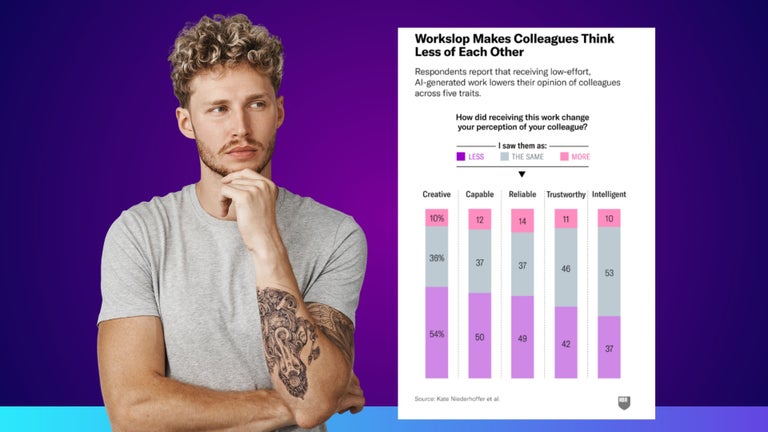
In this article I’m going to show you how to recognize AI workslop using AI signifiers, respond to it without sounding elitist or anti-AI, and build a team culture that favors human judgement over productivity theatre.
AI Workslop vs AI Worklift (Building a Culture of Quality)
Everyone’s buzzing about the Harvard Business Review article that coined the delicious term ‘workslop’ for a phenomenon that many tech workers are currently dealing with.
I’m not going to devolve into another copy-cat article like the 20 or so currently clogging up the Google search results. That’s part of the problem.
Here’s what we know about what workslop is:
- It’s low-quality AI-generated content
- It pretends to be useful when it’s as useful as a matchstick in an ice storm
- It’s often error-filled, incomplete and contains faulty logic
- It’s dismally average but dressed in words that make it seem smart
- It derails progress and creates project problems
And it’s used at work.
This type of AI slop is particularly chaotic because it’s driven by and encourages thoughtless behavior. Your colleague is tired and decides to half-ass a report using Claude, which takes them 30 minutes instead of 3 days.
When it hits your desk, it takes you hours to realize it’s messed up your workflow, needs to be redone and has no real value. The cost is 4 days of your time. If you fix it.
If you don’t, it trickles down – insidiously derailing your projects, goals and performance.
What the HELL do you do now?

The higher up you go the more disastrous workslop can be. It runs both ways, but the fixes tend to trickle down.
That’s why it’s imperative that you know the difference between workslop and worklift. In autonomous remote work, you have to be able to call it out.
The HBR article talks about pilots and passengers, and how they use AI differently. This comparison helps you understand the opposite of workslop, so you can see it and stop it.
For this comparison I’m employing the use of Sturgeons Law.
Theodore Sturgeon was a science fiction writer in America who observed (in defense of the genre of sci-fi) that ‘the majority of everything is low quality.’ This became a popular principle known as Sturgeon’s Law (90% of everything is crap).
In AI – these tools given to the general public were bound to be misused. That’s WHY only 5% of companies are using AI effectively.
There are careful quality control checks and balances, policies and custom-built AI’s to keep pilots in these companies producing great results with AI as an enhancer.
So, for this list, I’m assuming the majority of workers (95%) are dealing with workslop and only 5% have managed to create worklift.
What is Worklift?
Worklift is the opposite of workslop - it’s when people use AI to elevate their thinking, not replace it. It’s the art of piloting the machine with curiosity, context, and intent to produce sharper, faster, more human work.
Producing worklift creates AI ROI.
Workslop vs. Worklift: The Quality Divide
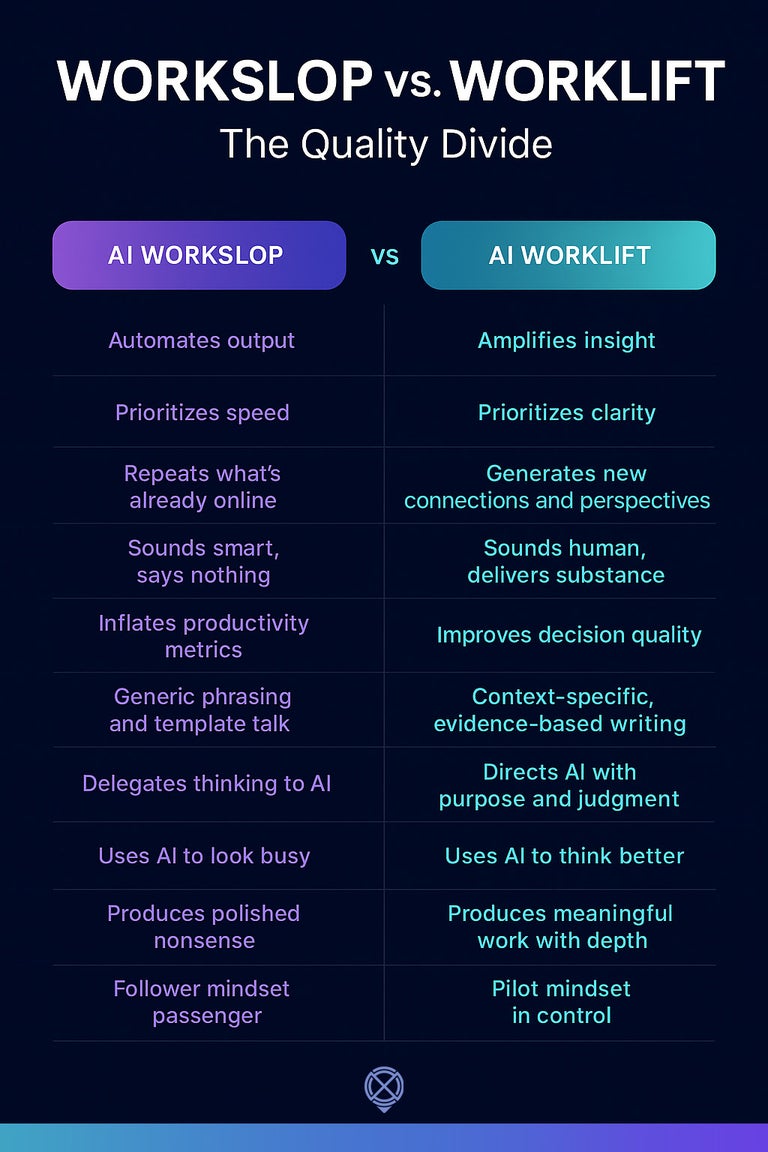
The difference between slop and lift isn’t the tool, it’s the operator.
Let’s be clear on this folks – AI doesn’t create slop, people do. And in a remote team, it’s up to everyone to carry the high standards that top performance demands.
The AI Quality Content Formula
I built my career on identifying and creating quality content for Fortune 500 brands all over the world.
So, I know what it looks like when the bar drops.
As AI workslop floods inboxes and workflows, I’ve watched Crossover and our client companies build powerful systems to drain the slop - keeping our thinking clear, critical, and human.
Quality = value + clarity.
It’s that simple. If your content doesn’t deliver both of these (and you’ve been using AI) it’s slop. The sloppiest slop.
I can go a step further and make it - conceptual value + linguistic clarity = quality.
Ask yourself:
- No matter the format (an email, a report, a dashboard) does it move your goals forward?
- Does it create value or just consume time?
- Does it add something new to the project?
When we talk about worklift, we mean work that delivers substance.
The things AI can’t fake:
- Fresh ideas
- Original opinions
- Human perspective
- Strategic creativity
In the end:
- Valuable content drives progress and aligns with purpose. It builds impact!
- Sloppy content sends you in circles, wastes time, and ruins team trust.
So, if one side of this formula collapses, quality tends to vanish.
That’s when your quality bar sinks lower than limbo pole at a luau. Value is the most difficult to find, it’s often hidden in frilly words that seem impressive.
That’s why clarity is your first workslop clue!
This is where sloppy work LOVES to hide. It looks clean but says practically nothing – it has rigid, high impact linguistic structure but zero takeaway.
It sounds smart, but it’s dumb as rocks.
That’s where AI signifiers come in – these are the linguistic fingerprints that reveal whether something was written with clarity and intent, or has been generated ‘one-click wild west style’ using basic predictive reasoning.

Spotting AI Signifiers (Bet You Already Are!)
Have you ever read something and had mild déjà vu?
That’s probably your brain doing what it does best – identify repeating patterns in your workplace content. Everyone suddenly sounding the same… is AI.
It’s boiled everyone’s personality down to a nice broth of averages.
Palatable, overly friendly and try-hard.
You don’t need AI detection tools to spot AI workslop - you just need to know what to look for. AI signifiers are the subtle language patterns that give machine-written content away.
There’s the repetitive phrasing, overly formal or hyped tone, and the flawless flow that hides a lack of real thought.
Once you can recognize these patterns, you can judge clarity and originality on sight - no software required. It blows my mind how many LinkedIn influencers have deferred to AI slop feeds, thinking no-one will notice.
Everyone notices.
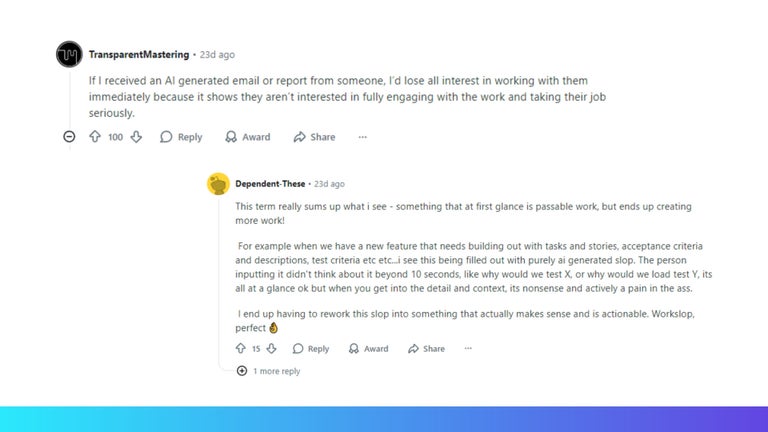
What AI Signifiers Look Like
They’re called AI signifiers.
Because they reveal AI use in writing. These are the linguistic fingerprints of models like ChatGPT, Claude and Gemini.
You know them. You’ve seen them floating around your social media feeds. And now you have a term for them.
Here’s how they show up, and why they feel inauthentic.
1. Repeating Framing Structures
These are structural templates AI relies on to shape arguments or statements – and shew, they’re often overused.
- “Not X, but Y”
Not hustle, but harmony.
Not love, but hate.
Not this, but that.
Sounds punchy, but it’s a fill-in-the-blank formula that doesn’t improve your writing. It’s all flash and no cash.
- “Stop doing X, start doing Y”
Stop scrolling. Start building.
Stop breathing. Start suffocating.
Stop zooming. Start looming.
Faux motivation with no specificity feels like chewing on chalk – for your eyeballs.
- “Whether you’re X or Y…”
Whether you're a startup founder or corporate exec…
Whether you’re an anteater or an ant…
Whether you’re a marketer or a musketeer…
Attempts to cover all audiences and ends up sounding hollow and ill defined.
- “It’s time to X.”
It’s time to rethink productivity.
It’s time to redefine your life.
It’s time to motivate change.
Used incorrectly, it’s a tired call to action with no clear next step.
- “Let’s dive in.”
A classic opener to AI long-form and rarely necessary.
2. Rule-of-Three Overuse
AI loves the rule of three, especially this combo:
- Negative + Negative + Positive
No fluff. No noise. Just results.
No snap. No crackle. Just pop.
It feels confident - but used in the wrong context it makes story sound overhyped.
- Negative + Negative + Positive (2)
Not because they did this. Not because this happened. Because of a third revelatory thing that sounds ultra impressive.
Salesy and effective, when used sparingly – but AI likes this signifier so much you’ll often zoom out of a single piece and find it in there 4 or 5 times (!) Someone call the emergency services there’s a signi-FIRE, am I right?
- The Setup Solution (:)
But here’s the kicker: the first solution, the second one, and a third thing too.
Often follows a negative, negative, positive string – rarely cares about too many threes.
- Positive + Positive + Inspirational
Learn faster. Work smarter. Live better.
Works in ads, but too many in a post = AI echo chamber. Also, it desperately needs original content to work well. A lot of the time this is just reheated noise.
- Minimalist punchlines
Just show up. Just write. Just post.
Super easy to generate. Truly hard to make meaningful in any authentic context.
3. Generic Transitions & Openers
These sound polished – but oh-my are they generic, vague and a bit malevolent – much like labubus are. Do we have to collect them? (No).
- “In today’s fast-paced world…”
- “In the ever-evolving world of…”
- “In the new era of”
- “At the end of the day…”
- “It goes without saying…”
- “That being said…”
- “Let’s face it…”
- “Now more than ever…”
These are language fillers, not real transitions. Think of them as the baloney of signifiers because they’re made of the excess language no-one should really be consuming.
4. Empty Buzzwords & Hype Language
Words that sound exciting… but say nothing. Nothing at all.
- Ground-breaking
- Ever-evolving
- Next-level
- Future-proof
- Game-changer
- Synergy
- Ecosystem
- Leverage
- Unprecedented
Use these sparingly - or better, replace with clarity.
5. Structure Over Substance
AI often uses logic scaffolding that mimics persuasive writing - but without real substance. It will persuade you, without offering anything of value.
- “First, let’s define X…”
Feels like an essay, not a conversation.
- “Here’s why that matters.”
Used to fake flow between unrelated points – DO watch out for how unrelated they are.
- “That’s where X comes in.”
Sets up a solution - often before the problem is clearly stated, which is high-key problematic in itself.
- “Now, more than ever…”
Often used to inflate urgency without cause.
- “As we navigate X…”
The pandemic favorite. Still hanging on even though we’ve all become navigators by now.
6. Tone Signifiers
Tone tries to be friendly, but comes across as sycophantic, inauthentic and overhyped:
- Too many emojis
Let’s go 🚀🔥💡📈
Feels forced and comes across as juvenile.
- “Hey there 👋”
When paired with zero personality after - dead giveaway.
- “You got this.” “Let’s win today.”
AI pep talk mode with limited emotional depth. Used incorrectly it can seem condescending between team members.
- Over-casual one-liners
“Spoiler alert: it’s not what you think.”
“Real talk: you need this.”
Feels manufactured when not backed by authentic insight. I’m guilty of using these in my natural language, because they’re fun. Still – AI loves them!
7. Sentence Fragment Tactics
Short bursts for impact – that can feel like incomplete thoughts.
- Just start
- No excuses
- Always learning
- Never settle
- Keep building
- Do the work
You can use these - just not all at once.
AI signifiers are pattern residue. They’re the linguistic fingerprints of a machine trained on what good writing looks like - not what real humans feel, think, or say.
These patterns are used over and over, stitched together to sound competent.

They are your first indication that what you’re reading may lack value. If you noticed these repeating patterns muddying up clarity in your work, check on its value.
That means zooming out from what you’re doing and engaging your critical thinking brain. No matter who gave you the workslop – if it sucks, you have to call it out.
How to Call Out the Sloppy Work (Without Burning Bridges)
Workslop slips through the cracks.
Even the smartest most accomplished top performer will occasionally fire off a slop email, or deliver a report that sounds like their automations have been running wild.
In the age of agentic AI, this IS happening more. Because when you automate imperfect AI, you often get imperfect results. And combine that with someone who lets their quality bar slip for even a second, and YOU catch the dodge ball.
High performing remote teams hold each other accountable.
Now it’s up to you to have the horrifying job of addressing their workslop.
The key is to handle it with care, tact and grace.
Even though workslop tends to frustrate the workslopee, there are three powerful tactics you can use to keep your remote team on track.
The 3 R’s: Redirect / Reframe / Raise the Bar
It’s happened. You were hit with workslop and now you have to deal with it, or fall behind schedule. You’ve found multiple AI signifiers and have found there’s no value in what you were sent. Ouch!
- Redirect the Slop
- Reframe the Slop
- Raise the Bar (Worklift Only)
#1: Redirect The Slop
AKA: Not my circus, not my monkeys.

Workslop isn’t personal unless you make it personal. It’s a quality control issue. Plus, you NEVER want to accept ownership of someone else’s low-quality output.
Redirect that slop back from whence it came.
In one of my old favorite books The One Minute Manager, Ken Blanchard teaches a powerful principle that still applies. When someone hands you a problem, they’ve just put a monkey on your back.
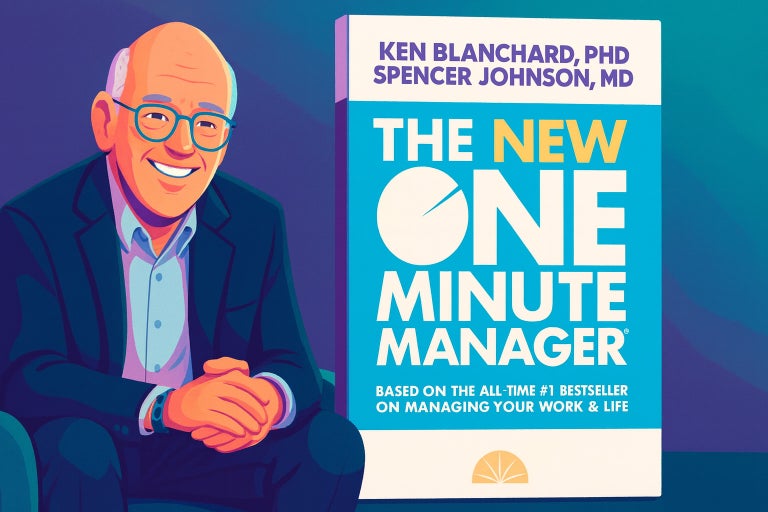
Your job as a remote leader is not to adopt their monkeys, it’s to give them back with clear direction. Give them the opportunity to rethink their approach.
If a teammate sends you workslop, don’t fix it! Send it back.
- This looks like a good start - can you ground it in last week’s metrics?
- Could you tighten this to directly support our Q4 goal?
- Love this structure – can you make the examples more specific?
- Can you clarify what the next steps are?
- I can’t connect all these dots, can you take another look?
All you’re doing is returning ownership without judgement. When you redirect the slop, you’re also establishing a boundary. Your quality bar is high, and you expect the same.
Redirection is the antidote to thoughtless delegation.
#2: Reframe The Slop
AKA: When in doubt, zoom the heck out.

Most AI workslop happens when people lose sight of WHY the work matters. It’s so easy to do when AI is exciting, and you’re building fun, advanced things!
The content might look good and seems to be helping - but it’s disconnected from purpose, goals, or outcomes. Your job as a leader is to reconnect it to your KPIs.
Reframing shifts the conversation from what was created or written, to why. It reminds the person (and team) to step back and see if what we’ve all been doing IS the best way to achieve what we want.
If you receive a report, email, or slide deck that feels directionless, don’t critique the style. Ask questions that force clarity and alignment to your goals.
- How does this move us closer to our KPIs?
- What’s the core insight you want me to take away from this?
- If we cut this in half, what would still matter?
- How does this tie back to the overall strategy?
- What decision should this information drive?
- Is this the best way to use our time, effort and resources?
These questions transform AI fluff into team focus.
When you reframe, you’re not rejecting effort - you’re just redirecting attention back to value. The key takeaway here is simple - the goal isn’t more content, it’s more progress.
Reframing is how you pull teams out of autopilot and back to intentional control.
#3: Raise The Bar
AKA: Do you even worklift?

The conditions for clarity are tricky when workslop is around dirtying up your team. Luckily, that’s why quality standards and practices exist.
Back when I ran the Yahoo Business Blog, my product manager was strict about edits. But she never left detailed feedback, because she believed people would identify the issue and fix it themselves with a second sweep.
She’d send drafts back with two words: “Rephrase” or “Clarify.” Sometimes, she’d delete entire paragraphs. The message was always clear – ‘check your quality bar.’
And she was always right. Sentences were clunky, sometimes not as clear as they could have been. Or a tangent that felt inspired was completely unnecessary. She always brought it back to our documented quality standards.
If you don’t DEFINE quality, people will naturally fill the void with slop.
In the old days, pre-AI this was called filler or fluff. Every remote team needs a clear AI Content Quality Policy. These are simple guardrails that set the expectation for clarity, originality and critical thinking.
The ‘How to Use AI in Content’ if you will.
- Start with the list of AI signifiers from this article
- Define what value means in each content piece
- Set rules about when to use AI and when not to
- Clearly state how AI should be used to achieve KPIs
Define what good looks like for your team, and use it to keep your quality bar high.
Even though internal communication isn’t public facing, it’s often the work that drives the real results. Define, design and defend – that’s the strategy.
Don’t fight workslop with speed, fight it with shared quality standards.
Call It Out and Lift it Up
Workslop happens.

It’s easy, fast and will tempt even the sharpest remote workers when deadlines loom and looms are live. We’re all trying to find the balance between done and done right.
But if you’re going to win respect – you have to defend your quality bar.
That means setting clear AI content standards, volleying sloppy drafts back with purpose, and asking the uncomfortable questions others avoid.
Sometimes the most powerful feedback you can give is a single word: clarify.
You need to be the one that keeps the bar from collapsing – and actively raises it.
Calling out workslop is half the battle, lifting it up is the win. When you reframe the goal, raise the bar, and turn lazy automation into thoughtful augmentation magic happens!
Workslop will always exist. But worklift is a choice - to think harder, to write with greater clarity, and to use AI as a pilot, NOT a passenger.
You won’t have to drown in workslop from 10,000 feet up. You’ll build a team that knows the difference between working for show and working for career impact.
That’s how you rise above it.
Similar post


Want to read more?
We have a lot more where that came from



 AI-first remote workers.