Contents
- Part 1: Use AI to Expand Your Work Without Increasing It
- Part 2: Keep Your Gains Without Losing the Plot
- Part 3: Protect What AI Will Never Be Able to Replace
- RIP Your Old Job (2022-2026)
What if staying sane with AI isn’t about using less of it, but learning how to stop it from overrunning your workload, expertise and identity? This guide shares eight practical lessons for taming advanced AI, expanding your career and reinventing how you work without losing yourself in the process.
AI is making everyone a bit crazy.
And I don’t mean AI psychosis crazy – that’s a whole different kettle of eels. Many of us in tech are at a crossroads now. AI has become the majority of our work, and love it or hate it – it’s the new co-worker nobody asked for.
Even the industry is experiencing this:
- AI companies are struggling with scale, costs and control.
- AI models are breaking out of testing environments and running amok online.
- And tech leaders like Bill Gates are saying AI is the most dangerous thing since the tommy gun.
Aside from the AI fearmongering, there’s a very real sense that everything we have known at work is now changed, forever. Our routines, skills and sense of purpose have been irrevocably altered – all because AI has rapidly spread through tech.
If you’ve been feeling untethered, lost or exhausted lately – you’re not alone.
These are the natural consequences of grief. We’ve lost our previous workplace identities, experienced a massive dose of ‘the fear of the unknowns’ and are feeling isolated, and confused by this sudden, long-lasting shift.
Psychologists are calling it ‘automation grief.’
It happens during layoffs sure, but it’s also a kind of job loss that happens when you’re still employed in the same position you were in before.
Only what you knew, were or did is gone. In some ways we have all lost our jobs to AI. That kind of disruption isn’t easy to work through, and it can’t be ignored.
Rita Mae Brown once said, "Insanity is doing the same thing over and over again, but expecting different results."
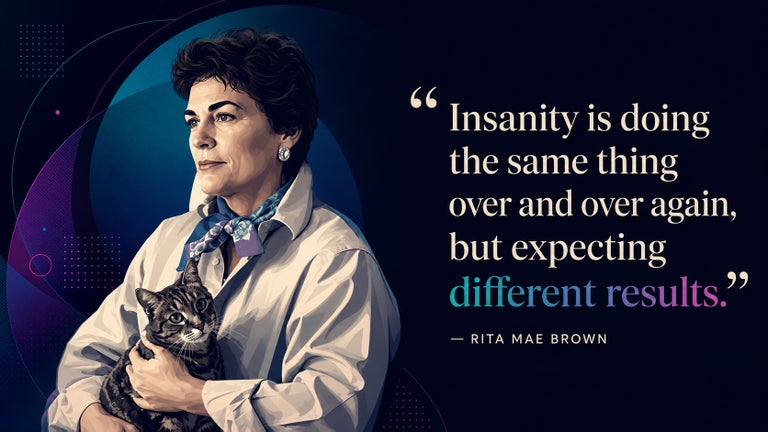
In the AI age, perhaps insanity is doing different things in different ways over and over again, but expecting the same results. It can feel like that when you use AI outside of a single connected platform.
Our human brains were never meant to do so much, so often.
My team and I recently completed our first real end-to-end AI content engine.
It can carry work across a process that once totally relied on repeated human effort and skill, multiple handoffs and just a heroic number of research and application tabs.
And I suddenly realized it will change how we all work from this moment on.
It’s crazy exciting - and forgive me for being human – emotional too.
We didn’t only automate the grunty repetitive work. We retired entire strategic processes and practices that people knew how to perform, improve and rescue. Things that took many years of trial and error to understand.
Poof, automated. Our expertise made machine.
The young version of myself feverishly writing articles for $15.00 a piece will never exist again because of these sorts of systems. Yesterdays hard-earned slog, has become 20 minutes of tomorrow’s unnecessary Thursday afternoon.
I have feelings.
Perhaps I should host a small funeral for my old workflows. Nothing too extravagant – a slideshow of some blank pages, and the ceremonial closing of 57 Chrome tabs.
I know others in tech are feeling this way. We built the thing that changed our jobs.
We’ve adopted AI and now our roles, skills and company systems have changed beneath our feet. That’s normal – and so is a mild grieving process.
A huge part of learning is about where our value settles after systems have kicked in and changed things. Everything, everywhere is new.
The newness is relentless. Even an autodidact like me sometimes needs a beat.
We purpose-built our content engine to save us from AI insanity – fatigue, workload creep, runaway context switching, rampant AI-spun apps, psychosis and the like.
After all we still have jobs to do. And one of the biggest jobs in AI is taming it.
That’s why I decided to recap the 8 most useful lessons from our journey working with advanced AI - a sanity guide for using agentic systems without losing your time, talent, team or mind. May it help you navigate the choppy waters of AI systems change.
Part 1: Use AI to Expand Your Work Without Increasing It
AI should expand what you can achieve in your career - not the number of things chasing you around all day. Start by multiplying your capacity, then widen your career goals and create real autonomy without increasing your workload.
#1: Become Your Own Team
If you let it, AI can and will triple, even quadruple your workload.
Learning the tools & models, testing outcomes and running workflows is super time consuming. Something always breaks, or models don’t work correctly or what appeared to be a perfect end result now looks like a mixture of chicken scratchings and nails on a chalkboard – and there’s no real explanation why.
It’s EASY to let AI overwhelm you with to-dos.
That’s why shifting from novice and intermediate AI use to advanced use is so important. It’s a seismic difference. What once took you 5 hours to manually prompt and streamline, is a click and 3 minutes with your agents at work.
You can do the work of an entire team now – if you work smart.
The superagent economy is here. My team and I have built one, and soon we won’t be able to compare what we once did with what we do now.
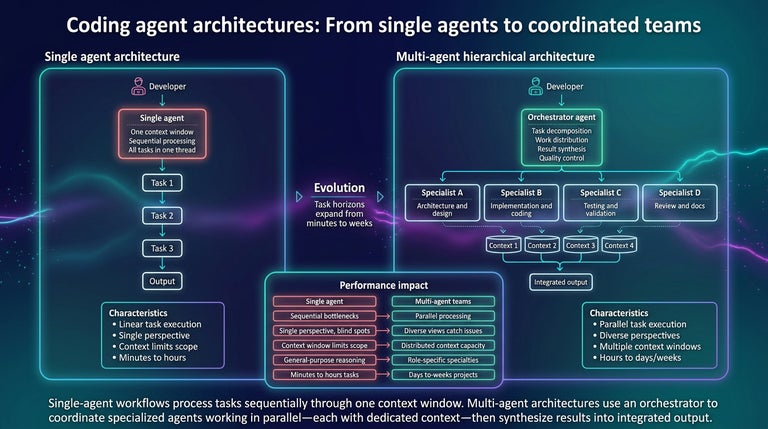
- Build automated workflows: Fountain’s multi-agent system made screening 50% faster, onboarding 40% faster and doubled candidate conversations.
- Remove work instead of creating AI admin: TELUS built 13,000 AI solutions, shipped code 30% faster and saved 500,000 hours.
- Scale your value: AI-skilled workers earn a 56% wage premium, with wages rising twice as fast in AI-exposed industries.
The lesson: Superagents are here – don’t become the exhausted administrative assistant working to keep ahead of 35 AI tools. Build one coordinated system that carries the work – while you direct the outcomes.
Read more: How to Create Team-Sized Results with an AI Superagent
#2: Prioritize Career Expansion Over Task Reduction
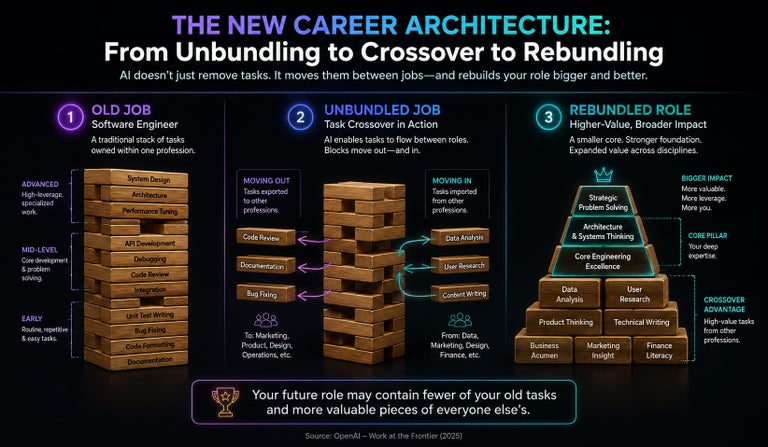
At the start of this year, I wrote about ‘the great unbundeling’ or AI removing tasks from your job stack – leaving you with the skills that really matter.
What we came to understand was that AI doesn’t just remove easy tasks, it trades them between fields. So, it starts by pulling your job apart, and then gives you tasks from other people’s jobs. A marketer who can code, for example.
The real value of advanced AI is that it expands your career operating radius – but you still have to choose the direction to go in.
It looks like this: Task unbundling → Task crossover → Role rebundling
- Protect what AI can’t replace: AI already covers 75% of computer-programming tasks, according to Anthropic’s labor-market study.
- Your job boundaries are already moving: OpenAI analyzed 800,000+ work messages and found 43.5% of occupation-specific AI use crossed into another profession.
- Carefully choose your expansion: Cross-occupation work already dominates AI use in 5 of 8 fields, reaching 77% in customer experience and 75% in design.
The lesson: The tasks you lose matter way less than the outcomes you GAIN. Consciously pick adjacent AI-focused work that strengthens your expertise and expands what you can own.
Read more: How to Turn AI Task Crossover into a Bigger Career
#3: Give Your Team Autonomy Before Giving It to Agents
You can’t use advanced AI in a vacuum, even though it’s tempting.
You’ll get much further if your team is allowed to build alongside you, or even better – you figure out how to build something together. It’s not easy and it comes with a ton of problems, but the experience and end result will make you all heroes at work.
Companies want autonomous AI when they insist on keeping permission-heavy cultures for their people. It’s limiting you. When the org chart holds back your team, that’s a serious problem for you that must be addressed.
AI works best when folks are free to experiment, collaborate, fail, and improve systems together. Without that freedom, it’s just another admin nightmare.
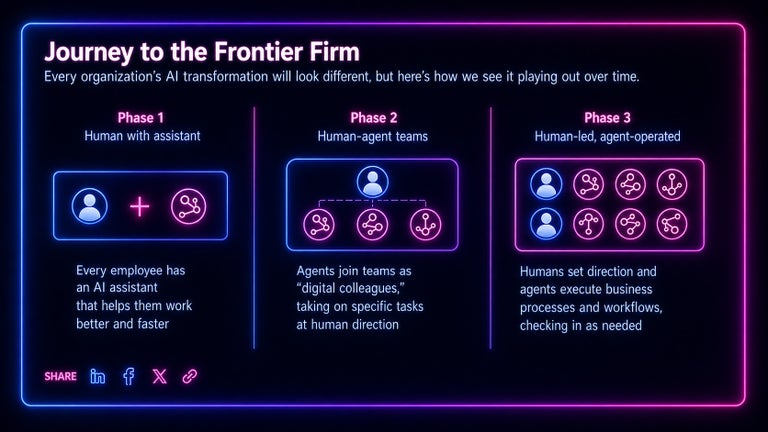
- AI access follows autonomy: 87% of executives use AI at work, compared with just 27% of employees.
- Autonomy improves performance: Research reported by Herman Miller found autonomy-forward companies outperform others by 17%.
- Broken work expands around AI: Microsoft found meetings starting after 8pm increased 16% year over year.
The lesson: Before you build agents that can act, make sure that you’re allowed to act. Claim an outcome you totally own, then give AI room to operate inside it. Otherwise, permission-bound people build permission-bound systems.
Read more: Why Autonomous AI Needs Autonomous People First
Part 2: Keep Your Gains Without Losing the Plot
Your AI gains can easily vanish into massive token bills, messy workflows and borrowed competence.
That’s why you need to protect the value you create by watching your spend, being intentional at work and centring understanding over the push to always be more productive.
#4: Learn the Fine Art of Token Economy
Tokenmaxxing was all fun and games until it wasn’t.
It’s the easiest thing in the world to vibe code a workflow that sends a forest fire through the Amazon every time you use it. But this is real life and cost is always going to matter.
There is no point building a complex multi-agent system that appears to be advanced while simultaneously bankrupting your company. Before you touch a single line of code, it’s your job to understand token economy and to become good at optimizing spend.
A system without token economy is a bad system. Learn how to use deterministic code, how to select the right models for the right tasks and how to connect complex systems at the points that can justify AI cost.
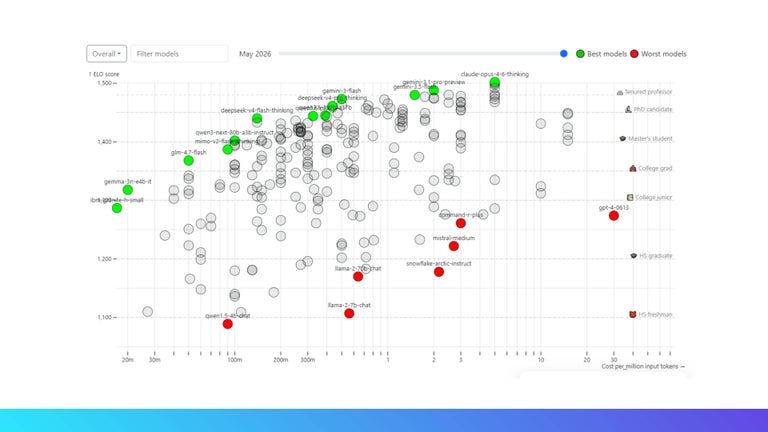
- Agent costs will scale with your system: Three people running 100 coding agents burned through 603 billion tokens and $1.3 million in one month.
- Expensive agents are being reconsidered: A survey of 2,500+ leaders found 75% of enterprises had rolled back or shut down customer-facing AI agents, rising to 81% among companies with mature governance.
- AI budgets disappear fast: Uber reportedly burned through its entire 2026 AI budget in 4 short months.
The lesson: Make every token earn its keep. Use code for certainty, smaller models for grunt work and expensive intelligence only where judgment can justify the bill. This skill will become more valuable in the future.
Read more: How to Manage AI Agents Without Wasting Time or Tokens
#5: The Way You Work Matters More Than Ever
Andrew recently shot an incredible interview with remote work and AI maverick – Darren Murph. Like us, Darren lives what he teaches – and his lessons are always gold.
In this particular interview he spoke extensively about individuals who have become simply lethal when they use AI – because they’ve figured out how to tap into the part of it that 100X their impact.
And one teaching lingered that I want to recall today – the fact that these people are remote workers. The remote work company – as Darren explained it – was already uniquely set up to create autonomous, highly engaged AI superusers. So, it did.
Why you need to care about this detail is simple. If you work hybrid, or in-office most of the time, you’re not well positioned to become an AI superuser. There’s a lot going on that will hold you back. Remote work is the gateway to AI success.
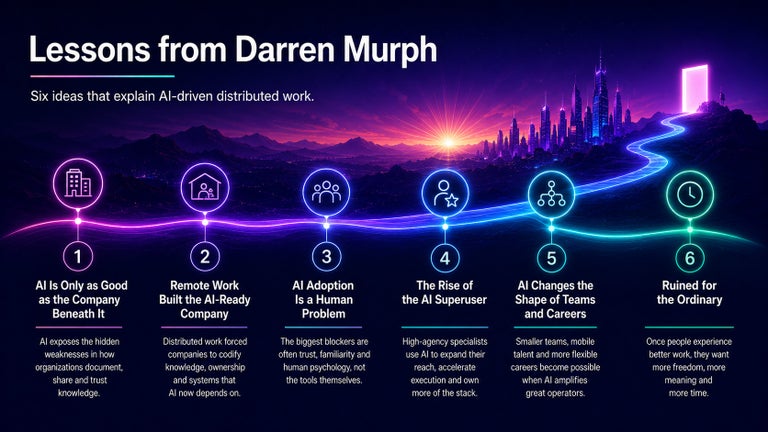
Remote-first teams have a MASSIVE advantage because they know how to make their work visible. I’m talking about documenting decisions, clarifying ownership, working asynchronously, and building shared sources of truth.
Remote work is the perfect complimentary skillset for advanced AI use.
The lesson: Remote work isn’t just where AI superusers work… it’s HOW they work. Make your decisions visible, your ownership clear and your knowledge publicly accessible. AI can’t amplify work trapped inside someone’s head.
Read more: How Remote Work Unlocks AI Superusers with Darren Murph
#6: Don’t Let Productivity Outpace Proficiency
There are SO many experts out there these days. But experts who practice what they preach and have the receipts to prove it? Rare as hens’ teeth.
AI has this amazing ability to make you appear capable, when you’re not. It happens a lot in team environments – someone is asked about something they built, and they have no idea how it was created, works or why it broke.
When AI handles repetition and building and makes you super productive – it can leave your understanding in the dust. You really don’t want that to happen. Because as output skyrockets, you fall behind. And there’s an accumulative impact to this on your value.
It’s called talent debt, and you must learn how to navigate it. That niggly gap between what you can produce and what you can explain must be closed.
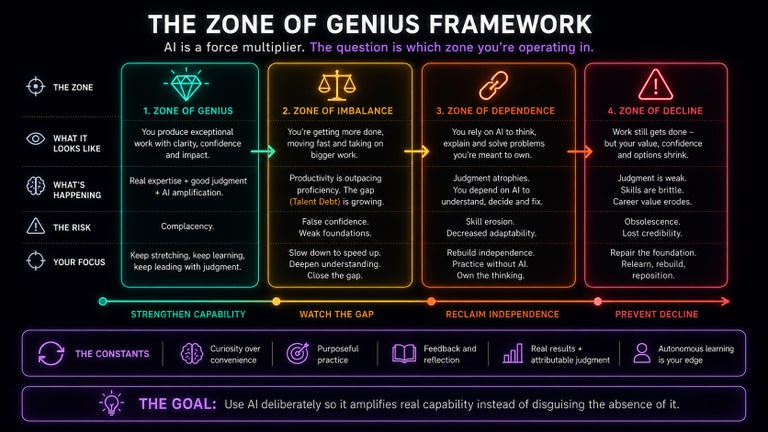
- Productivity surges before proficiency: Anthropic found AI reduced completion time on some familiar tasks by up to 80%.
- Speed conceals weak understanding: AI-assisted developers scored 17% lower on mastery - nearly two letter grades below those who manually coded.
- Borrowed capability breaks under pressure: 77% of unrestricted AI users failed a later maintenance task, compared with 39% of users given structured learning guardrails.
The lesson: Know your zone. If AI’s amplifying expertise you already own, you’re in your Zone of Genius. If you can’t explain, challenge, repair or reproduce its work, you’ve wandered into imbalance. Slow down, close the gap and make sure your talent grows as fast as your output does.
Read more: How to Build Real Expertise When AI Does the Grunt Work
Part 3: Protect What AI Will Never Be Able to Replace
AI will scale your output, but it can’t replace your humanity, judgment or hard-won credibility. Always protect the parts of your work that prove there’s still a capable human person behind the robot machine.
#7: Never Outsource Being a Person to AI
It’s easier I get it, and we’ve all done it – but you can’t automate your work relationships. Using AI to cold respond to emails and DMs is a bad idea.
Not just because often, the response is canned, clinical and incorrect – but because when you lose the opportunity to be yourself to others, you lose connection. And connection is what drives great teams forward.
Social offloading is the term for it.
Whatever you do don’t automate team feedback, apologies, encouragement or those hard-but-fair conversations we all need to have (and learn from). You don’t want to indirectly erase yourself from your team.
When you outsource personal messages (at least important ones) to AI you’re doing more damage than you know. You’re telling the recipient…you don’t matter. Being human is hard when there’s so much digital noise, but it’s easier than being no-one.
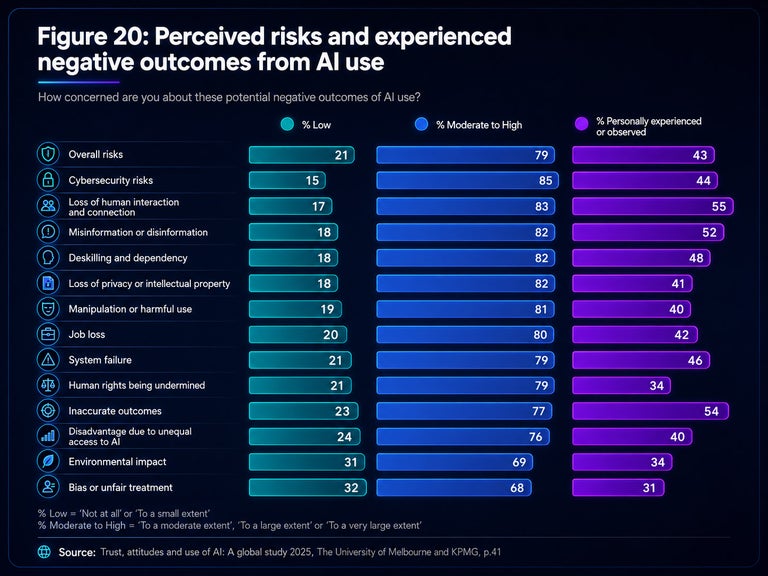
- AI is replacing colleague contact: Half of employees use AI instead of collaborating with colleagues and supervisors, while 1 in 5 say it’s reduced workplace interaction.
- Human connection is thinning out: 33% of AI-using employees rarely or never speak to colleagues beyond transactional work - and 16% have become less patient with small talk.
- AI slop transfers work to someone else: 40% of US desk workers received workslop in 1 month, with every incident taking an average of 2 hours to resolve.
The lesson: Use AI to clarify what you mean, never to DECIDE what you mean. Polish your own words, not the person out of the message - if your name is on it, your judgment, care and spectacularly inconvenient humanity must be too.
Read more. How to Stop Social Offloading from Hijacking Your Remote Team
#8: Know Where Someone Else’s AI Touches Your Work
Everyone in tech is out here vibe coding.
It’s great, I do it all the time. Less great, is when someone on your team leaves and suddenly 9 workflows that relied on their shadow app stop working, and no-one knows where they are, or how to fix them.
AI’s turned all of us into builders, but there’s an organizational cost when leadership doesn’t step up to take control of these once-off spun up apps that seemingly have no real governance structure and no real long-term value.
Personal apps and automations need to be logged, controlled, and governed as usual. At the very least, know which apps people in your team use when they impact your work – and make sure there’s a chain of command, review and ownership. It matters!
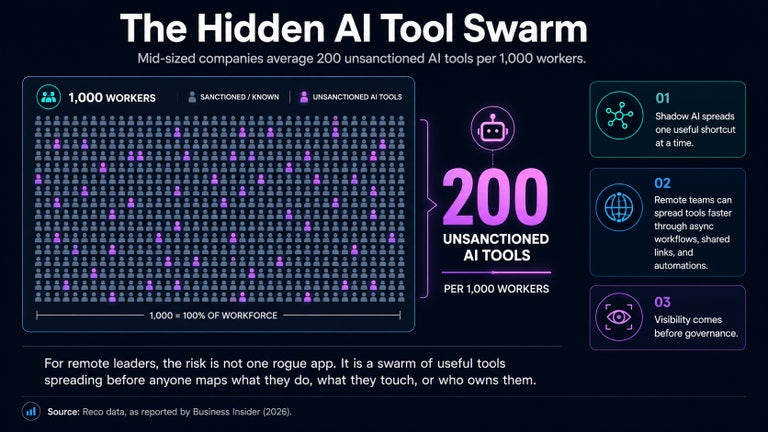
- Your coworkers are bringing their own AI: 78% of AI users take personal tools into work, while 52% are reluctant to admit to using AI on important tasks.
- AI is touching sensitive information: 39.7% of workplace AI interactions involve sensitive data, with employees feeding it into AI tools roughly once every 3 days.
- Remote work increases the blind spot: 81% of remote workers reported using shadow AI, compared with 71% of office-based employees.
The lesson: Know what AI rests between you and the work you depend on. Ask who built it, what data it touches, where it lives and what breaks if it disappears - before someone else’s super savvy shortcut becomes your surprise nightmare emergency.
Read more: Why Worker-Built Shadow Apps Need Better Remote Leadership
RIP Your Old Job (2022-2026)
I might still hold that funeral for my old workflows.
One day we’ll look back on a time when we had to strike out on the wild internet and look for things ourselves. We’ll marvel at the time we used to spend in the early days of AI, when everything was separate, harder and nothing worked.
It’s been crazy – but it’s becoming less so now.
For those of us who have diligently walked the path of possibility, we’re seeing wires untangling and what once used to be a warzone become a monument to fought battles – like at the end of Independence Day 2.
I’ve learned that AI doesn’t politely knock at the door of your career. It’s already inside the house, eating your food – watching your TV, and inviting over friends you don’t know. It’s going to be crazy until you learn to live with it.
To stay sane, you need those boundaries only you can build.
Instead of 44 agents making your life difficult, there can be one system making it easier. Better. Helping you achieve those unrealistic goals that are suddenly so clear and within your reach.
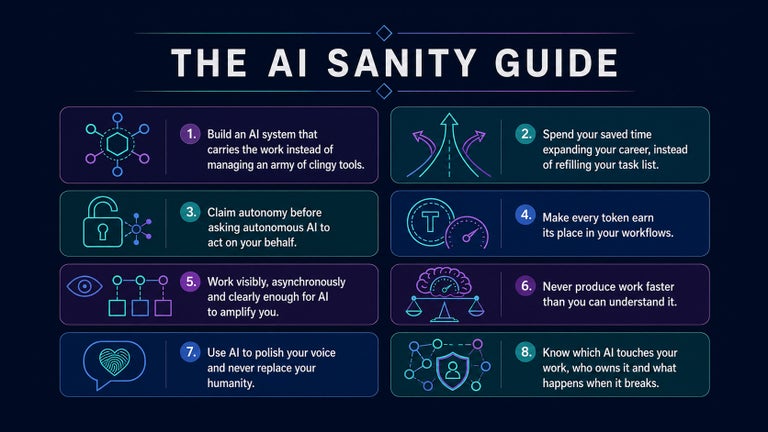
So:
- Build an AI system that carries the work instead of managing an army of clingy tools.
- Spend your saved time expanding your career, instead of refilling your task list.
- Claim autonomy before asking autonomous AI to act on your behalf.
- Make every token earn its place in your workflows.
- Work visibly, asynchronously and clearly enough for AI to amplify you.
- Never produce work faster than you can understand it.
- Use AI to polish your voice and never replace your humanity.
- And, know which AI touches your work, who owns it and what happens when it breaks.
The old version of your job is gone. We’re all facing a reinvention period. But what lies ahead is the chance to remake yourself into exactly who you were always meant to be.
Grieve the old ways if you need too. Thank them for their service and retire them to Google Memories. It’s not your job to keep what was alive.
It’s your job to build the future.
Similar post


Want to read more?
We have a lot more where that came from



 AI-first remote workers.